Feature | New Science From ESC Congress 2026

The ACC was live from ESC Congress 2026 in Munich, bringing members the latest cardiovascular science and clinical guidance. Below are standout studies in heart failure (HF), structural heart disease, dyslipidemia and prevention, and more, plus promising news in pulmonary embolism (PE). Visit ACC.org/ESC2026 for complete coverage, including video interviews.
Heart Failure Highlights
In patients with pulmonary hypertension associated with left heart disease and HF, PADN-HF-PH demonstrated that pulmonary-artery denervation added to guideline-directed medical therapy reduced clinical worsening without a major procedural safety signal.
In chronic HF, LUMINARA showed that the oral relaxin receptor agonist AZD5462 was well tolerated, with early signals of improved cardiac function and hemodynamics that support further outcomes testing.
H-HeFT and Met-HeFT showed no significant cardiovascular benefit from hydralazine plus isosorbide dinitrate or metformin in broader HF populations, highlighting the need to test familiar therapies in contemporary, well-treated cohorts before expanding use.
An analysis of DAPA ACT HF-TIMI 68, published in JACC: Heart Failure, found that in-hospital dapagliflozin initiation produced modest but significant improvements in congestion within one week among patients hospitalized for HF. Among 2,401 patients, dapagliflozin improved all decongestion-related endpoints vs. placebo within one week, with effects sustained at two months and diuretic efficiency increasing progressively.
A nurse-led, mobile health-supported collaborative care model in TIME-HF improved survival without hospitalization and reduced deaths among patients with HF and reduced ejection fraction in India.
Structural Heart Insights
Three late-breaking trials offered practical insights for structural heart disease care. In TAVI PCI, performing TAVI before PCI was noninferior to a PCI-first strategy in patients with severe aortic stenosis and concomitant coronary artery disease. ACASA-TAVI found that 12-month NOAC monotherapy after TAVI reduced hypoattenuated leaflet thickening vs. aspirin monotherapy, while remaining noninferior for bleeding, thromboembolic events or death. In TRIC-I-HF, transcatheter tricuspid valve repair showed potential benefits in selected patients with HF and significant tricuspid regurgitation.
Positive News in PE
Results from PRAGUE-26 showed that, among patients with intermediate-high-risk acute PE, catheter-directed thrombolysis with alteplase plus anticoagulation reduced the seven-day risk of death from any cause, recurrent PE, or cardiorespiratory decompensation or collapse vs. anticoagulation alone. Bleeding rates appeared similar at seven days.
"Using the blueprint already employed for heart attacks, we were able to demonstrate that specialized interventional treatment can be delivered in tertiary care centers," said Viktor Kočka, MD.
Fast Takes: Lipids
AMUNDSEN showed initiating evolocumab before PCI in patients with acute MI markedly improved LDL-C goal achievement at one year, although no early clinical benefit was observed. In VESALIUS-CV, intensive LDL-C lowering with evolocumab in high-risk patients without prior CV events reduced major adverse cardiac events (MACE), supporting earlier intensification in selected primary prevention populations.
SHASTA-3 and SHASTA-4 addressed severe hypertriglyceridemia, with quarterly plozasiran reducing triglycerides by about 80% at one year and significantly lowering acute pancreatitis events vs. placebo.
Lepodisiran, a novel extended-duration small interfering RNA studied in a post-hoc analysis of ALPACA, reduced Lp(a) levels from 60 to 180 days after subcutaneous administration in patients with elevated Lp(a). The analysis also showed sustained, dose-dependent reductions in OxPL-apo(a) and OxPL-apoB through day 360, closely correlating with reductions in Lp(a).
A protocol-based implementation strategy in BRIDGE focused on earlier intensive treatment in patients hospitalized for an emergency PCI led to more patients achieving LDL-C levels <70 mg/dL and <55 mg/dL than standard care.
Visit JACC.org/Guidelines to download the new ACC/AHA Dyslipidemia guideline.
Fast Takes: Prevention
REACT highlighted the burden of silent atherosclerosis earlier in life. Imaging identified subclinical disease in nearly 60% of about 17,000 adults aged 45 years without known ASCVD, with plaque volume rising sharply with age and suggesting an opportunity for earlier detection and treatment.
In STAREE, atorvastatin reduced MACE by 30% among community-dwelling adults ≥70 years old without known CV disease, diabetes or dementia; disability-free survival was not improved.
DAN-RSV showed fewer RSV-related respiratory illness hospitalizations with the bivalent RSV prefusion F vaccine vs. no vaccination, supporting vaccination as part of prevention strategies for older and higher-risk adults.
Interventional Insights
New data from LIBREXIA ACS, PREMIUM, SWITCH SWEDEHEART, A-CLOSE and EPIDAURUS shed light on milvexian with antiplatelet therapy following an acute coronary event; aspirin omission at the time of primary PCI in STEMI; switching from ticagrelor to prasugrel after PCI in ACS; clopidogrel vs. extended DAPT after high-risk PCI; and potent antiplatelet therapy in patients with atrial fibrillation after MI.
New ESC Guidelines Address CR, CKD and HF
Three major guideline updates were released by the ESC during its Congress related to cardiac rehabilitation (CR), chronic kidney disease (CKD) and heart failure (HF).
The first-ever ESC Guideline on Cardiac Rehabilitation underscores the broad benefits of CR programs, including improved quality of life, physical fitness, confidence and mental well-being, while lowering the risk of future cardiovascular events. Notably, the guideline expands the role of CR to additional groups, including those with congenital heart disease, atrial fibrillation, heart valve replacement and cancer therapy-related heart complications.
The first dedicated ESC Guideline on Cardiovascular Disease and Chronic Kidney Disease calls for all patients with heart disease to be assessed for kidney disease. Developed with the European Renal Association, it emphasizes wider use of kidney function and urine albumin testing to improve early detection. The document also reflects emerging evidence that relatively simple treatments can substantially reduce both kidney and cardiovascular complications and provides recommendations for adapting cardiovascular care in patients with CKD.
The updated ESC Heart Failure Guideline introduces important changes to the classification and treatment of HF. A staging approach was adopted that spans prevention in at-risk individuals through management of advanced disease, emphasizing earlier intervention to address a growing global burden driven by aging populations and rising obesity rates. The guideline simplifies HF phenotypes into reduced and preserved ejection fraction categories and replaces the term "acute" HF with "decompensated" HF, as well as establishes new therapy categories designed to remain relevant as treatments evolve. The update also incorporates the latest evidence on medical, device-based and interventional therapies, alongside a renewed emphasis on patient education and self-care.
Read the ACC/AHA/ESC/WHF Fifth Universal Definition of MI also released during ESC Congress 2026.
Innovation in Cardiac Diagnosis, Device Therapy
Three Hot Line trials – ASPIRED, DANISH-CRT and His-Alternative II – tested 14-day ECG monitoring in patients with unexplained syncope, compared cardiac resynchronization therapy (CRT) modalities and assessed targeted left ventricular lead placement at the site of latest electrical activation in patients with heart failure and prolonged QRS.
Late-Breaking Critical Care Cardiology Science
In AIR-STEMI, complete coronary artery revascularization guided by functional vs. conventional coronary angiography reduced the risk of death, MI, cerebrovascular accident or ischemia-driven revascularization in patients with STEMI and multivessel CAD.
After MI was ruled out in patients with suspected ACS, TARGET-CTCA showed that routine CT coronary angiography-guided management did not reduce subsequent MI or cardiovascular death. In PRECISE-MI, a rapid 0/1-hour biomarker pathway for MI was as safe as the standard 0/3-hour pathway but did not shorten ED length of stay or increase direct ED discharge.
Not All Trial Names Are Created Equal
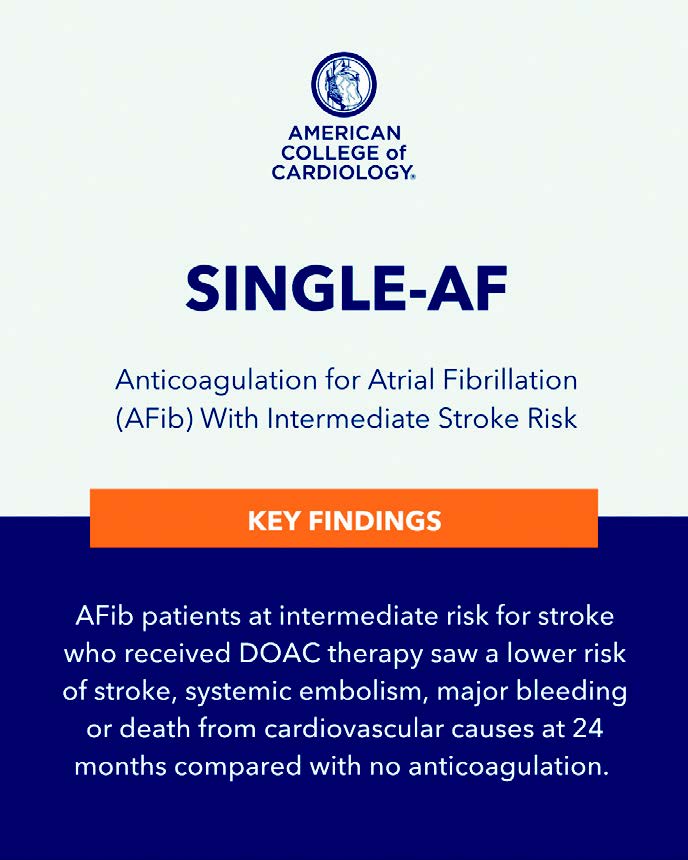

Some late-breaking clinical trials make headlines for their science, and some also happen to have names that spark a little creativity. Trials like SINGLE-AF and POET-II not only advanced cardiovascular care, they inspired some fun social media moments along the way. Check out ACC and JACC Journals on Instagram, X, LinkedIn, Facebook and Bluesky to see the coverage from the meeting – and stay tuned for more creative takes on the latest science from TCT 2026 and AHA 2026 this fall.
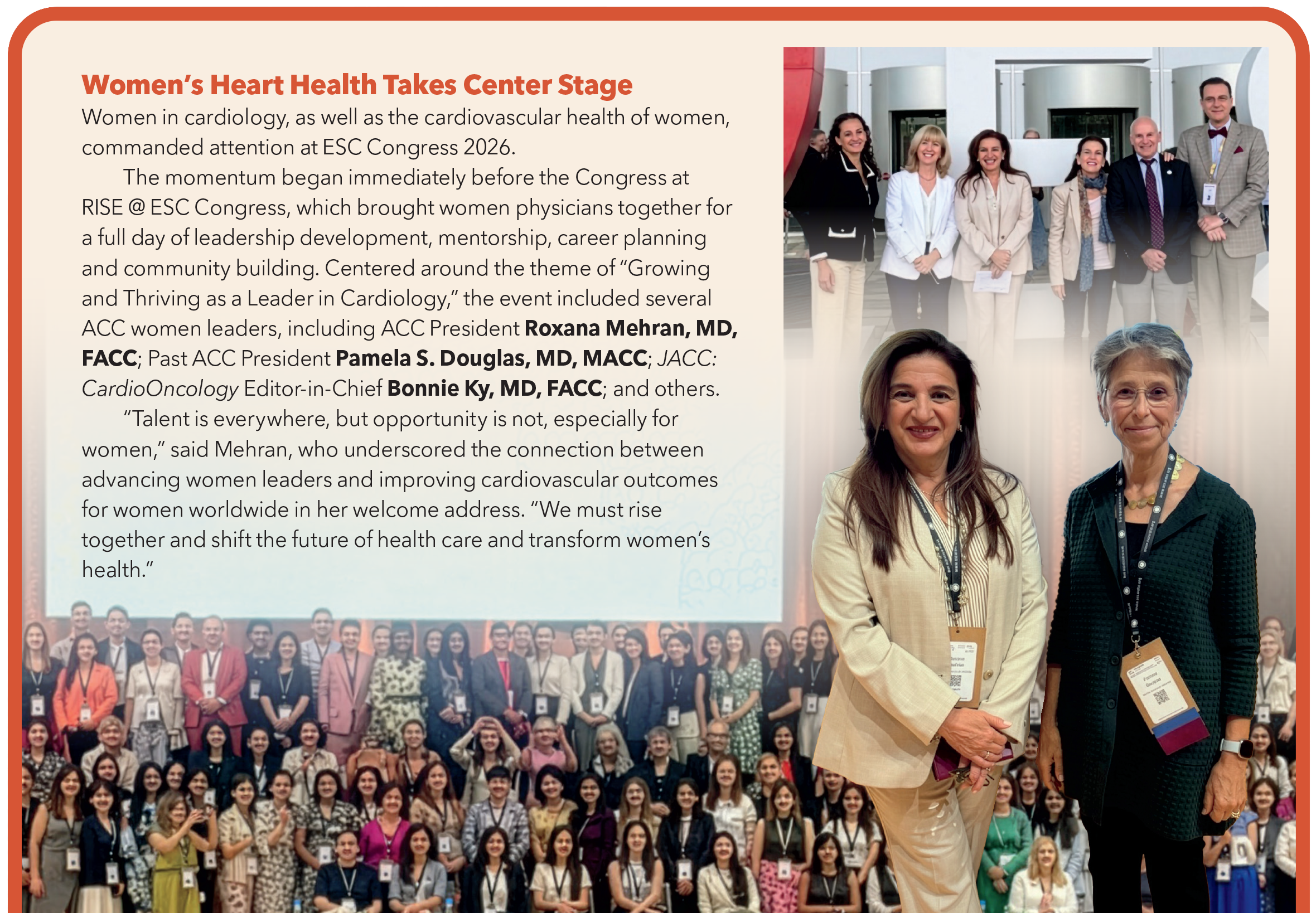
Clinical Topics: Cardiovascular Care Team, Dyslipidemia, Heart Failure and Cardiomyopathies, Prevention, Vascular Medicine, Lipid Metabolism, Acute Heart Failure
Keywords: Cardiology Magazine, ACC Publications, CM-Oct-2026, ESC Congress, ESC26, Heart Failure, Pulmonary Embolism, Lipids, Structural Intervention, Interventional Cardiology, Primary Prevention
