New in Clinical Guidance | HFpEF; Cognitive Impairment, Frailty; Fifth Universal Definition of MI
Updated Pathway Reframes HFpEF Care
The 2026 ACC Expert Consensus Decision Pathway (ECDP) for the Management of Heart Failure With Preserved Ejection Fraction (HFpEF) reflects a significant evolution in how HFpEF is understood and treated. Rather than a single cardiac condition, HFpEF is framed as a complex, multisystem syndrome driven by visceral adiposity, inflammation and metabolic dysfunction, with distinct patient phenotypes requiring individualized care.
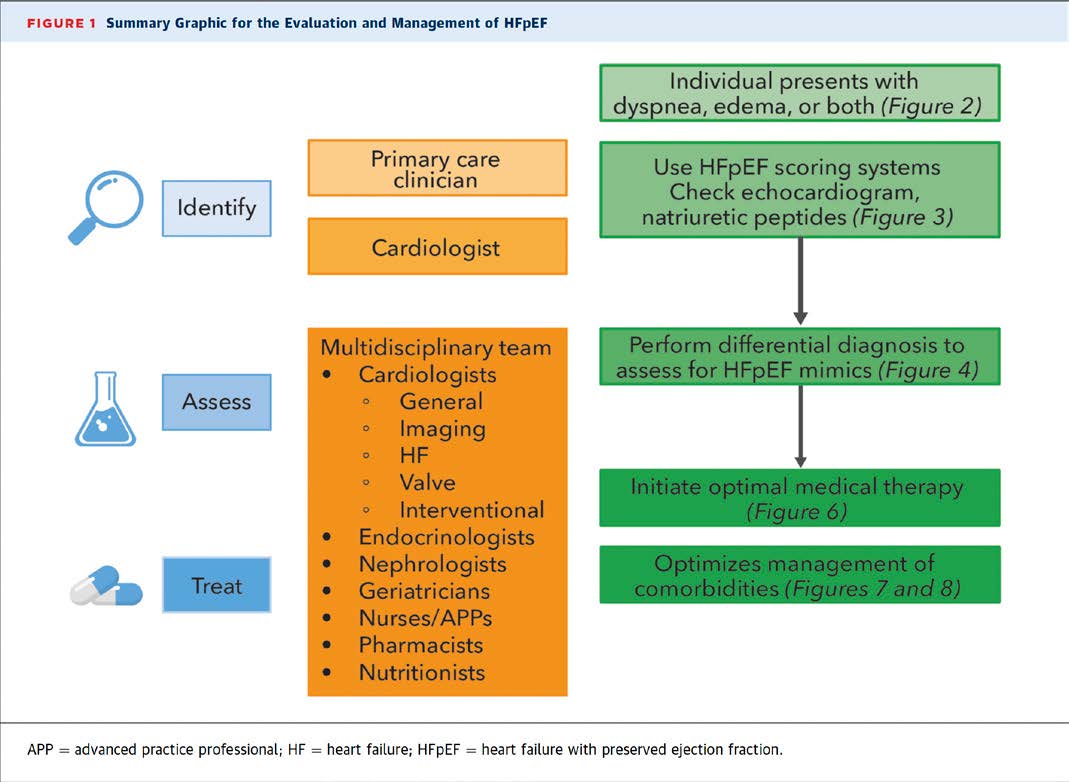
Prompted by advances since the original 2023 ECDP, the document incorporates positive clinical trial data supporting SGLT2 inhibitors, nonsteroidal mineralocorticoid receptor antagonists (MRAs) and incretin-based therapies that extend benefits beyond HF to broader cardiovascular, kidney and metabolic health.
A central theme is accurate diagnosis. The ECDP provides a structured approach to patients with dyspnea, edema and other symptoms, including differential diagnosis, scoring systems, assessment of HFpEF mimics and sex-specific considerations, to support earlier recognition and evidence- and guideline-based treatment.
For management, the pathway provides practical guidance on optimal medical therapy, including use and titration of SGLT2 inhibitors, MRAs, incretin-based therapies, angiotensin receptor-neprilysin inhibitors, angiotensin receptor blockers, diuretics and beta-blockers. The document highlights nonpharmacologic interventions and provides a framework to address common comorbidities in HFpEF, and emphasizes comprehensive management of frequently associated conditions.
"As science evolves, some recommendations may need to be altered to reflect those advances," write the authors, led by Chair Michelle M. Kittleson, MD, PhD, FACC, and Vice Chair Gurusher S. Panjrath, MBBS, FACC. "In the interim," the ECDP offers practical tips and structure for clinical decision-making and implementation of contemporary pharmacologic and nonpharmacologic therapy.
ACC Scientific Statement Connects Frailty, Cognition and CV Outcomes
Because older adults rarely experience CV disease in isolation, ACC's newest Scientific Statement on Cognitive Impairment and Frailty in Older Adults With Cardiovascular Disease stresses the importance of considering cognitive impairment, frailty and physical disability within the context of CV decision-making.
Led by Writing Committee Chair Karen P. Alexander, MD, FACC, the document emphasizes the way these conditions influence health outcomes, function, treatment decisions and quality of life, and underscores the need to consider them as interconnected manifestations of the biological aging process.
The statement highlights several major themes, including the role of biological aging and multisystem pathophysiology, such as vascular dysfunction, chronic inflammation and sarcopenia, in linking CV disease, frailty and cognitive decline. It also provides practical, consensus-based recommendations for prevention, screening, assessment and management.
Key takeaways include addressing shared, modifiable risk factors and social drivers of health; implementing routine and feasible screening for frailty and cognitive impairment in outpatient settings and after hospitalization; ensuring timely diagnostic evaluation and referral when concerns are identified; and promoting resilience through cardiac rehabilitation, multidomain exercise, nutritional optimization, careful medication management and reduction of polypharmacy-related harms.
Global CV Societies Release Updated Universal Definition of MI
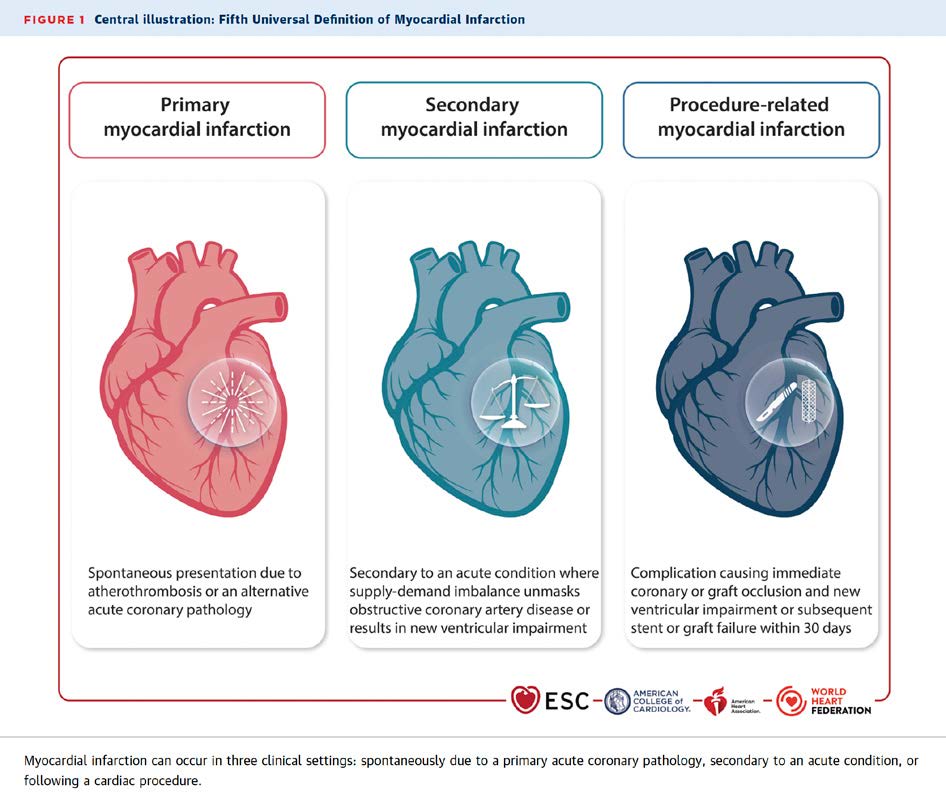
The Fifth Universal Definition of Myocardial Infarction (MI) released on behalf of a joint task force from the ACC, European Society of Cardiology, American Heart Association and World Heart Federation provides a new clinical classification of MI that is based on pathophysiology, aligns with clinical evaluation of patients and incorporates objective diagnostic criteria.
Highlights include refined criteria for acute and chronic myocardial injury, emphasizing underlying mechanisms and sex-specific cardiac troponin thresholds to improve diagnostic accuracy, particularly in women; replacement of numerical MI classification with three clinical categories: Primary MI, Secondary MI and Procedure-related MI; new objective criteria for silent or unrecognized MI; updated definition of MINOCA as "myocardial injury with nonobstructive coronary arteries"; introduction of accelerated diagnostic pathways using high-sensitivity cardiac troponin assays; guidance for diagnosing MI in low-resource settings; and proposed ICD-11 codes to align with updated MI classification and support implementation and research.
Read the full document in JACC.
New Clinical Performance, Quality Measures Set AFib Care Standards
The 2026 ACC/AHA Clinical Performance and Quality Measures for Patients With Atrial Fibrillation (AFib) provide an updated framework to help improve the quality, consistency and equity of AFib care. Developed with the American College of Clinical Pharmacy and the Heart Rhythm Society, the document translates the strongest Class 1 and Class 3 recommendations from the 2023 ACC/AHA AFib guideline into measurable practice standards.
Clinical Topics: Arrhythmias and Clinical EP, Atrial Fibrillation/Supraventricular Arrhythmias
Keywords: Cardiology Magazine, ACC Publications, CM-Oct-2026, Heart Failure, Preserved Ejection Fraction, Myocardial Infarction, Atrial Fibrillation, Cognition, Quality of Health Care, Cognition Disorders, Guidelines as Topic
