Number Check | When Environment Meets Cardiology
"Cardiovascular leadership has 2 obligations: 1) to care well for the person who arrives at our door; and 2) to reduce the number who need to come through it," writes JACC Editor-in-Chief Harlan Krumholz, MD, SM, MACC, in an Editorial Comment kicking off a special issue dedicated to environmental cardiology. "Our view of cardiovascular health must extend beyond the clinic to the conditions that produce disease across populations."
Check out some of the highlights below and use the links to explore the full issue, read specific papers and access the new Environmental Cardiology topic collection at JACC.org.
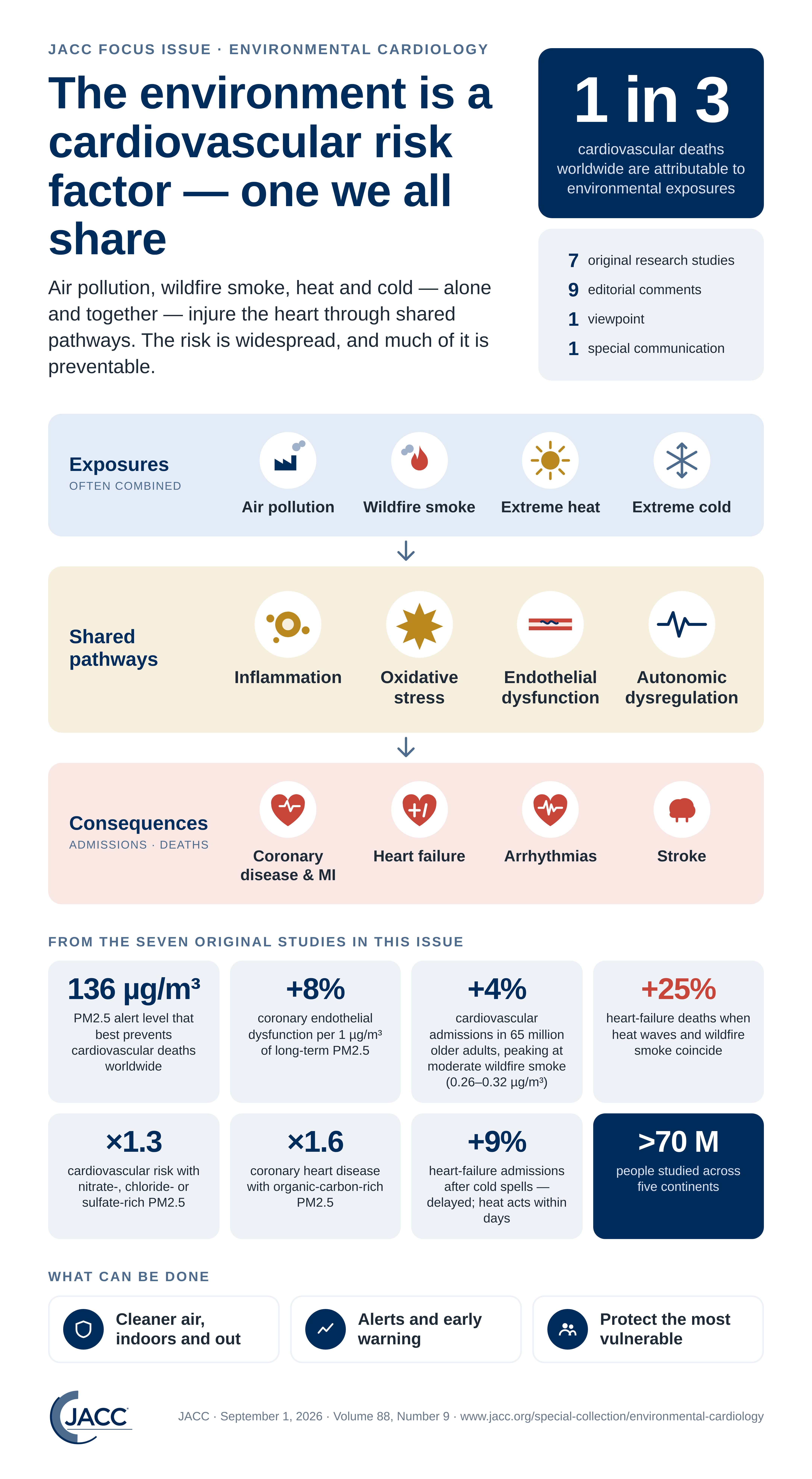
The number of cardiovascular deaths worldwide attributable to environmental exposures. Access a special JACC Focus Issue and learn how environmental factors are shaping cardiovascular health and what actions can help reduce risk.
The number of days following cold spells associated with a higher risk of heart failure (HF) hospitalization, based on a Swedish study presented at ESC Congress 2026 and published in JACC. In other findings, higher temperature exposure was linked to a higher risk of HF over zero to three days. There was no association between heat wave exposure and HF hospitalization. Read more.
Air pollution, specifically chronic PM2.5 exposure, was linked with coronary endothelial dysfunction in individuals with nonobstructive coronary artery disease, in an original research study out of the Mayo Clinic. Two other studies published in the special JACC Environmental Cardiology issue also shed light on PM2.5 impacts on heart health. Access all three studies (and more) in the new JACC Environmental Cardiology topic collection.
Compound exposure to extreme heat and substantial fire-source air pollution was associated with an 11.5% increase in cardiovascular mortality, based on an assessment of nearly 6 million cardiovascular-related death records from multiple countries. Read more.
Live at ESC Congress: From Exposure to Action

The impact of environmental stressors on cardiovascular health was part of a special ESC and JACC Joint Session at ESC Congress 2026, exploring why environmental cardiology has emerged as a critical clinical priority. Speakers examined the cardiovascular impacts of air pollution, wildfire smoke, temperature extremes, and the risks associated with specific PM2.5 constituents and combined environmental exposures. Attendees also gained insight into the latest evidence and practical priorities for research and prevention and they were able to engage with experts like Krumholz around clinical actions needed to address the growing cardiovascular burden of environmental threats.
Keywords: Cardiology Magazine, ACC Publications, CM-Oct-2026, Air Pollution, ESC Congress, Environmental Pollution, ESC26
