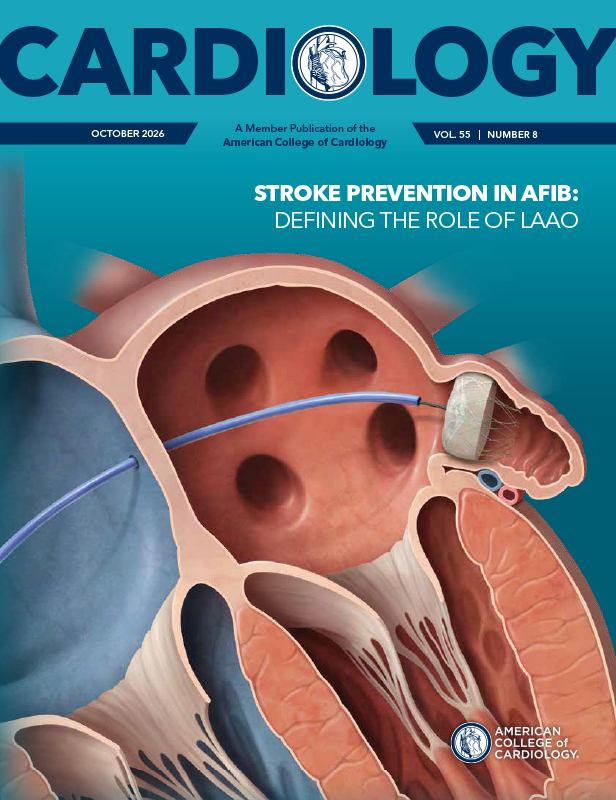
Quality Improvement for Institutions | EP and NCDR: A Decade of Real-World Evidence Generation
The electrophysiology (EP) field has undergone a remarkable transformation over the past decade. Advances in left atrial appendage occlusion (LAAO), atrial fibrillation (AFib) ablation and outpatient procedural care have expanded treatment options for patients while improving safety and outcomes.
At the same time, the rapid pace of innovation has heightened the need for robust real-world evidence. NCDR registries have helped meet that need, providing clinicians, researchers and health systems with a comprehensive view of how new technologies and treatment strategies perform outside the controlled environment of clinical trials.
From tracking the growth of LAAO and AFib ablation to supporting quality improvement efforts in ambulatory surgical centers (ASCs), NCDR programs have played a central role in advancing high-quality care for patients with AFib. And as AFib diagnoses continue to rise in the U.S., the need to assess procedural safety, effectiveness and long-term outcomes has never been greater.
10 Years of Real-World Data
ACC's LAAO Registry launched shortly after the U.S. Food and Drug Administration approved the WATCHMAN device in 2015, providing a framework to assess real-world outcomes as the procedure entered widespread clinical practice.
Since then, procedural volume and participating hospitals have increased substantially, with analyses involving well over 100,000 patients helping transform LAAO from a therapy supported primarily by pivotal clinical trials into one backed by extensive real-world evidence.
These data have documented consistently high procedural success rates while helping clinicians better understand patient selection, long-term outcomes and opportunities for quality improvement.
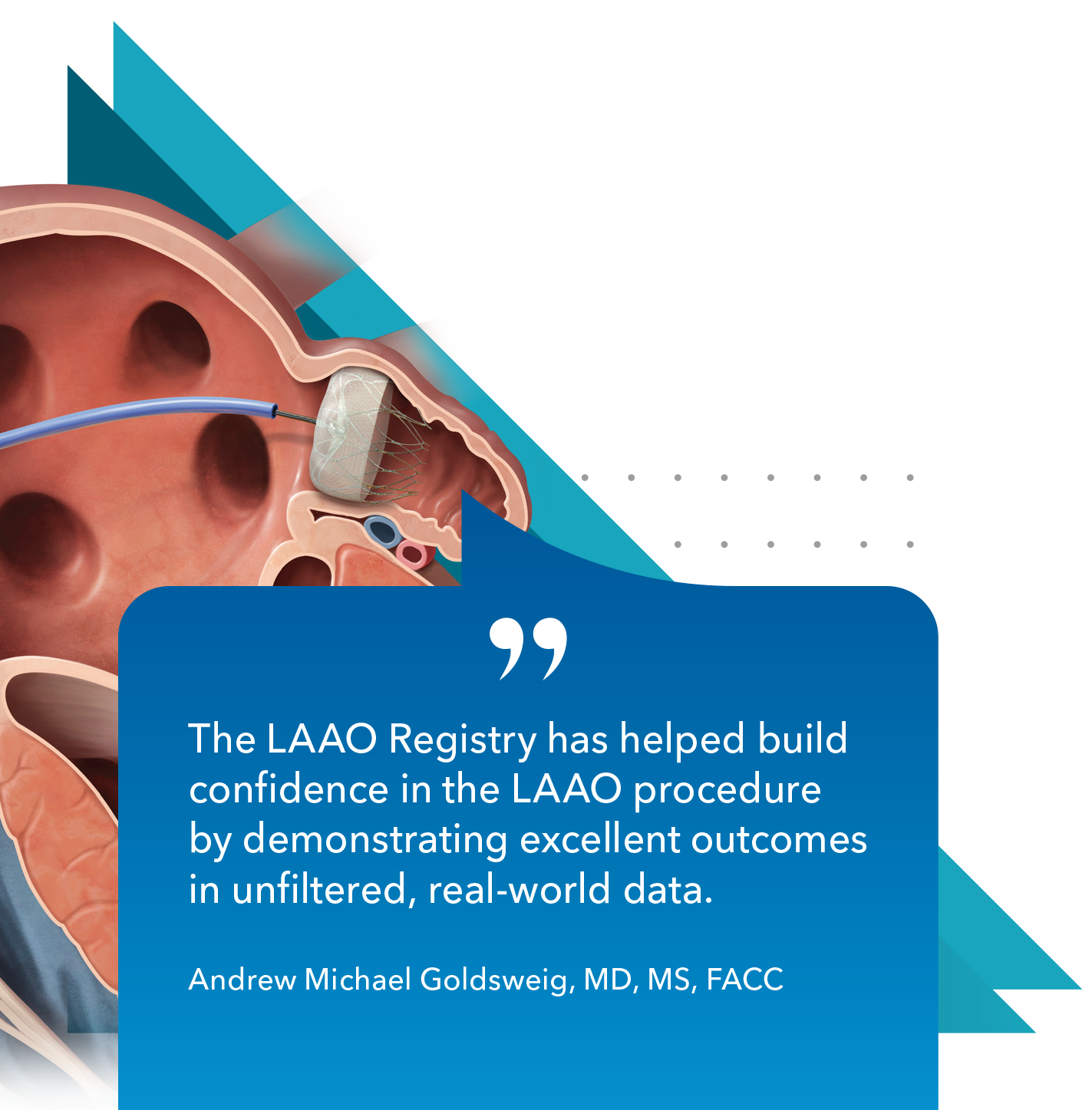
"The field of LAAO was destined to grow rapidly...the population eligible to benefit from this technology is enormous," says Andrew Michael Goldsweig, MD, MS, FACC, chair of the NCDR LAAO Registry Steering Subcommittee. "The LAAO Registry has helped build confidence in the LAAO procedure by demonstrating excellent outcomes in unfiltered, real-world data."
The technology behind the procedure has also continued to evolve. Next-generation devices, including WATCHMAN FLX and Amulet, have expanded treatment options and further advanced procedural safety and effectiveness. In turn, the registry has evolved to capture emerging technologies, new clinical data elements and changing practice patterns, including concomitant procedures such as AFib ablation.
As LAAO enters its second decade of widespread adoption, new evidence continues to refine how the procedure is used and which patients may benefit most.
Goldsweig points to several key questions that will shape the future of the field, including whether LAAO could serve as a first-line strategy for stroke risk reduction in patients with AFib, regardless of contraindications to anticoagulation.
Results from the CHAMPION-AF trial, presented at ACC.26, found LAAO superior to long-term non-vitamin K antagonist oral anticoagulant therapy for prespecified nonprocedure-related bleeding in patients with AFib who were candidates for anticoagulation.
At the same time, unanswered questions remain around appropriate management of peri-device leak and device-related thrombus to minimize stroke risk.
"The ACC and NCDR have played a key leadership role in partnership with clinicians, hospitals, regulators and industry," notes Goldsweig. "As the LAAO procedure becomes available to an ever-increasing number of patients, the registry allows quality benchmarking and improvement at the level of the individual operator, the hospital and the field as a whole."
Advancing AFib Ablation
AFib ablation has undergone a similar evolution. Once reserved for patients who failed to respond to or could not tolerate antiarrhythmic drugs, the 2023 AFib Guideline elevated catheter ablation to first-line therapy in select patients with symptomatic paroxysmal or persistent AFib.
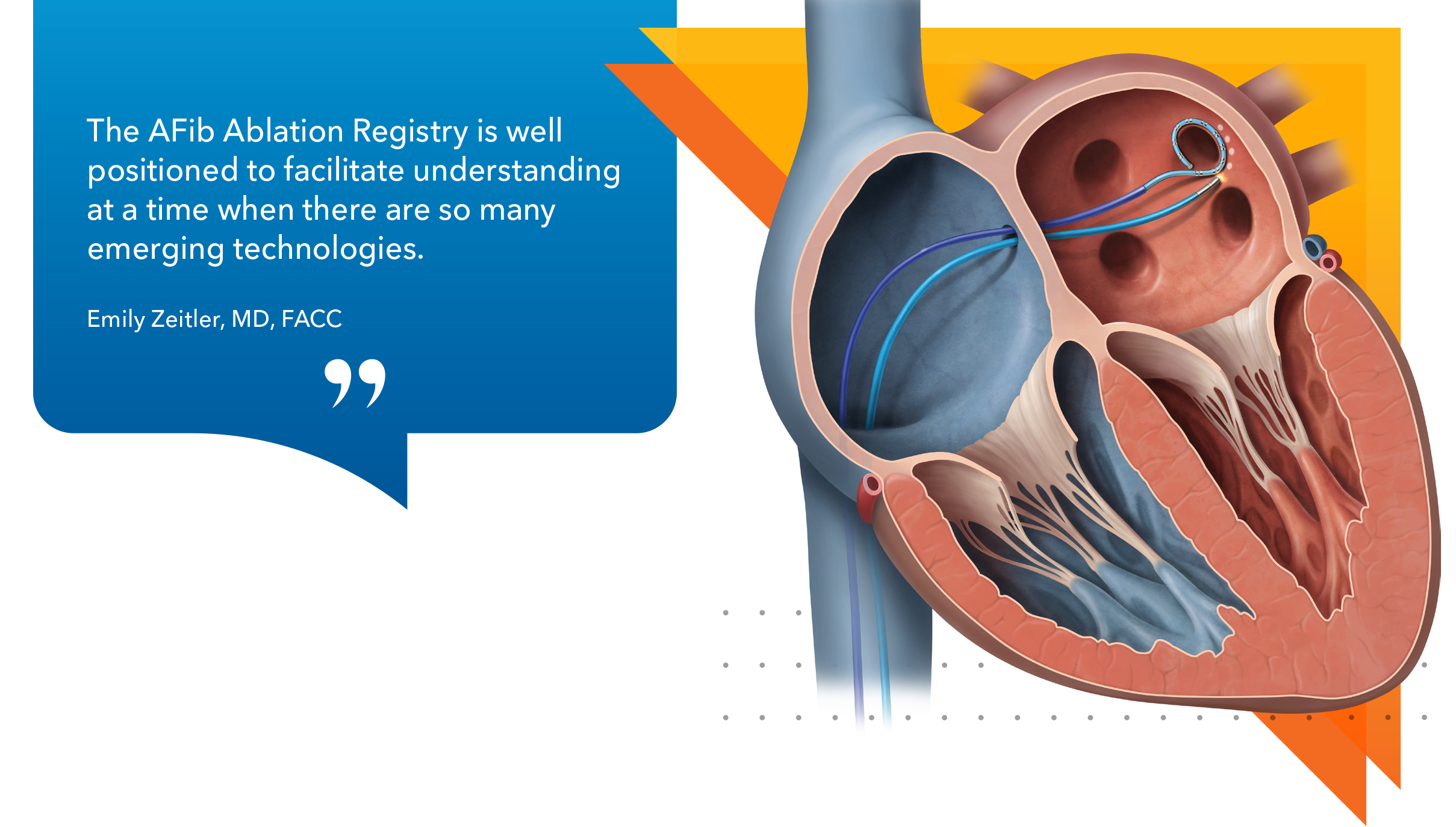
"Many in the EP space were already approaching AFib care with earlier ablation, so the guidelines, which collated an ever-expanding body of literature supporting this approach, were validating, but it remains incompletely clear which patients are best served by earlier ablation," says Emily Zeitler, MD, FACC, chair of the NCDR EP Registry Suite Steering Subcommittee.
Developed in tandem with the LAAO Registry, ACC's AFib Ablation Registry was designed to better understand the prevalence, management and outcomes of patients undergoing ablation procedures in routine clinical practice. The resulting data have informed guideline development, quality initiatives and ongoing research efforts.
Today, the registry continues to address important unanswered questions, investigating long-term outcomes beyond the procedural episode of care and providing valuable insight into national practice patterns across the EP service line.
Emerging innovations are creating new opportunities for evidence generation. Pulsed field ablation has rapidly reshaped the field, and the registry is working to evaluate its adoption as well as monitor safety and effectiveness as the uptake of the technology grows.
"Premarket and early commercial studies are generally smaller and single-arm or compared to a control arm that may or may not be relevant by the time it is widely used. That's where the registry can be helpful," says Zeitler. "The AFib Ablation Registry is well positioned to facilitate comparative effectiveness at a time when there are so many emerging technologies."
Safety in the Outpatient Setting
As cardiovascular care expands beyond the traditional hospital setting, ensuring patient safety remains paramount.
The emergence of outpatient facilities for cardiovascular procedures has created new opportunities to improve access, convenience and efficiency. It has also underscored the importance of collecting consistent, high-quality data to monitor outcomes and support evidence-based care delivery.
To that end, ACC's CV ASC Registry Suite continues to expand its ability to capture outpatient cardiovascular procedures. In early 2027, a new module will launch to collect data on AFib ablation procedures performed in ambulatory and outpatient surgical centers.
"Using more detailed information from the registry should help us develop and evolve best practices for this new setting with regard to patient selection and protocols for perioperative surveillance, sedation, transfers and other features," says Zeitler.
The addition builds on broader efforts to support quality and safety in the outpatient setting, including the initial launch of the CV ASC Registry Suite in 2024 focused on PCI and EP device procedures and the expansion of ACC's Cardiac Cath Lab Accreditation to freestanding outpatient facilities.
By extending data collection and quality improvement tools into new care settings, the ACC is helping ensure that innovation and expanded access are accompanied by the same commitment to measurement, transparency and continuous improvement that have long defined cardiovascular quality programs.
Innovation Meets Evidence
Across LAAO, AFib ablation and emerging outpatient care models, one theme remains constant: innovation is only as valuable as the evidence supporting it.
For the past decade, NCDR registries have helped clinicians move beyond individual experiences and isolated clinical trials, providing a real-world view of patient outcomes at an unprecedented scale.
As technologies evolve, care settings shift and treatment options expand, these data will continue to play a critical role in guiding clinical decision-making, informing best practices and ensuring patients receive the highest quality care.
Advanced Insights Driving Strategic Decisions
The Population Analytics Dashboard is available for ACC's LAAO Registry and AFib Ablation Registry, offering flexible, dynamic date range selection beyond quarterly windows and population-based metric outcomes based on patient characteristics and risk profiles. Learn more about NCDR performance dashboards.
ACC HeartCARE Centers: 100 and Counting
One hundred hospitals nationwide achieved the ACC HeartCARE Center designation, showcasing their commitment to delivering high-quality, patient-centered cardiovascular care. Established in 2018, the designation is ACC's highest recognition honoring organizations that demonstrate ongoing excellence through comprehensive accreditation, data-driven performance measurement and continuous quality improvement initiatives.
"Each of these institutions has demonstrated a deep commitment to evidence-based care ... ensuring that patients receive the highest level of cardiovascular care, no matter where they live," says ACC Accreditation Oversight Committee Chair Steven B. Deitelzweig, MD, MMM, FACC.
Clinical Topics: Arrhythmias and Clinical EP, Implantable Devices, SCD/Ventricular Arrhythmias, Atrial Fibrillation/Supraventricular Arrhythmias
Keywords: Cardiology Magazine, ACC Publications, CM-Oct-2026, Atrial Appendage, Atrial Function, Left, Atrial Fibrillation, National Cardiovascular Data Registries, Registries, Coronary Occlusion, Catheter Ablation, Electrophysiology, Quality Improvement
