Editors' Corner | Unfinished Chapter: Braunwald's Legacy and Cardio-Immunology
Few physicians have shaped modern cardiovascular medicine as profoundly as Eugene Braunwald, MD, MACC. Across six decades, his scholarship helped define how clinicians understand myocardial infarction, heart failure, valvular disease, prevention and cardiovascular therapeutics. It is fitting that, in the final months of his productive life, Braunwald turned to inflammation and cardiovascular disease. His unfinished review was more than a scholarly project. It reflected his ability to see where the field was heading next.
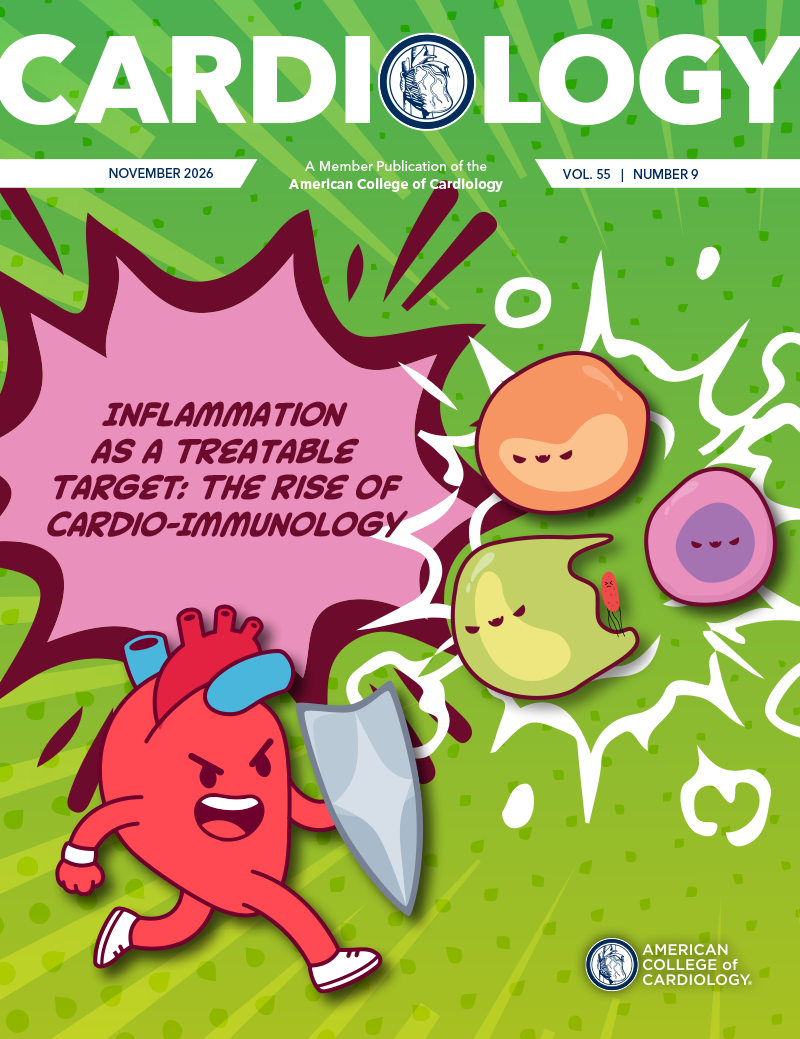
Our cover story this month examines the evolving field of cardio-immunology, defined in an ACC Scientific Statement as the study of how immune cells, molecules and inflammatory processes shape cardiovascular health and disease. Inflammation provides a unifying framework for conditions ranging from atherosclerosis and heart failure to recurrent pericarditis, treatment-related cardiotoxicity and arrhythmia. The question is no longer whether inflammation contributes to cardiovascular disease, but which pathways should be targeted, in which patients and at what stage.
Peter Libby, MD, FACC, captures the concept in six words: "We all study the same disease." He describes the challenge of finding the therapeutic "sweet spot": enough anti-inflammatory activity to protect the heart without weakening immune defenses against cancer and infection.
hsCRP has helped bring inflammation into clinical practice. Elevated hsCRP may identify residual risk not captured by LDL-C or conventional risk calculators, especially in patients with established ASCVD. Yet hsCRP is not disease specific. Infection, injury, smoking, visceral adiposity, autoimmune disease and other conditions may elevate it. Clinicians should interpret hsCRP within the broader clinical phenotype, repeat testing when acute inflammation is suspected and avoid treating an isolated laboratory value.
Clinical trials led by Paul Ridker, MD, FACC, and others established that inflammation is more than a risk marker. CANTOS demonstrated that targeting IL-1β could reduce cardiovascular events without lowering LDL-C. Low-dose colchicine trials showed similar promise in selected patients with coronary disease. Neutral trials are equally instructive: methotrexate neither reduced cardiovascular events nor lowered hsCRP or IL-6, while ziltivekimab markedly suppressed IL-6 and hsCRP in ZEUS but did not reduce major cardiovascular events.
The lesson is fundamental: lowering an inflammatory biomarker does not improve outcomes. For clinicians, the message is practical: optimize established risk factors, recognize residual inflammatory risk, promote physical activity and smoking cessation, address visceral adiposity and use therapies supported by cardiovascular outcomes data.
Braunwald's legacy is not only a body of knowledge, but a way of advancing medicine that links mechanism, evidence and patient care. That is the promise of cardio-immunology: the right inflammatory target, for the right patient, at the right time.
Clinical Topics: Cardiovascular Care Team
Keywords: Cardiology Magazine, ACC Publications, CM-Nov-2026, Inflammation, Allergy and Immunology, History