
AI in Cardiology: From Promise to Practice
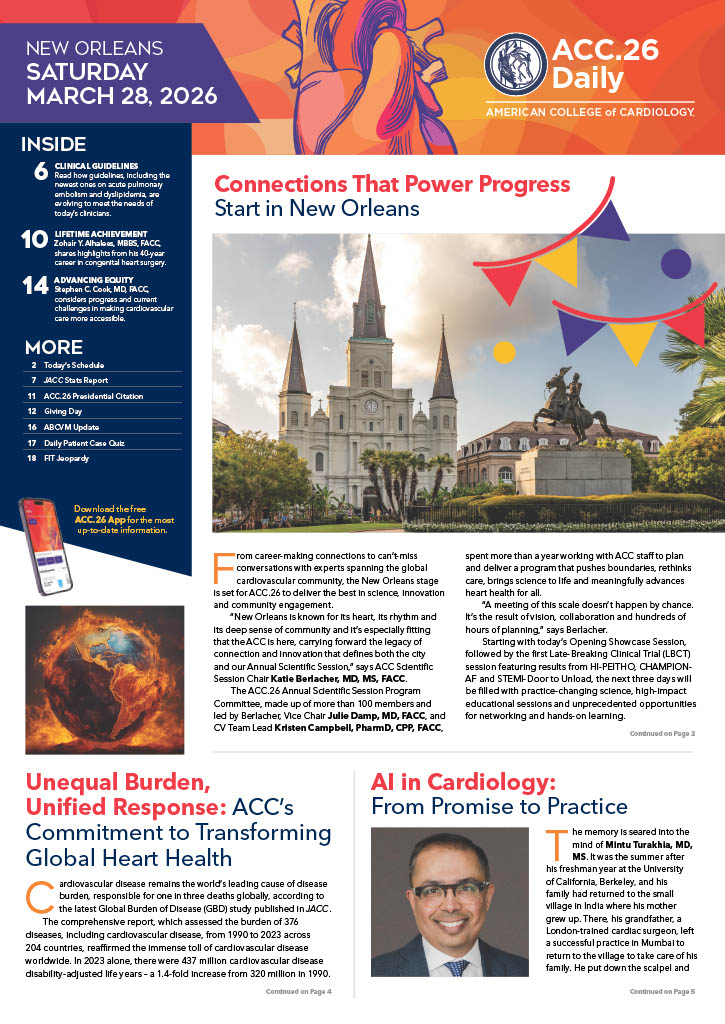
“My grandfather’s only tools were his own knowledge, textbooks, a reflex hammer, a stethoscope and an old suction-bulb 12-lead electrocardiogram (ECG),” Turakhia says. “While I was fascinated with how much he could do with his brain and just a limited set of tools, this was clearly not the way health care delivery could be scaled in India or anywhere.”
Given his majors in computer science and biology, Turakhia integrated computer science and digital technology with medicine. Thirty years later, he is on the forefront of developing those practice-changing tools by bringing artificial intelligence (AI) to cardiovascular medicine.
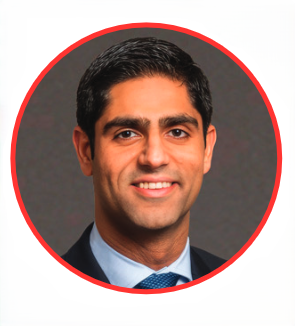
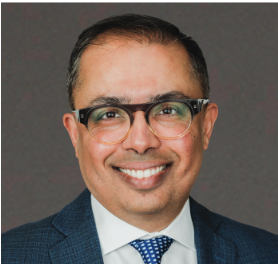
At ACC.26, Turakhia, a professor at Stanford University, founding director of Stanford’s Center for Digital Health, and chief medical and scientific officer of iRhyhtm Technologies, and Rohan Khera, MD, MS, FACC, who directs the Cardiovascular Data Science Lab at Yale University, will bring their deep knowledge of the field to ACC attendees as Keynote speakers.
Their message is clear. The conversation is no longer about whether AI has potential. It is about how to translate that potential into safe, equitable and clinically useful tools.
"Cardiology is uniquely positioned to lead medicine into the AI era," says Turakhia. “We already run well ahead of everyone else around the first lap.” He attributes that advantage to the nature of the specialty itself, “a data-rich field of physiologic signals.” AI adds the ability to extract deeper layers of information from those signals; patterns and risk signatures that even experienced clinicians may miss.
Khera and his colleagues have developed AI models that analyze ECGs not only for rhythm abnormalities but also for markers of reduced cardiac contractility and high- risk conditions like cardiac amyloidosis and hypertrophic cardiomyopathy. His team has also used AI to demonstrate that patients diagnosed with cardiac amyloidosis present to emergency departments with patterns predating their diagnosis by two to three years. Earlier detection, possibly with AI, may have altered their clinical trajectories, he says.
Both Khera and Turakhia say that this moment feels different from prior waves of innovation. What once seemed speculative is now embedded in clinical workflows with devices cleared by the U.S. Food and Drug Administration, AI-powered scribes, and promising research pipelines.
For Turakhia, the critical inflection point is translation. Academic cardiology has produced hundreds of publications demonstrating that AI models can detect arrhythmias, structural disease and risk signatures from common tests. But publication alone does not change patient lives. Moving from podium presentations to practical products requires clarity about the problem to be solved, rigorous validation in real-world settings and alignment with payment models that support adoption.
Both physicians are careful to temper their enthusiasm with realism.
One challenge is clinician acceptance, Khera says. Clinicians must become fluent in interpreting probabilistic outputs, understanding model limitations and integrating AI-generated insights into clinical judgment, rather than deferring to them.
Another concern is “de-skilling,” where trainees are no longer required to learn certain skills because of technology. “We will potentially lose some skills but will need to develop new ones, and so there will be an evolution of what it means to be a cardiologist,” Khera says.
Underlying both talks is a broader vision: that AI, if implemented appropriately, can expand access to high-quality cardiovascular care beyond the walls of academic medical centers. Moving forward, those same tools that enhance workflow in well-resourced practices should support earlier detection and triage in rural hospitals or underserved regions like Turakhia’s family village.
Don’t miss AI Intensive sessions at ACC.26! The Louis F. Bishop Keynote, presented by Turakhia, will commence today at noon in the Main Tent, Great Hall. The Douglas P. Zipes, MD, MACC, Distinguished Young Scientist Award Keynote, featuring Khera, will take place tomorrow at 8:30 a.m. in Room 356.
Keywords: Cardiology Magazine, ACC Publications, ACC Annual Scientific Session, ACC26, Artificial Intelligence
