
Temporal Trends and Predictors of Cardiac Arrest During PCI | NCDR Study
Although risk-adjusted intraprocedural cardiac arrest (IPCA) during PCI rose from 2018 to 2023, risk-adjusted in-hospital mortality declined slightly, according to a study recently published in JACC: Cardiovascular Interventions. This analysis of ACC's CathPCI Registry also identified several patient- and procedure-related predictors of IPCA.
Ramya C. Mosarla, MD, FACC, et al., included 3,956,840 PCI procedures from 2018 to 2023, exploring temporal trends in IPCA and in-hospital mortality and determining predictors of cardiac arrest during PCI. Overall, 36,755 IPCA events were observed. Cardiac arrest was seen in 0.24% of elective PCIs, 0.32% of PCIs for stable coronary artery disease and 1.28% of PCIs for acute coronary syndromes (ACS). Of patients who suffered IPCA, 40.5% died in the hospital.
IPCA rates increased over the course of the study period (0.62% in 2018 to 1.07% in 2023; p<0.0001). Of note, despite risk-adjusted IPCA increasing over time (0.79% to 0.95%; p=0.042), risk-adjusted mortality declined slightly over the same period (45.1% to 43.6%; p=0.027).
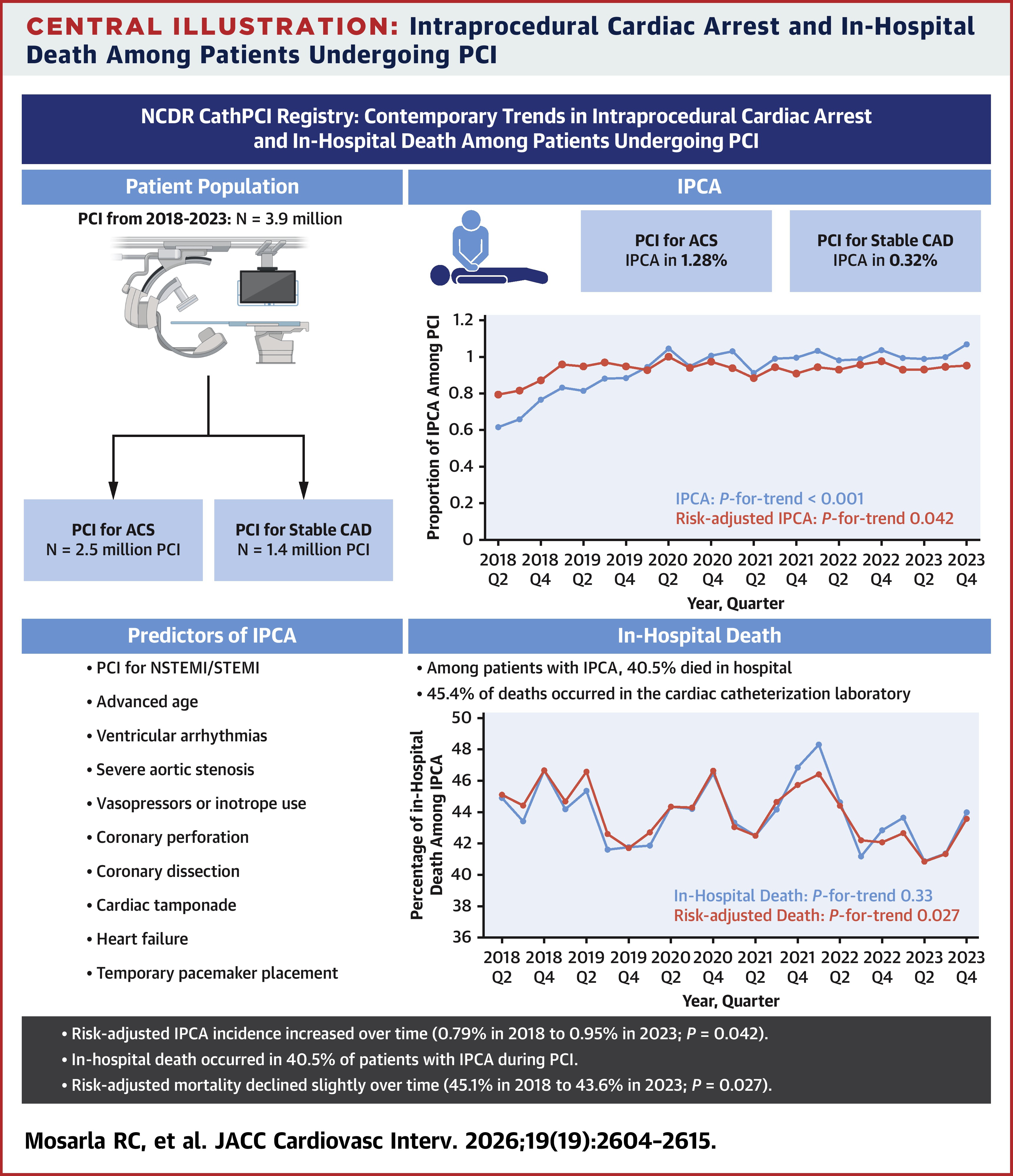
Predictors of IPCA included PCI for STEMI, non-ST-segment ACS, increasing age, ventricular arrhythmias, severe aortic stenosis, vasopressors or inotrope use, mechanical circulatory support, coronary perforation, coronary dissection, cardiac tamponade, intraprocedural heart failure or myocardial infarction, and temporary cardiac pacemaker implantation.
"Although several patient- and procedural risk factors appear to be independently associated with IPCA, few are modifiable," note the authors. "Still, the findings in the present study are valuable in that they may inform case selection for PCI and risk-benefit conversations with patients, particularly among those with elective indications for coronary revascularization focused on improving quality of life."
In an accompanying editorial comment, Sundeep Shenoy, MD, MBA, FACC, and Kapil Lotun, MD, add that "Nearly half of all deaths after IPCA occur while the patient is still in the cath lab, raising an uncomfortable question about how effectively we recognize deterioration and rescue patients from catastrophic procedural complications... Once IPCA occurs, the outcome is unlikely to depend on operator expertise alone; it also reflects the surrounding system: Team coordination, rapid recognition, coordinated resuscitation, speed of escalation of hemodynamic support and postarrest care."
Clinical Topics: Arrhythmias and Clinical EP, Cardiovascular Care Team, Invasive Cardiovascular Angiography and Intervention, Implantable Devices, SCD/Ventricular Arrhythmias
Keywords: National Cardiovascular Data Registries, CathPCI Registry, Percutaneous Coronary Intervention, Registries, Heart Arrest
