
ACC Quality Summit Explores AI’s Role in the Future of CV Care
John Rumsfeld, MD, PhD, MACC, the Ralph G. Brindis Keynote speaker at ACC Quality Summit 2026, is not only a global leader in health technology and AI, but also a deeply respected figure within the ACC community.
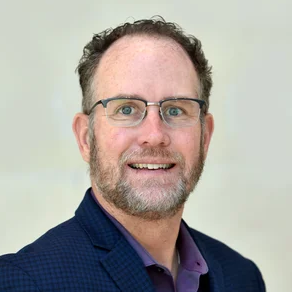
The current director of health technologies at Meta and professor of medicine at the University of Colorado shared his thoughts on AI and quality care ahead of his 2026 address.
What are some of the most meaningful ways generative AI is already affecting clinicians and patients today?
Hundreds of millions of consumers are asking questions of large language models (LLMs) each week, and it's estimated that over 80% of U.S. physicians are now routinely using LLMs. Over the last decade, AI in health care grew slowly and largely 'in the background.' Now, clinicians actively use it as a source of clinical knowledge, and ambient AI (or so-called AI scribes) are becoming ubiquitous. AI is increasingly being deployed to reduce administrative burden, though there's still a lot of room to improve.
As both a cardiologist and technology leader, what excites you the most about AI's future in cardiovascular care?
It's already clear that clinicians plus AI can outperform clinicians alone in many aspects of clinical care. If we deploy them correctly – with leadership from the medical profession – they can and will make us better at what we do and improve both our lives and those of our patients and their families.
Many forces are coming together that suggest AI will assume an increasingly large role in health care ... We have a growing physician shortage and aging populations ... It is likely AI will start to fill gaps in care such as in rural care or first-line primary care – sooner than many expect.
How can clinicians embrace AI while ensuring quality, safety and accountability remain paramount?
Medical professionals need to understand what AI can do ... and equally what the limitations are, especially where risk is highest such as diagnosis and treatment. Consumer and medical use of AI related to health is growing faster than robust evaluations of its safety and effectiveness. There is a real role for the medical profession to lead on AI evaluations, as well as need for rapid evolution in things like regulatory accountability – you can see the U.S. Food and Drug Administration trying to move fast in this direction, recently approving the first patient-facing LLM.
What do you see as the biggest opportunity for AI to improve outcomes over the next decade?
It's a challenging question because we are right in the middle of the revolution of generative AI...The promise is indeed very high.
AI should help us address physician shortages and other gaps in medical care delivery; improve efficiency such as reducing unnecessary variation in care and administrative burdens for both clinicians and patients; promote health and prevention at scale; and, perhaps paradoxically, optimize the humanity of medicine by augmenting clinicians, improving efficiency, and filling gaps in front-line care. This will require all of us to lead how AI is implemented in health care. It will happen, so we should guide how it happens.
Clinical Topics: Cardiovascular Care Team
Keywords: Quality Summit, Artificial Intelligence, Delivery of Health Care, Social Responsibility, Technology, Leadership
