
CV Risk Factor Treatment, Control Rates Low Among Adults With CKM
Treatment of hypertension and hyperlipidemia was low among U.S. adults with cardiovascular-kidney-metabolic (CKM) syndrome, with less than half achieving blood pressure or glycemic control, and gaps in starting treatment were greatest among women, young adults and Hispanic adults. Furthermore, inadequate risk factor control was highest among those with the highest cardiovascular risk, according to research published June 17 in JACC.
The assessment identified 6,384 adults aged ≥20 years with CKM stage 2 or above (weighted mean age, 44 years; 51% women) through self-reported data in the National Health and Nutrition Examination Survey (2015-2023).
Results showed that only 51% of participants with hypertension and 49% of those with hyperlipidemia were receiving treatment, with treatment rates declining from 56% to 44% and from 53% to 40% respectively across the study period. In contrast, among participants with diabetes, 84% received treatment, with rates increasing from 76% to 88%.
Additionally, control of blood pressure and glycemia was achieved in only 45% and 47% of treated individuals, respectively, with rates remaining largely unchanged across the study period. Cholesterol control was substantially higher at 68% of treated individuals.
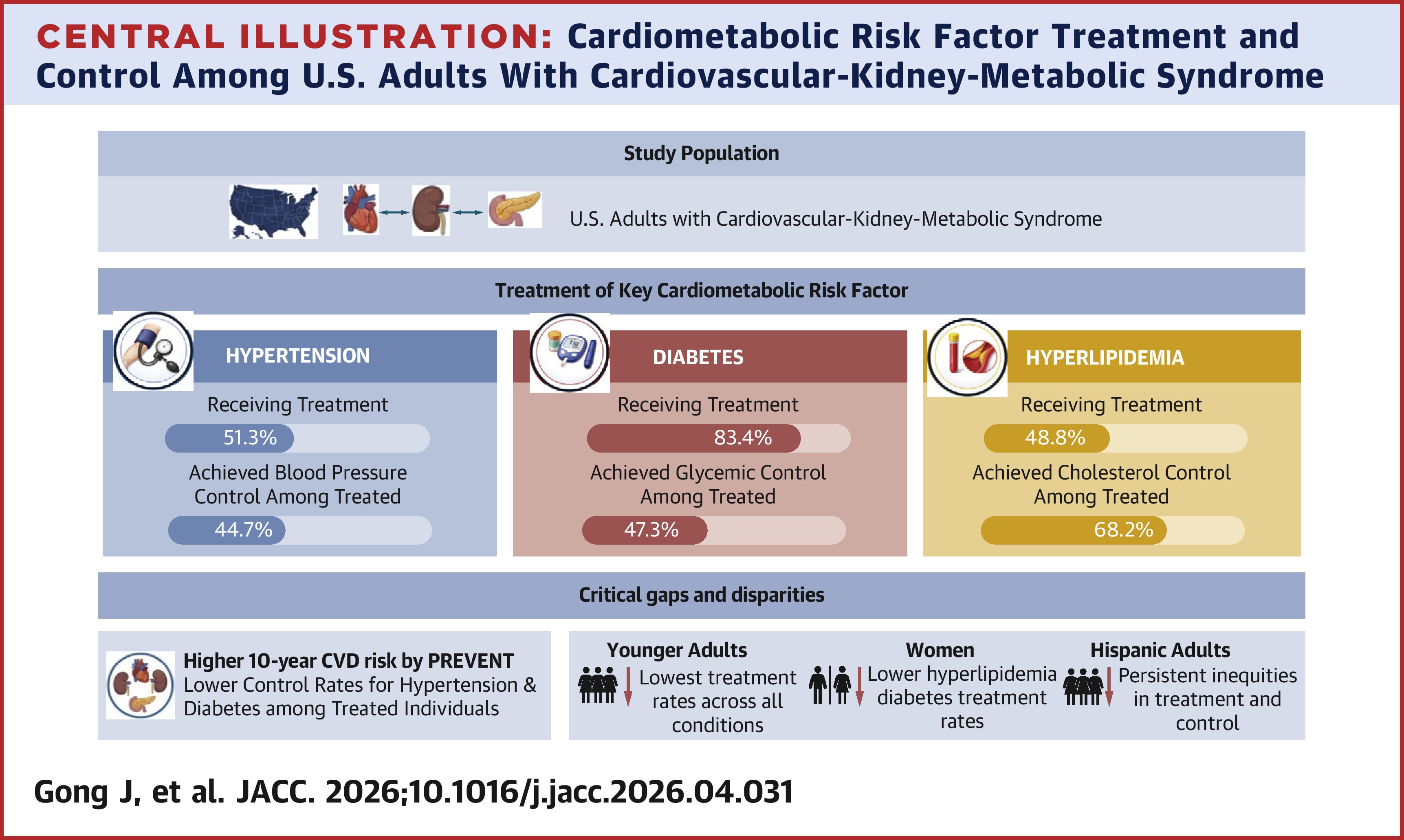
Younger adults (20-44 years old) had the lowest treatment rates for hypertension (28%), diabetes (74%) and hyperlipidemia (20%), and women were less likely than men to receive treatment for diabetes and hyperlipidemia. Hispanic adults among all racial and ethnic subgroups were the least likely to receive treatment for hypertension and hyperlipidemia.
Notably among risk strata, blood pressure control declined by roughly 4% with every 5% increase in 10-year cardiovascular disease risk (relative risk, 0.96). Glycemia control remained suboptimal across all strata.
“These trends are particularly concerning considering the rising [cardiovascular] mortality and persistent disparities,” write Josephine L. Harrington, MD, and Ambarish Pandey, MD, in an accompanying editorial comment. “In our view, the more actionable signal in these data is not undertreatment of the lowest-risk patients but suboptimal control of the highest-risk ones, a distinction that could inform where implementation effort should be directed.”
To that end, “achieving population-level improvements in CKM health will therefore require coordinated, multilevel strategies that harness innovative care-delivery models, expand awareness and access, and strengthen clinician screening and treatment practices,” write study investigators Jingyi Gong, MD; Rishi K. Wadhera, MD, MPP, MPHIL, et al.
Clinical Topics: Dyslipidemia, Prevention, Lipid Metabolism, Nonstatins, Hypertension
Keywords: Blood Pressure, Glycemic Control, Hyperlipidemias, Heart Disease Risk Factors, Hypertension, Cholesterol, Diabetes Mellitus, Kidney
