Surgical Bailout During TAVR Declining, Yet Early Mortality Remains High
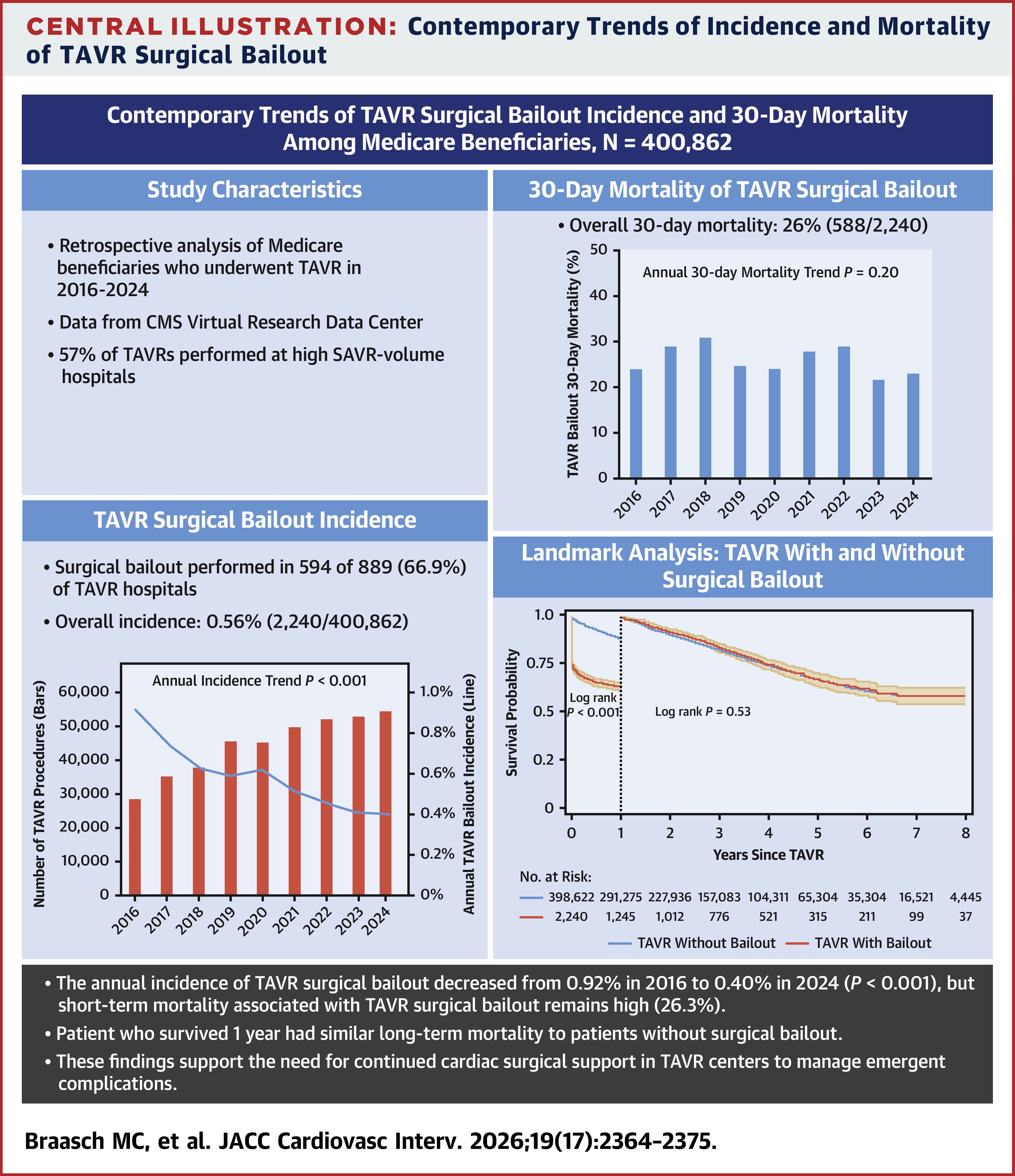
The annual incidence of surgical bailout during TAVR is declining, but short-term mortality for patients who experience emergent complications remains high, according to new data published in JACC: Cardiovascular Interventions. However, research also shows that those who survive the first year following surgical bailout have comparable long-term outcomes with those who didn't require surgery.
A contemporary analysis by Maxwell C. Braasch, MD, et al., analyzed annual trends from more than 400,000 Medicare beneficiaries in the Centers for Medicare and Medicaid Services database who underwent TAVR between 2016 and 2024. Overall results found TAVR bailout occurred in 0.56% of TAVRs. However, the annual incidence of TAVR bailout decreased from 0.92% in 2016 to 0.40% in 2024.
Braasch and colleagues also noted that higher mortality was observed among those needing surgical bailout up to one year after TAVR, but rates of mortality were similar after one year. "These data support the need for continued cardiac surgical support in TAVR centers to manage emergent complications," they said.
In a related editorial comment, Benjamin M. Hibbert, MD, PhD, FACC, notes the data from the study makes the case for "the rise of the solo TAVR operator, capable of evaluation, procedural excellence, and follow-up." Using data from Braasch, et al., "one could envision hub-and-spoke models concentrating low-risk cases at nonsurgical sites, resulting in negligible rates of need for emergency surgery," he writes.
In another editorial comment, Busra Cangut, MD; Mateo Marin-Cuartas, MD; and Gilbert H.L. Tang, MD, MSc, MBA, FACC, raise concerns about the removal of cardiac surgical requirement from the recent TAVR National Coverage Determination. "Surgical bailout during TAVR is uncommon, but when it is required, it must occur immediately, and it saves lives," they write. "...Rather than diminishing the role of the Heart Team, efforts should focus on optimizing multidisciplinary collaboration, preventing catastrophic complications whenever possible, and ensuring that every patient has immediate access to definitive surgical rescue when prevention fails."
The ACC continues to work with partner societies, including The Society of Thoracic Surgeons and the Society for Cardiovascular Angiography & Interventions, to advocate for the preservation of the Heart Team, continued collaboration across specialties, collection of real-world evidence via national data registries, outcomes monitoring, and continuous quality improvement when it comes to ensuring and improving outcomes for patients with severe aortic stenosis.
Clinical Topics: Cardiac Surgery, Cardiovascular Care Team, Invasive Cardiovascular Angiography and Intervention, Valvular Heart Disease, Aortic Surgery, Cardiac Surgery and VHD, Interventions and Structural Heart Disease
Keywords: Transcatheter Aortic Valve Replacement, Aortic Valve Stenosis, Heart Valve Diseases
