ACC Scientific Statement Calls For Exercise Prescription as Key Element of Routine CV Care
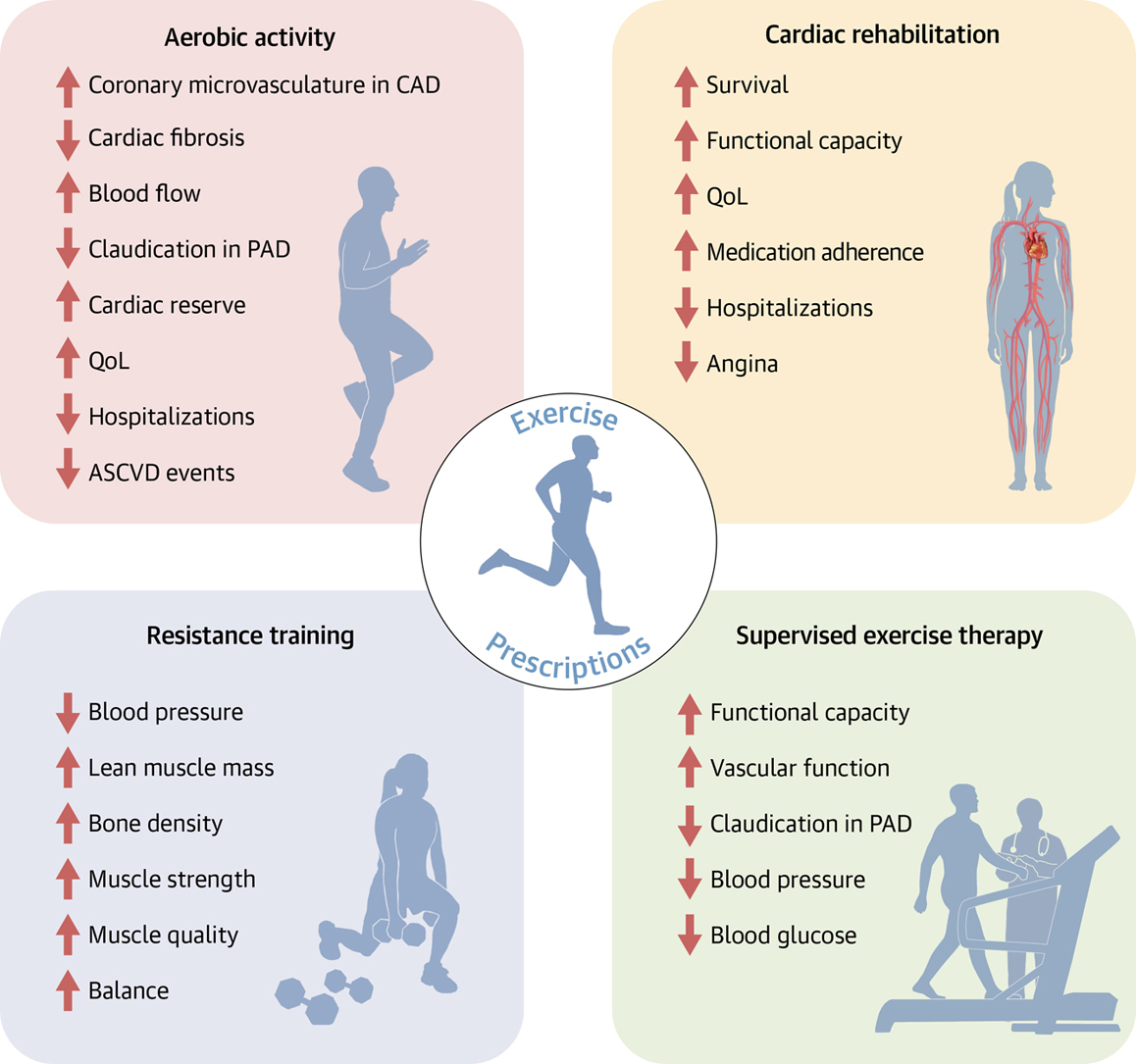
Exercise should be prescribed as a foundational component of routine cardiovascular care, according to a new ACC Scientific Statement on Exercise Prescriptions for Cardiovascular Health in Adults. Read the full statement in JACC.
More Activity, More Benefit
The Statement provides clinicians with contemporary, evidence-based guidance on exercise prescription across the spectrum of cardiovascular disease prevention and management. Importantly, it underscores that the greatest gains occur when individuals transition from inactivity to regular physical activity, with further benefits associated with increasing activity volume and intensity as clinically appropriate.
"The most important message is that some activity is better than none," said Writing Committee Chair Jonathan N. Myers, PhD. "Patients do not need to become athletes to improve their cardiovascular health. Small increases in physical activity can produce meaningful benefits, particularly for those who are currently inactive."
For example, the statement highlights growing evidence that meaningful cardiovascular benefits can be achieved well below 10,000 steps per day, with approximately 5,000 to 7,000 daily steps associated with lower cardiovascular and all-cause mortality for many adults.
Key Recommendations
- Exercise prescriptions should be individualized based on a patient's cardiovascular condition, functional capacity, symptoms, treatment goals and preferences.
- Resistance training should complement aerobic exercise for most adults.
- Wearable devices and virtual or home-based rehabilitation programs may help support exercise participation and long-term adherence, particularly when combined with structured programs such as cardiac rehabilitation.
- Routine exercise testing is not required before starting exercise for most asymptomatic or clinically stable individuals but can provide valuable information for individualized exercise prescription when clinically appropriate.
- Cardiac rehabilitation remains first-line treatment for many patients with CVD and access should be expanded. While insurance reimbursement remains a barrier to entry for many, individualized exercise prescriptions should be provided to those with known CVD who are unable to participate in formal cardiac rehabilitation.
The Statement also calls for greater integration of exercise counseling into routine cardiovascular care, improved clinician training, expanded access to cardiac rehabilitation and further research "on long-term adherence, clinical outcomes, diverse populations, and scalable delivery models."
"Exercise is one of the most effective therapies available for preventing and managing [cardiovascular disease], yet it remains underutilized in routine care," Myers said. "This statement provides clinicians with practical tools to help patients safely incorporate exercise into their treatment plans and improve long-term cardiovascular health."
Clinical Topics: Cardiovascular Care Team, Diabetes and Cardiometabolic Disease, Prevention, Sports and Exercise Cardiology, Exercise, Sports and Exercise and ECG and Stress Testing
Keywords: Exercise Test, Cardiac Rehabilitation, Prescriptions, Athletes, Exercise, Wearable Electronic Devices, Resistance Training