Learn More About the Fellowship – OnDemand Information Session

Health equity champions Thad F. Waites, MD, MACC, and Katie L. Berlacher, MD, MS, FACC, deep dive into this exciting opportunity that is providing up to $70,000 in funding and support to a Fellow-in-Training or Early Career cardiologist.

Hero Image

Thad and Gerry Waites Rural Cardiovascular Research Fellowship

The Thad and Gerry Waites Rural Cardiovascular Research Fellowship (Fellowship) will provide up to $70,000 in funding and support to a Fellow-in-Training or an early-career cardiologist committed to reducing cardiovascular disparities in rural and underserved populations through innovative, data-driven clinical interventions, community engagement and rigorous implementation science research.

The ACC believes in advancing the research of and care to underserved populations. The Fellowship will be awarded to an applicant who meets the criteria and demonstrates a clear dedication to rural cardiovascular care, health equity and community engagement.

Application Open!

Please email ruralcvfellowship@acc.org with any questions.
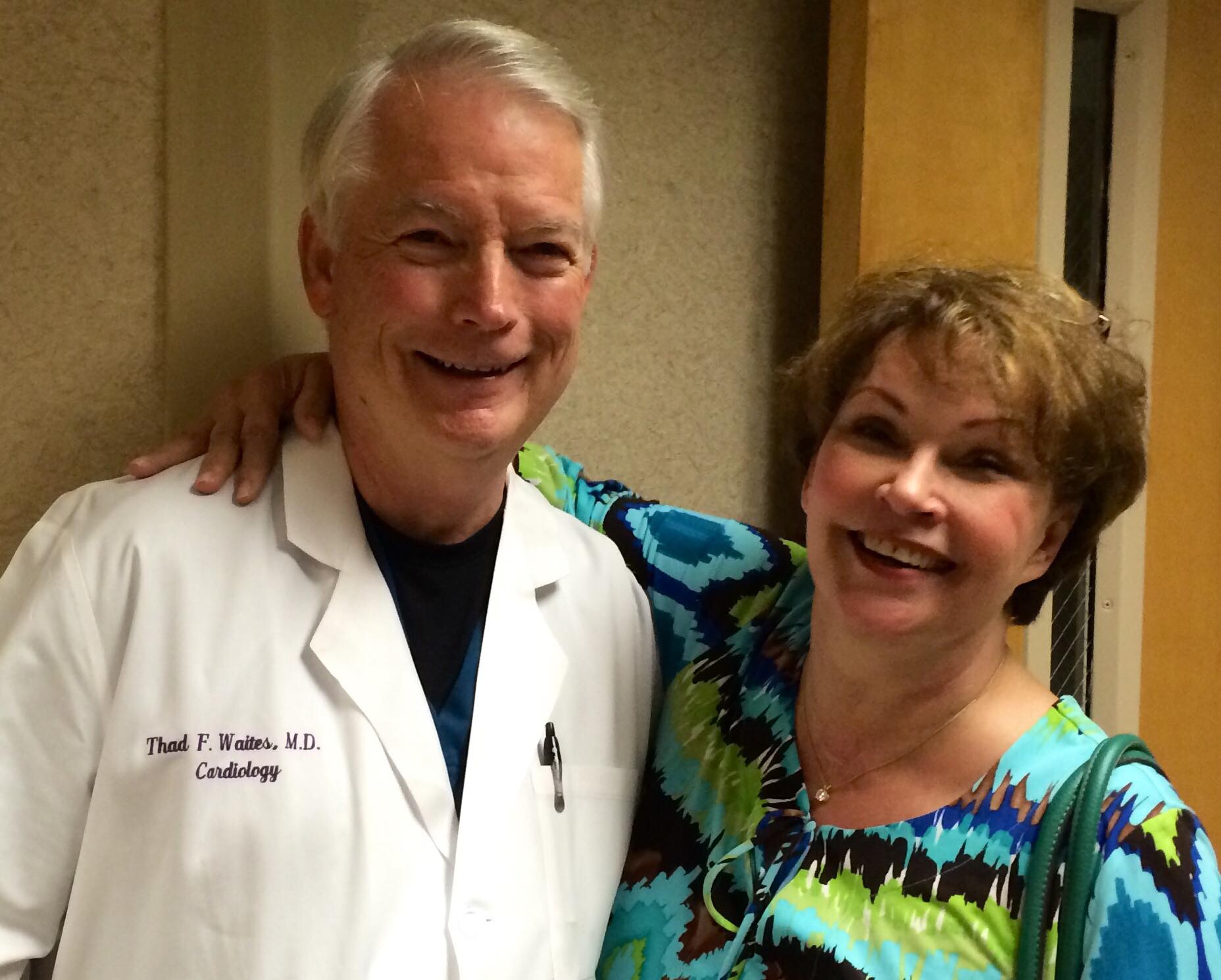
Thad F. Waites, MD, MACC and Gerry Waites

The Award

The awardee will receive a one-time grant of up to $70,000 for research and travel. Additional funding is set aside for training, implementation and administrative costs.

Who Can Apply

Applicants must:

  • Be a current cardiovascular Fellow-in-Training or within three years post-cardiology fellowship completion
  • Demonstrate commitment to rural cardiovascular health, equity-driven research and community-based interventions
  • Receive commitment from a sponsoring institution, clearly documented in writing, to support the fellow's participation in the fellowship and agreement to fund any additional indirect costs exceeding the $10,000 allowance provided by the award

How to Apply

You will need the following items to complete the application:
  • Cover Letter (1 page)
    • State candidate qualifications, alignment with fellowship objectives and clear motivation for application.
  • Applicant Personal Statement (maximum 2 pages)
    • Clearly describe career aspirations, professional background, and previous experiences relevant to rural cardiovascular care, health equity and community engagement.
  • Research Proposal (maximum 6 pages, excluding references, and clearly structured into the sections outlined below)
    1. Background & Significance:
      • Identify specific cardiovascular disparities targeted.
      • Use of the Nationwide Readmissions Database (NRD), National Inpatient Sample (NIS), American Community Survey (ACS) and ACC Health Equity Heat Map to establish baseline conditions and justify site selection.
    2. Specific Aims & Hypotheses:
      • Clearly defined, measurable, and feasible objectives aligned with fellowship goals.
    3. Methods & Implementation Approach:
      • Explicitly detail planned interventions (e.g., community health worker (CHW) training, telehealth, patient education or community engagement).
      • Clearly articulate integration and application of CFIR and RE-AIM frameworks.
    4. Expected Outcomes & Metrics:
      • Clinical outcomes (e.g., reductions in hospitalization, improved BP control, reduced cardiovascular disparities).
      • Clear measurement criteria, evaluation methodology and analytical strategies utilizing provided data resources.
    5. Sustainability & Scalability Plan:
      • Strategies for sustaining and scaling effective interventions beyond the fellowship term.
  • Sponsoring Institution Letter of Commitment (maximum 2 pages)
    • Clearly detail institutional capacity, infrastructure, mentorship commitments and resources provided to the fellow.
    • Explicitly acknowledge institutional financial responsibility for all indirect, administrative, overhead, or additional academic expenses exceeding the defined indirect cost allowance ($10,000) provided by the fellowship award.
  • NIH-Format Biographical Sketch (maximum 5 pages)
    • Include CV highlighting education, training, professional experiences, relevant publications and contributions.
  • Two Letters of Recommendation
    • Letters should endorse applicant qualifications, institutional support and capacity to fulfill fellowship expectations.

Approval Process

  • The Fellowship Review and Selection Committee may request additional information or documentation from the applicant if necessary.
  • Approval will be based on the application and virtual interview.

Fellowship Schedule

  • Oct. 22, 2026: Application submission deadline (11:59 p.m. ET)
  • November 2026: Committee review and scoring
  • January 2027: Semi-finalist notification; virtual interviews
  • April 2027: Finalist announced
  • May 2027: Onboarding

Fund Guidelines and Responsibilities

  • Applicants may be asked to provide feedback on the impact of the funds received from the Fellowship.
  • If an individual's application is approved, then the recipient must agree to use the funds for the purpose outlined in the application.
  • Fellowship Recipient Responsibilities:
    • Research the delivery of clinical cardiovascular care in rural and underserved settings.
    • Design and implement community-based interventions, including health screenings and educational fairs.
    • Apply implementation science frameworks (e.g., CFIR, RE-AIM) to guide, monitor and evaluate site-specific projects.
    • Analyze national and local datasets to inform intervention design and assess impact.
    • Submit at least one (1) manuscript to a peer-reviewed journal and contribute to toolkits, reports and other scholarly outputs.
    • Present project findings and updatesat ACC Chapter meetings and other relevant professional forums.
    • Maintain an active mentorship relationship with an ACC-assigned mentor throughout the Fellowship year.
    • Collaborate with preceptors and host sites to complete onboarding, conduct research activities and communicate with Fellowship Program Directors and ACC staff on progress.
    • Participate in ACC-sponsored events, publications, and webinars as a representative of the Fellowship program.
    • Arrange personal travel and lodging for rotations and submit expenses for reimbursement pursuant to ACC policies.
    • Attend and contribute to local and state-level public health and policy meetings, as applicable.
    • Lead or assist with community health education events focused on cardiovascular risk reduction.
    • Maintain regular communication, reporting and debriefs with the Fellowship Program Directors, ACC staff and host site teams.
      • Dedicate approximately 75-80% of the year's professional time and best efforts to the performance of the research activities set forth in the research proposal.
      • Cooperate with each rotation site to fulfill credentialing requirements for access to the host site facilities.
      • Execute and comply with any Data Use Agreements required to carry out the research activities.
      • Complete ACCF-required training on the protection of human subjects.
      • Provide ACC with de-identified data produced by fellow during the course of the Fellowship research activities.
      • Submit to ACC for review and approval any proposed publication or distribution of aggregate data or reports produced in connection with the Fellowship (e.g., abstracts and manuscripts).
  • ACC Responsibilities:
    • Provide administrative, financial, and programmatic oversight of the Program.
    • Support the fellow's access to data resources and analytic tools (e.g., NRD NIS, ACS and ACC Health Equity Heat Map) in furtherance of the research activities.
    • Manage community resources and training ($10,000 budget)
    • Oversee Fellowship administration, reimburse fellow travel expenses and ensure structured mentorship. Anticipated host sites are located in Mississippi, West Virginia, Georgia and Washington.
    • Review and approve fellow's proposed publication or distribution of aggregate data or reports produced in connection with the Fellowship (e.g., abstracts and manuscripts).
  • Sponsoring Institution Responsibilities:
    • Permit the fellow to devote no less than 75-80% of the fellow's professional time to the performance of research activities set forth in the research proposal, including participation in rotations at each host site.
    • Maintain the fellow's fellowship appointment at the institution during the Program term, academic oversight, and insurance for the fellow's activities.
    • Provide robust mentorship and administrative support.
    • Provide financial support for any institutional costs exceeding the $10,000 allowance provided as part of the Fellowship award.
    • Support regulatory and compliance documentation.

Questions?

Find additional details in the FAQ sheet.