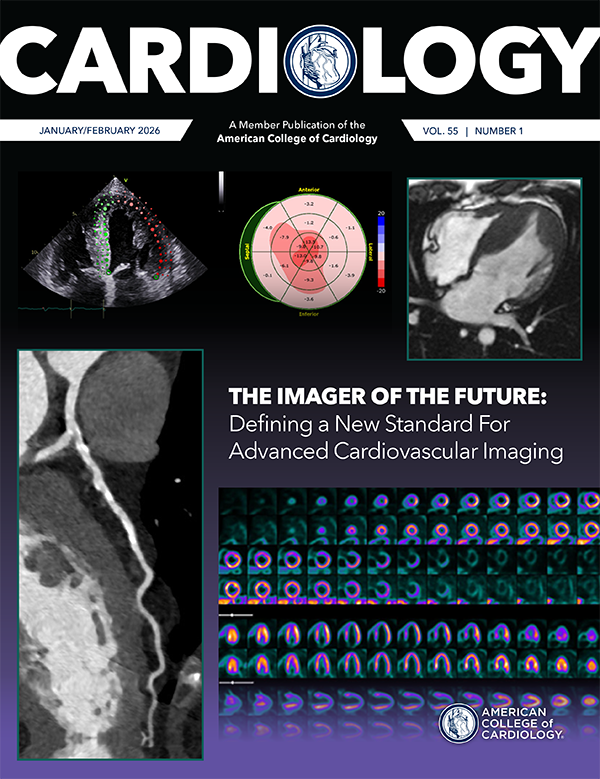
Cover Story | The Imager of the Future: Defining a New Standard For Advanced Cardiovascular Imaging
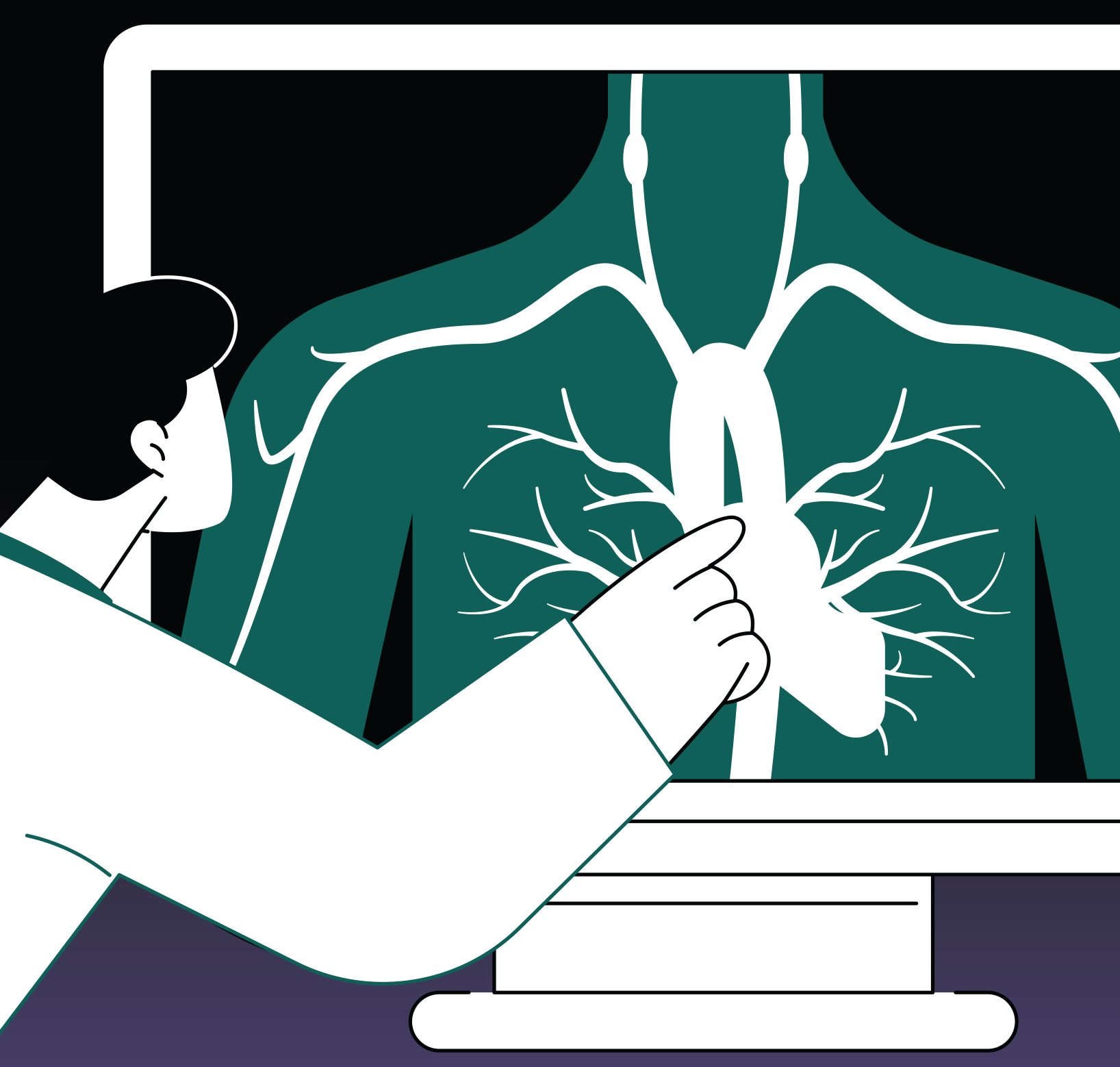
Cardiovascular imaging is undergoing a profound transformation. Advances in technology, the expansion of imaging modalities, and rising expectations for precision and patient-centered care have reshaped how imaging informs diagnosis and management across the cardiovascular continuum. In response, the new multisociety Advanced Training Statement on Advanced Cardiovascular Imaging, published in JACC late last year, sets forth a bold and comprehensive vision for the imager of the future – one that reflects both the complexity and the promise of modern cardiovascular care.
Co-chaired by Lauren Anne Baldassarre, MD, FACC, and Lisa A. Mendes, MD, FACC, the statement defines the core competencies and training requirements necessary for advanced cardiovascular imagers across all four major imaging modalities: echocardiography, cardiac computed tomography (CCT), nuclear cardiology and cardiac magnetic resonance (CMR). Supported by 25 professional societies, including the ACC, the document underscores the central role of multimodality imaging in contemporary practice and the urgent need for training pathways that keep pace with innovation.
At the heart of the statement is a clear and ambitious definition. "The new training statement defines the imager of the future by laying out the new definition of an advanced imager as a cardiologist who practices all four major imaging modalities," said ACC President Christopher M. Kramer, MD, FACC, in a JACC Leadership Page. "This is a bold definition that will push trainees to expand their horizons and search out programs that are able to train them in all of the modalities."
That boldness is intentional. As Kramer notes in his leadership commentary, "Gone are the days when it was sufficient to finish fellowship and be competent in one modality." While deep expertise in a single modality remains highly valued, today's clinical reality increasingly demands multimodality fluency guided by the principle of the right test for the right patient. To achieve this, imagers must understand not only how to perform and interpret studies, but also the strengths, limitations and optimal applications of each modality within a given clinical context.
The training statement reflects this evolution by emphasizing integration as a foundational skill. Rather than viewing echocardiography, CCT, nuclear cardiology and CMR as siloed disciplines, the document calls for imagers who can synthesize findings across modalities and integrate imaging data with clinical information to guide patient management. As the authors write, the goal is to prepare trainees to become "consulting cardiovascular imaging specialists who can guide decision-making regarding the appropriate imaging test or series of tests that may be required to inform patient management and optimize patient outcomes."
To support this vision, the statement outlines comprehensive standards for faculty, facilities, equipment and multidisciplinary collaboration, as well as detailed guidance on training workflows. These include didactic education, modality selection, image acquisition and quality assessment, patient safety, occupational risk management, image interpretation and reporting, and engagement in research and scholarly activity. Competency-based education is central, with defined milestones, procedural volume expectations, and attention to professional behaviors, leadership and administrative skills.
Importantly, the document recognizes that achieving competence across all modalities requires additional training beyond general cardiology fellowship. At the same time, it encourages programs to introduce imaging exposure early in fellowship to reduce the overall training burden. Where full multimodality training is not available at a single institution, which is often the case for newer modalities like CMR and CCT, the statement urges programs to facilitate training through visiting fellowships or external partnerships.
Kramer addresses this reality directly: "This begs the question: what happens to the trainee whose program does not offer one or more of the imaging modalities?" His answer is pragmatic, stressing the need to leverage existing visiting fellowships and cross-institutional collaborations to ensure equitable access to training opportunities.
Beyond structure and curriculum, the statement also looks ahead to the technological forces shaping imaging's future, particularly artificial intelligence (AI). AI is already transforming every modality, from automated image acquisition and segmentation to enhanced diagnostic accuracy and workflow efficiency. Kramer highlights its growing impact across echo, PET, CMR and CT angiography, while offering a critical reminder: "AI will not replace physicians, but those who do not embrace it will be replaced."
The imager of the future must be both technologically fluent and clinically grounded, capable of validating AI-assisted insights through expert review of primary images. "We need highly trained, advanced multimodality imaging specialists who will be able to select between the different tests and integrate all the information to improve patient care," says Writing Committee Vice Chair Ron Blankstein, MD, FACC. "Understanding both the strengths of AI but also the limitations and being able to assess the output and whether it's valid or not is critically important."
Another challenge on the horizon is certification. Currently, multimodality imagers often face the burden of maintaining separate certifications for each modality. While discussions are ongoing among imaging boards and societies to develop more integrated approaches, the statement reinforces the need for collaboration to align certification with the realities of modern practice.
One potential path forward is the formation of a multisociety task force (including the ACC and the American College of Radiology) to establish a pathway toward joint fellowship accreditation in advanced cardiac imaging for both cardiologists and radiologists, write Naman Upadhyay, MD; Paco E. Bravo, MD; and Vivek T. Kulkarni, MD, FACC, in a JACC viewpoint article. ACGME accreditation can further standardize the application cycle, training experiences and access to funding. "...In combination with existing COCATS guidance, board certification examinations, and this training statement, formalized accreditation would help propel advanced cardiac imaging education to the same high-level standardized education that we expect from other cardiac specialties. The road may be long, but the destination is worth the effort."
Ultimately, the Advanced Imaging Training Statement is more than a set of requirements. It is a call to action, challenging trainees to broaden their skill sets, challenging programs to rethink training models, and challenging the cardiovascular community to embrace a more integrated, patient-centered approach to imaging. As cardiovascular disease grows ever more complex, so too must the expertise of those who image it, ensuring that advanced imaging remains not just a diagnostic tool, but a cornerstone of better outcomes for patients everywhere.

Looking For More?
- Listen to an ACC CardiaCast "Heart Vision" podcast from the ACC Cardiovascular Imaging Section Leadership Council discussing why the statement was needed and practical takeaways for trainees, educators and clinicians.
- Read "Key Points" from the Advanced Training Statement authored by the Writing Committee co-chairs.
- Read Kramer's Leadership Page in JACC.
- Access the complete Advanced CV Imaging Training Statement.

The Future of Imaging: Why You Should Attend
With cardiovascular imaging at the heart of precision medicine, ACC.26 will offer clinicians opportunities to elevate their expertise, connect with global leaders and be at the forefront of late-breaking science.
This year's Multimodal Imaging Learning Pathway spans the full spectrum of imaging – from foundational applications in structural and coronary disease to cutting-edge technologies shaping tomorrow's practice. Through case-based discussions, interactive debates and real-time audience engagement, recent guidelines and training statements clinicians will come away with actionable knowledge on how to:
- Master Complex Diagnoses: Learn how imaging informs challenging conditions such as sarcoidosis and amyloidosis.
- Enhance Procedural Planning: Discover strategies for valvular and structural interventions.
- Explore Innovation: Dive into AI-driven imaging, evolving training standards and workforce solutions.
Session Highlights:
Don't miss dynamic sessions, groundbreaking science, and collaborative discussions that will redefine how imaging drives diagnosis, management and innovation. Examples include:
- Parade of Patients: Cardiovascular Testing Before Non-Cardiac Surgery and Sports Participation (Session 230)
- From Code to Clinic: AI Transforming Cardiac Imaging (Session 304)
- Demystifying Diastole: Guideline-Based Insights and Challenging Cases (Session 244)
- Icons and Impactful Innovations in Imaging (Session 379)
- Jeopardy: Ultimate Imaging Face-Off (Session 262)
Clinical Topics: Noninvasive Imaging, Echocardiography/Ultrasound
Keywords: Cardiology Magazine, ACC Publications, CM-Jan-Feb-2026, Patient-Centered Care, Imaging, Cardiac Imaging Techniques, Magnetic Resonance Spectroscopy, Tomography, Echocardiography, Faculty
