Quality Improvement for Institutions | ACC Quality Summit: Bold Insights, Shared Solutions
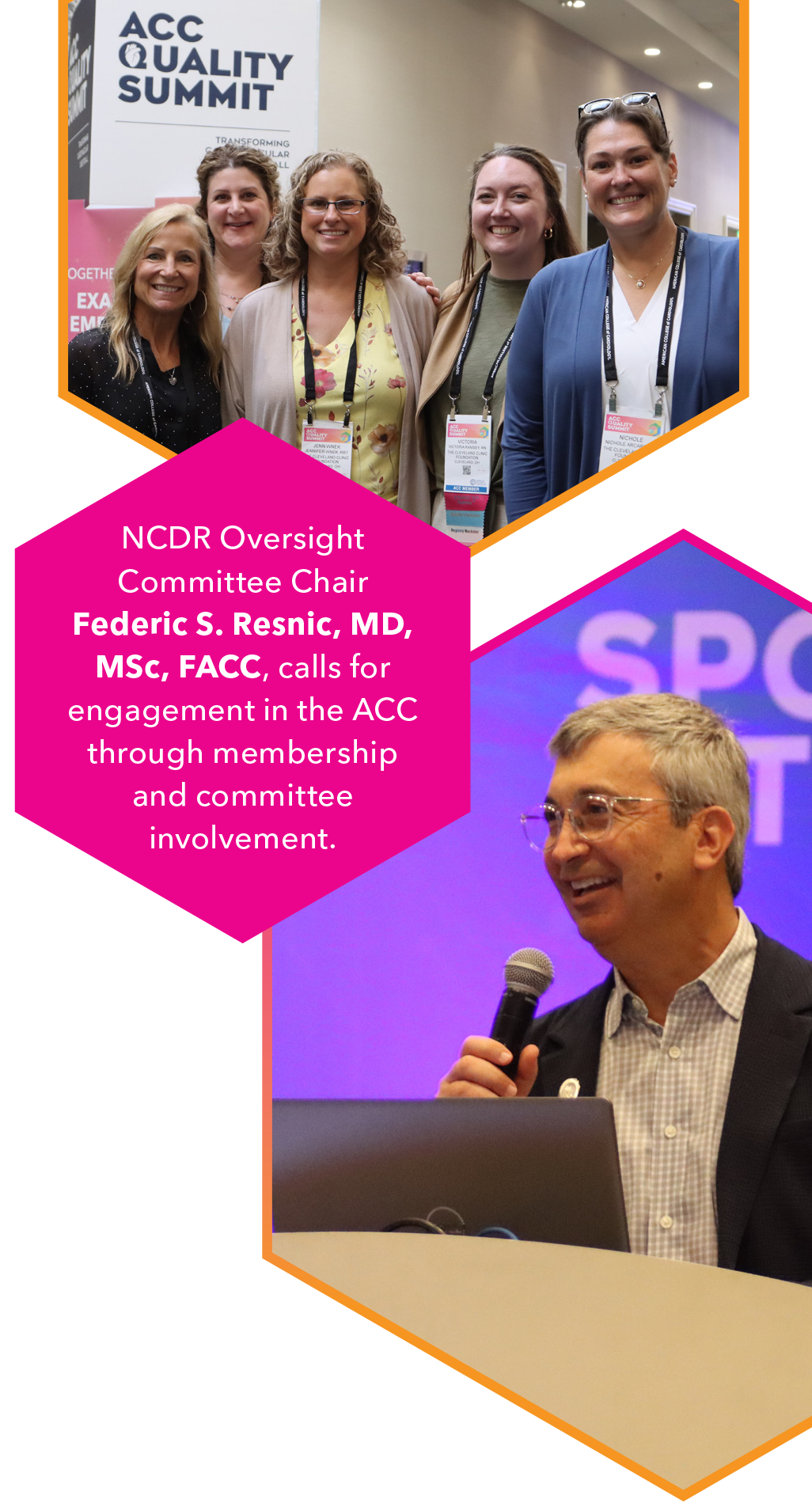
Bringing together more than 900 clinicians, administrators and quality leaders across the cardiovascular care team, ACC Quality Summit 2026 offered a collaborative forum to share insights, gain practical knowledge and drive meaningful improvements in patient care.
ACC Quality Summit Chair Ellie A. Huff, MSN, RN, FACC, set the tone for the meeting by encouraging attendees to be bold – ask the tough questions, sit next to someone new and learn from one another.
"The best ideas don't belong to any one organization," she says. "Every health system is navigating similar challenges, and all of us face headwinds when leading meaningful transformation. The Summit provides a unique opportunity to learn from colleagues across the country who are willing to openly share what has worked, what hasn't, and why."
Exploring AI's Role in the Future of CV Care
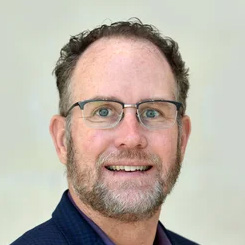
This year's Summit opened with the Ralph G. Brindis Keynote delivered by John Rumsfeld, MD, PhD, MACC, a global leader in health technology and artificial intelligence (AI) and a deeply respected figure within the ACC community. He shared his thoughts on AI and quality care ahead of his 2026 address.
What are some of the most meaningful ways generative AI is already affecting clinicians and patients today?
Hundreds of millions of consumers are asking questions of large language models (LLMs) each week, and it's estimated that over 80% of U.S. physicians are now routinely using LLMs. Over the last decade, AI in health care grew slowly and largely 'in the background.' Now, clinicians actively use it as a source of clinical knowledge, and ambient AI (or so-called AI scribes) are becoming ubiquitous. AI is increasingly being deployed to reduce administrative burden, though there's still a lot of room to improve.
How can clinicians embrace AI while ensuring quality, safety and accountability remain paramount?
Medical professionals need to understand what AI can do ... and equally what the limitations are, especially where risk is highest such as diagnosis and treatment. Consumer and medical use of AI related to health is growing faster than robust evaluations of its safety and effectiveness. There is a real role for the medical profession to lead on AI evaluations, as well as need for rapid evolution in things like regulatory accountability – you can see the U.S. Food and Drug Administration trying to move fast in this direction, recently approving the first patient-facing LLM.
What do you see as the biggest opportunity for AI to improve outcomes over the next decade?
AI should help us address physician shortages and other gaps in medical care delivery; improve efficiency such as reducing unnecessary variation in care and administrative burdens for both clinicians and patients; promote health and prevention at scale; and, perhaps paradoxically, optimize the humanity of medicine by augmenting clinicians, improving efficiency, and filling gaps in front-line care. This will require all of us to lead how AI is implemented in health care. It will happen, so we should guide how it happens.
Abstract Winners Present on AUC Discrepancies, Sex Differences in LAAO Outcomes, SDOH Screening
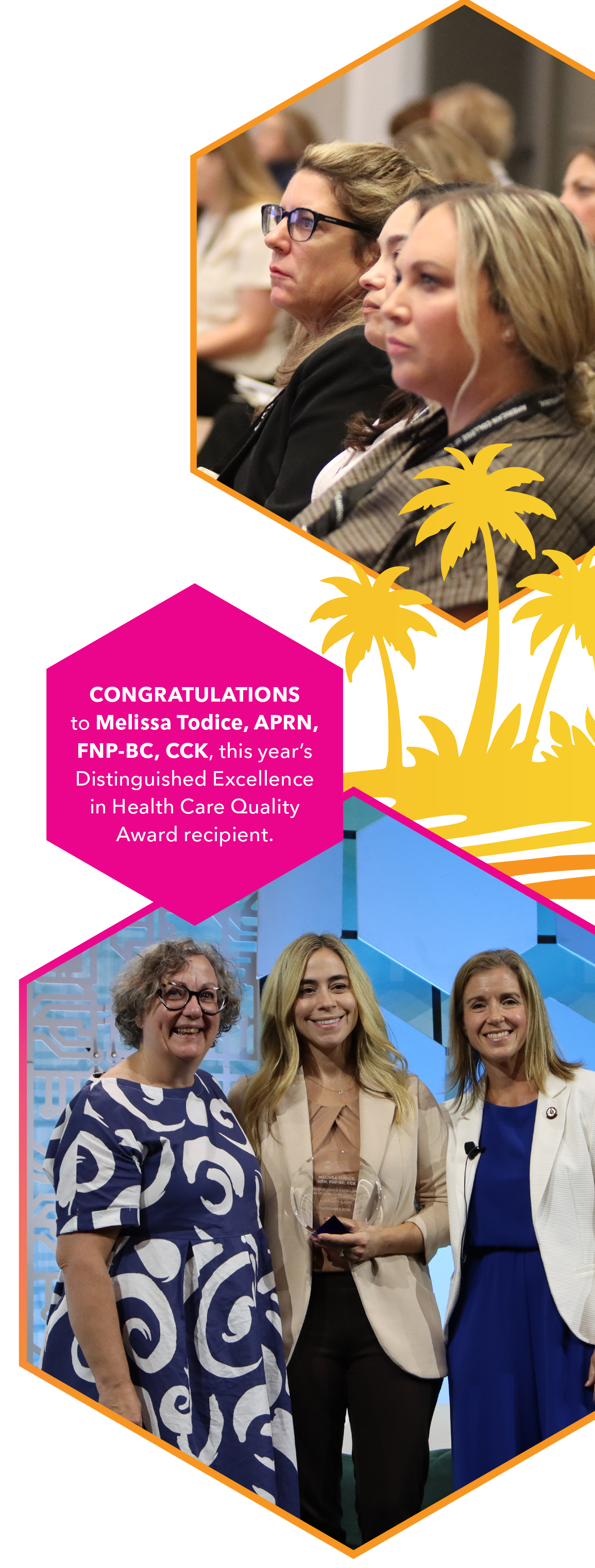
With a record-breaking number of abstract submissions, the quality improvement projects presented at the Summit reflect an ongoing commitment to improve cardiovascular care through innovation, collaboration and quality.
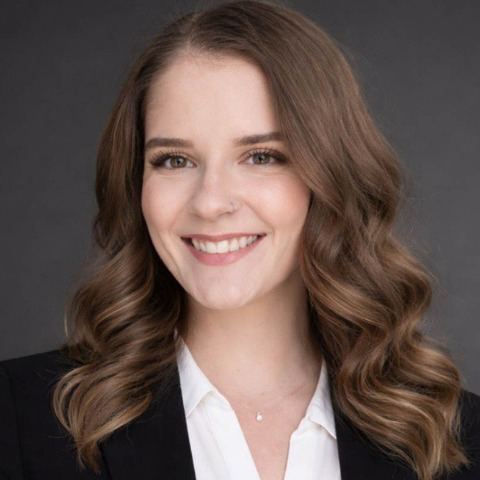
1st Place Winner: Sarah Clines, MBA, from Baylor Scott & White The Heart Hospital in Plano, TX, sought to determine whether discrepancies in appropriate use criteria (AUC) categorization for PCI procedures were due to patient selection or data validation gaps within the ACC's CathPCI Registry abstraction process. By implementing a structured, multidisciplinary review of AUC-designated cases, Clines found a 58% reduction in "rarely appropriate" cases, 14% average increase in appropriate classifications, 57% average reduction in "may be appropriate" cases and 25% increase in inter-rater agreement rates.
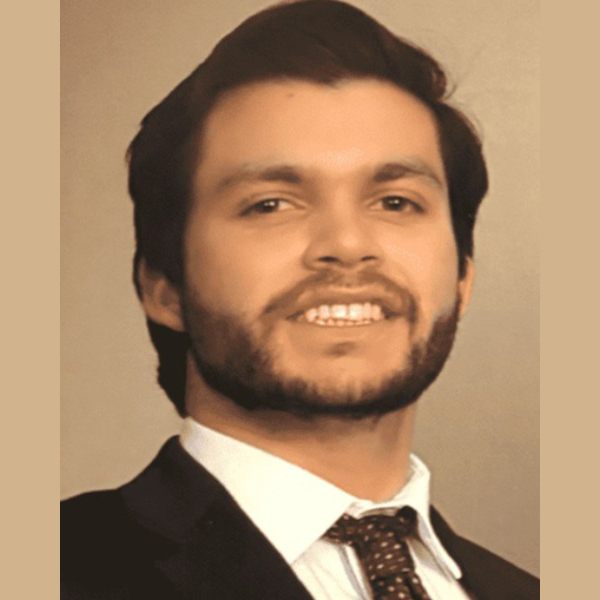
2nd Place Winner: Abhinav Singh, MD, et al., from HCA Bayonet Point in Hudson, FL, investigated sex differences in device-related complication risk at one year post left atrial appendage occlusion (LAAO). Including 2,817 patients (1,351 women; 1,466 men) across eight hospitals captured by ACC's LAAO Registry, they found women exhibited a 70% higher risk for the complication compared with men (hazard ratio 1.70 [95% CI,1.05-3.03]; p=0.007).
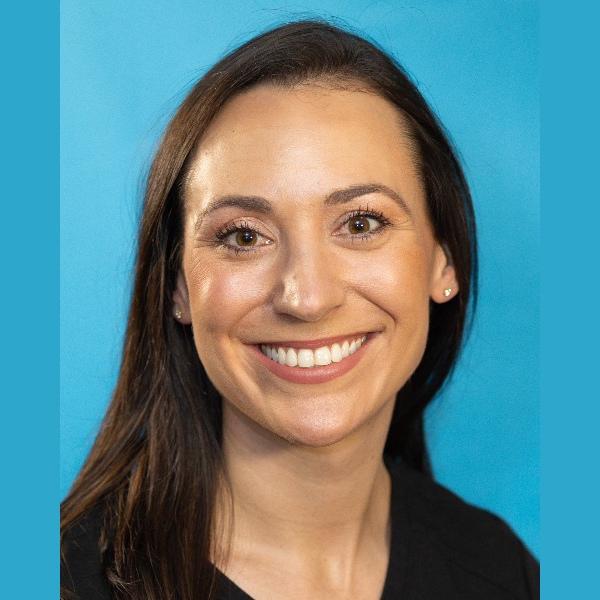
3rd Place Winner: Misty L. Theriot, BSN, RN, CPHQ, FACC, and J. Gregory Lugo, MD, from Lake Charles Memorial Hospital in Lake Charles, LA, worked to build a pathway to promote more equitable access to TAVR care at their site. By adding an Epic social drivers of health (SDOH) screening to their existing structural heart checklist and having the valve clinic coordinator screen every referral, Theriot and Lugo saw measurable improvements in care coordination, including a decrease from 31% to 3% missed or rescheduled visits, time from referral to treatment down to 20 days, and 0% 30-day readmission in 2025. Resources activated for those at moderate or high SDOH risk included gas cards, financial grants, food resources, ride-share trips, dental support and housing support.
A special issue of JACC: Case Reports features nearly 50 abstracts presented at the meeting, showcasing real-world challenges and practical solutions in patient care. View the issue.
Keywords: Cardiology Magazine, ACC Publications, CM-Nov-2026, Quality Summit, Artificial Intelligence
