
VPC-Yoga: Structured Yoga Intervention Reduces VPC Burden, Improves QOL
In patients with frequent ventricular premature complexes (VPCs), a structured yoga program compared with standard care reduced VPCs as well as improved quality of life (QOL) and psychological burden, according to results from the single-center, prospective VPC-Yoga study conducted in India and published Sept. 17 in JACC: Advances.
Gautam Sharma, MD, DM, DSc, et al., randomized 134 adults between 15 and 80 years of age with a VPC burden of ≥5% on 24-hour Holter monitoring, LVEF ≥35% and NYHA class I or II heart failure with structurally normal or abnormal hearts 1:1 to the yoga intervention (45 minutes of yoga three or more times a week) or standard care. Patients were in sinus rhythm and free from active ischemia and were on a stable medical regimen for a minimum of two weeks before enrollment.
The primary outcome was change in VPC burden assessed by 24-hour Holter monitoring. Secondary outcomes included QOL (evaluated using the 36-Item Short Form Survey), LVEF and psychological outcomes (evaluated using the Depression, Anxiety and Stress Scale-21 Items), heart rate variability and major adverse cardiac and cerebrovascular events (MACCE).
At baseline, age, BMI and systolic and diastolic blood pressure were similar; the mean age was 47 years and 58% were men. The patients were followed for 24 weeks.
Notably, the burden of VPC at baseline was significantly lower in the yoga group than the standard care group (median 13.02 vs. 21.06, respectively), "indicating a baseline imbalance." At six weeks, there was a reduction in VPC burden in both the yoga and standard care groups (11.62 and 19.19), but this was not statistically significant after adjusting for baseline values.
At 12 weeks, VPC burden was reduced more, with a greater reduction in the yoga than the standard care group (6.55 and 16.89, respectively), which was statistically significant after adjustment, indicating a significant and sustained effect of the yoga intervention write the authors.
At 24 weeks, there was a significant improvement in QOL scores in the yoga group vs. the standard care group across several domains, as well as better scores for depression, anxiety and stress. No differences were seen between the groups for LVEF, heart rate variability or MACCE.
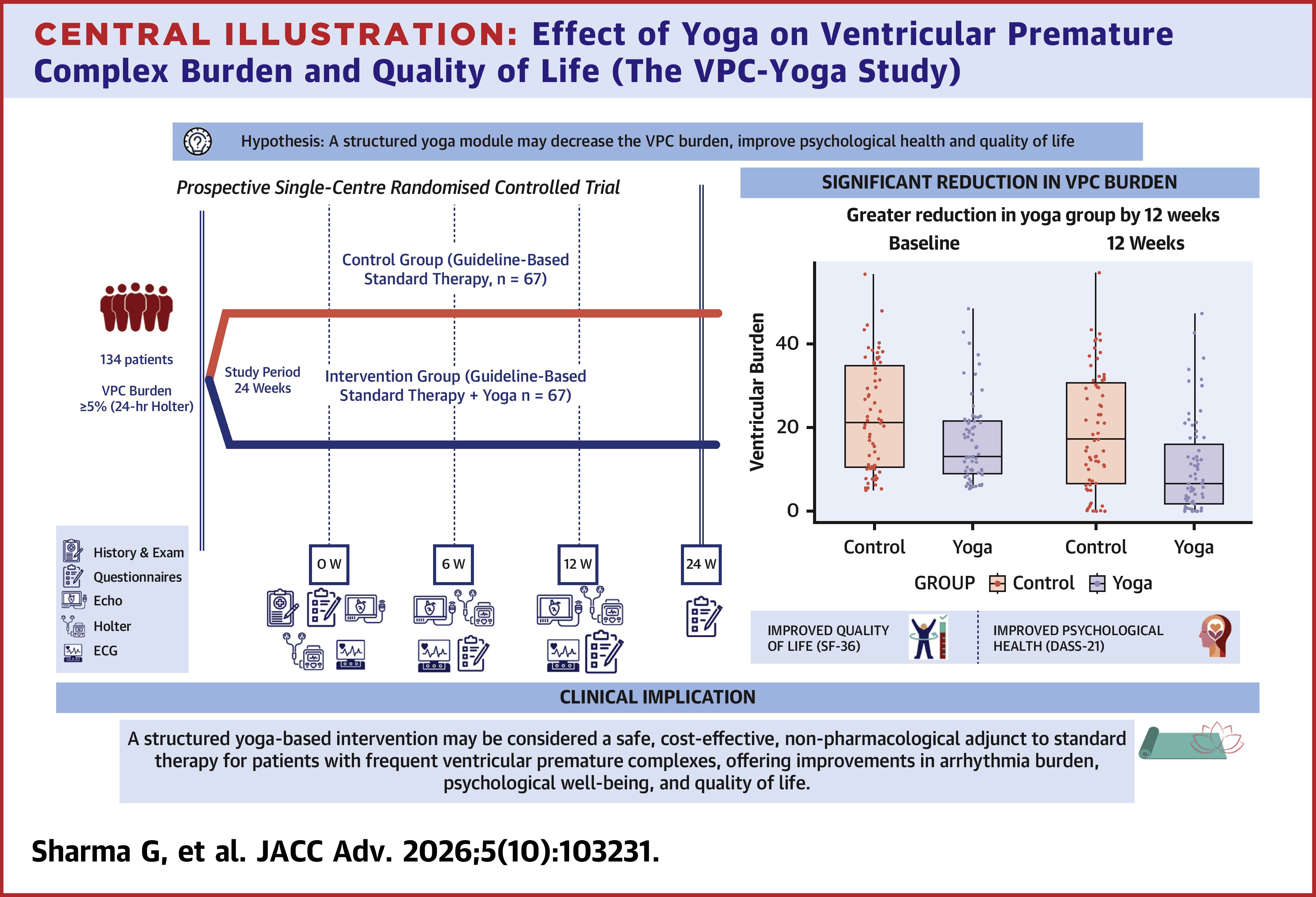
In what they believe to be the first randomized trial to systematically evaluate yoga as an add-on therapy in this population, the authors write that it "may be useful to integrate a cost-effective, nonpharmacological intervention like yoga in the management of patients with frequent VPCs."
Clinical Topics: Arrhythmias and Clinical EP, Cardiovascular Care Team, Diabetes and Cardiometabolic Disease, Prevention, EP Basic Science, SCD/Ventricular Arrhythmias, Exercise
Keywords: Ventricular Premature Complexes, Quality of Life, Yoga, Exercise
