
| Download app or launch web version here: |
|---|
We want to hear from you. Tell us what you think here or leave a comment on the app's iTunes or Google Play page.
About the CVD Risk Estimator Plus
CVD Risk Estimator Plus is a clinical decision‑support app that unifies two cardiovascular prevention tools: the 2013 ACC/AHA Pooled Cohort Equations (previously known as the ASCVD Risk Estimator) and the American Heart Association's PREVENT™ Calculator*. Combining traditional ASCVD risk modeling with modern cardiovascular‑kidney‑metabolic (CKM)–inclusive risk equations, CVD Risk Estimator Plus provides clinicians with a comprehensive, personalized cardiovascular disease (CVD) risk assessment.
Core Functionality: Dual‑Engine Risk Modeling
CVD Risk Estimator Plus computes risk estimates using:
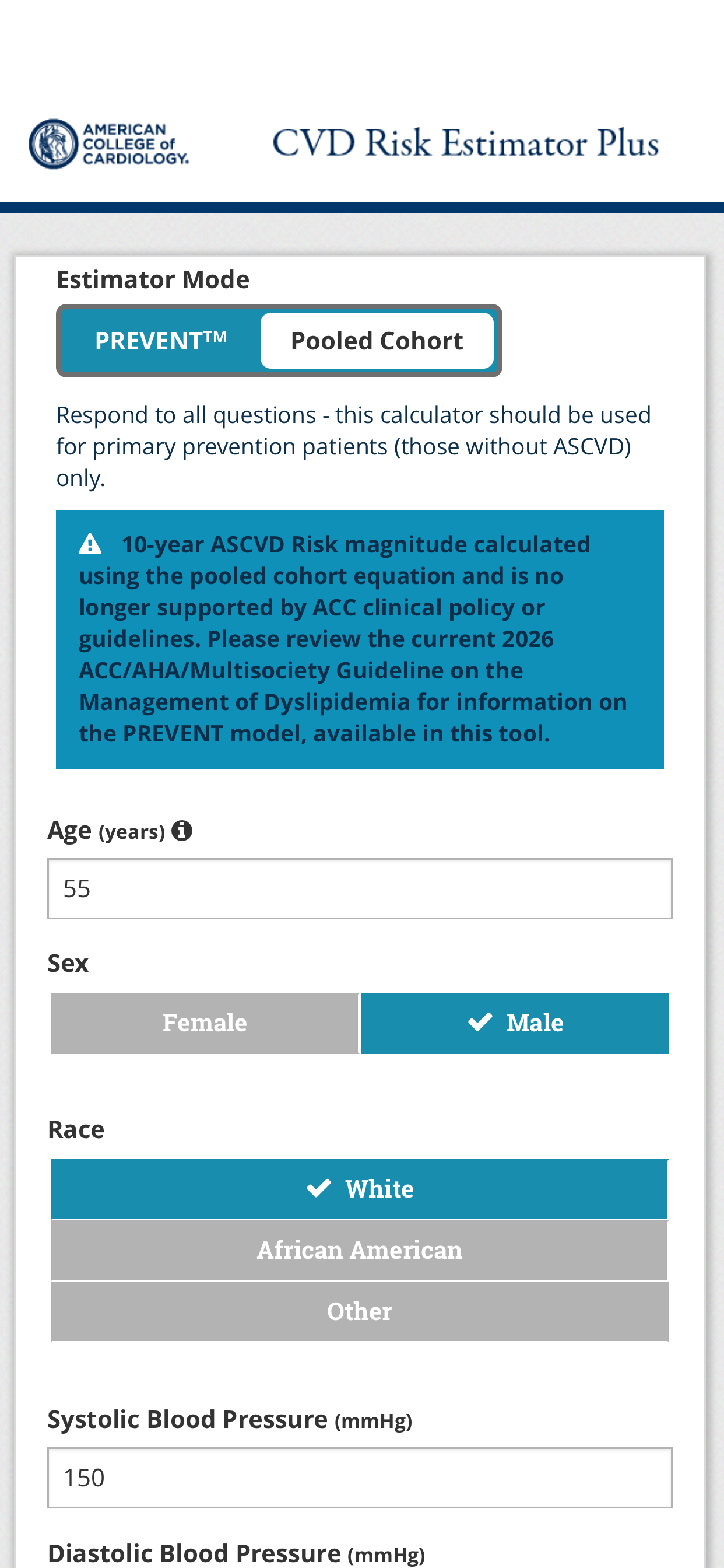
- 2013 ASCVD Pooled Cohort Equations (PCE), which calculate 10‑year and lifetime risk of atherosclerotic cardiovascular disease using age, sex, race, blood pressure, cholesterol profile, diabetes status, and smoking status.
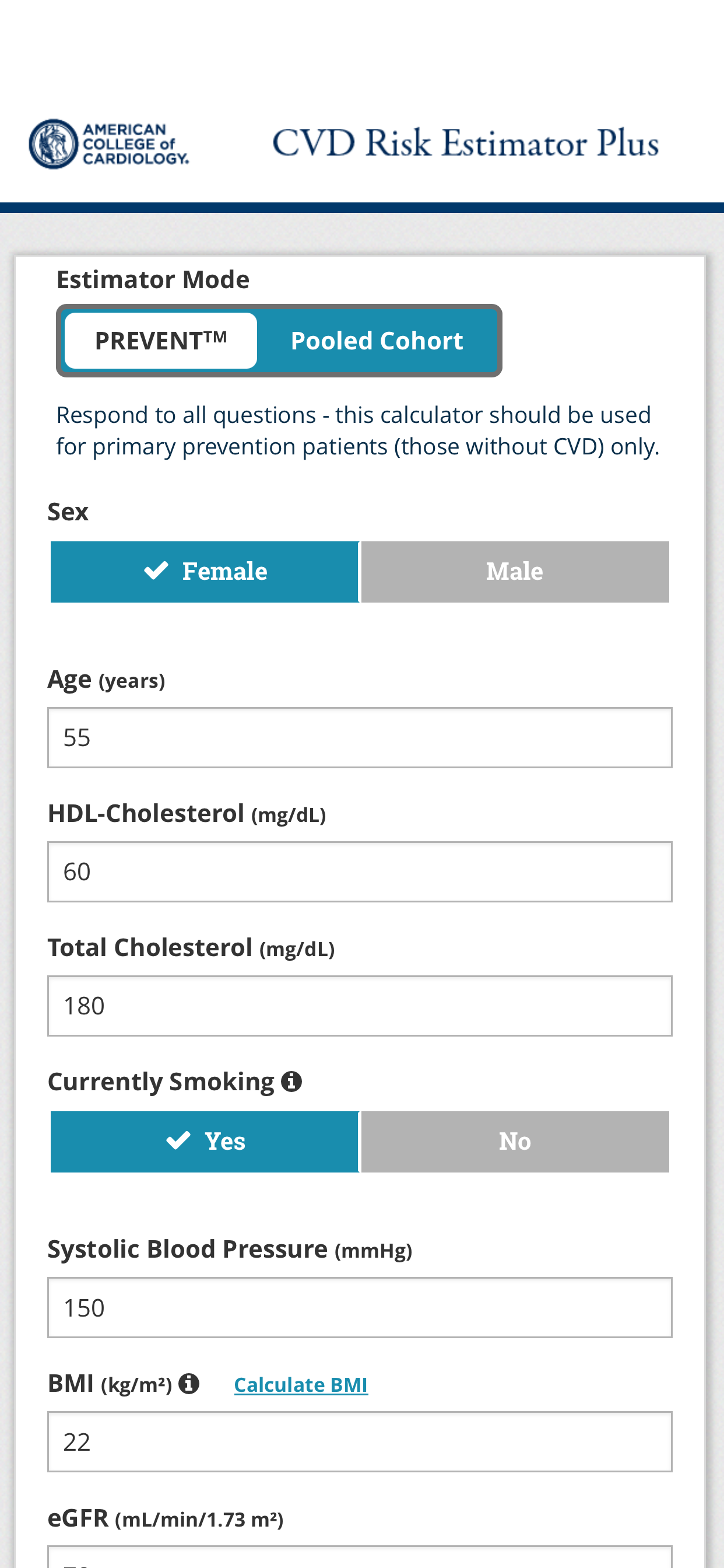
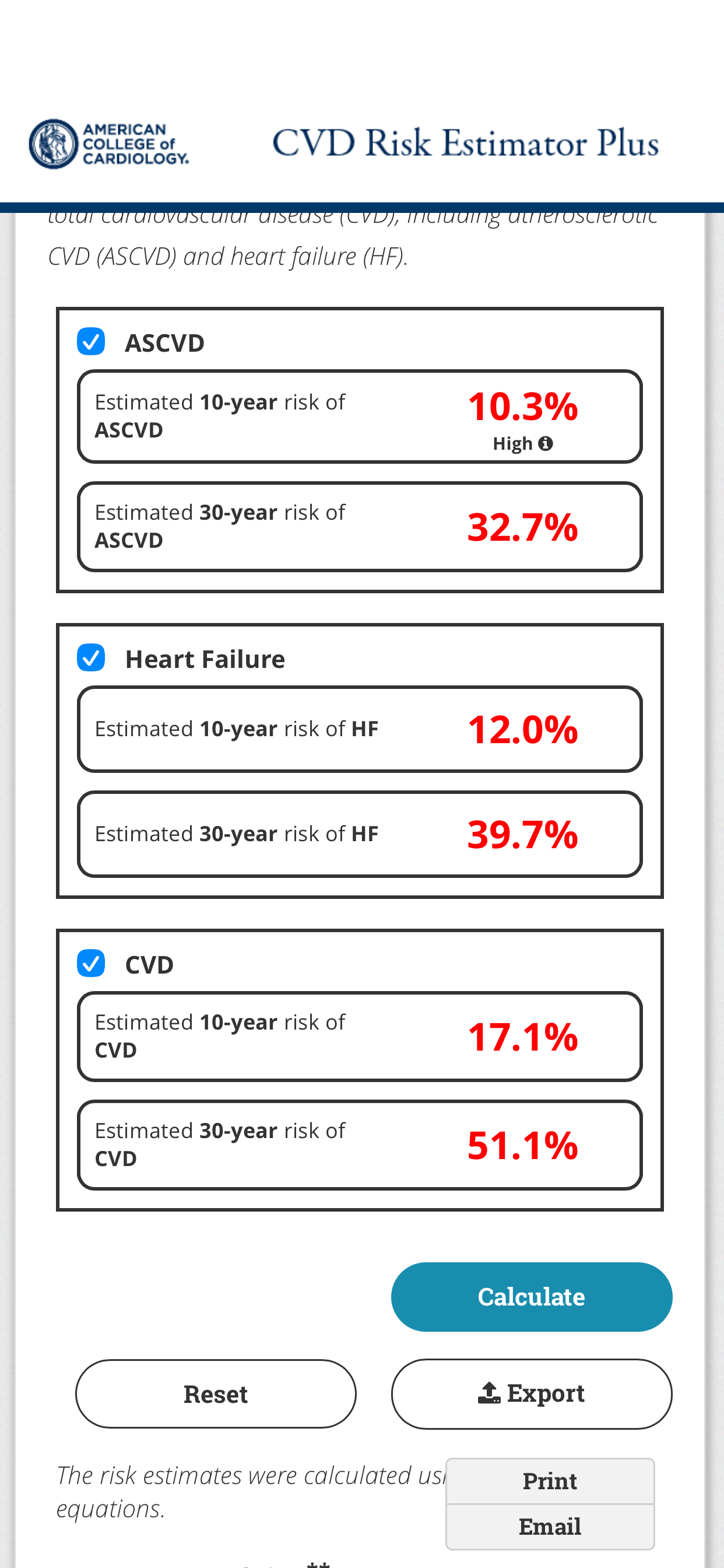
- 2023 PREVENT™ Equations, which estimate 10‑ and 30‑year risk for total CVD, ASCVD, and heart failure (HF), incorporating kidney and metabolic health measures such as BMI and estimated glomerular filtration rate (eGFR), and supporting optional predictors including urine albumin‑creatinine ratio (UACR), hemoglobin A1c (HbA1c), and social deprivation index (SDI).
Clinicians can toggle between PCE and PREVENT™ risk trajectories, for reference and comparison.
Decision‑Support & Shared‑Decision Tools
To support guideline‑aligned prevention conversations, CVD Risk Estimator Plus provides:
- Risk category classification (low, borderline, intermediate, high).
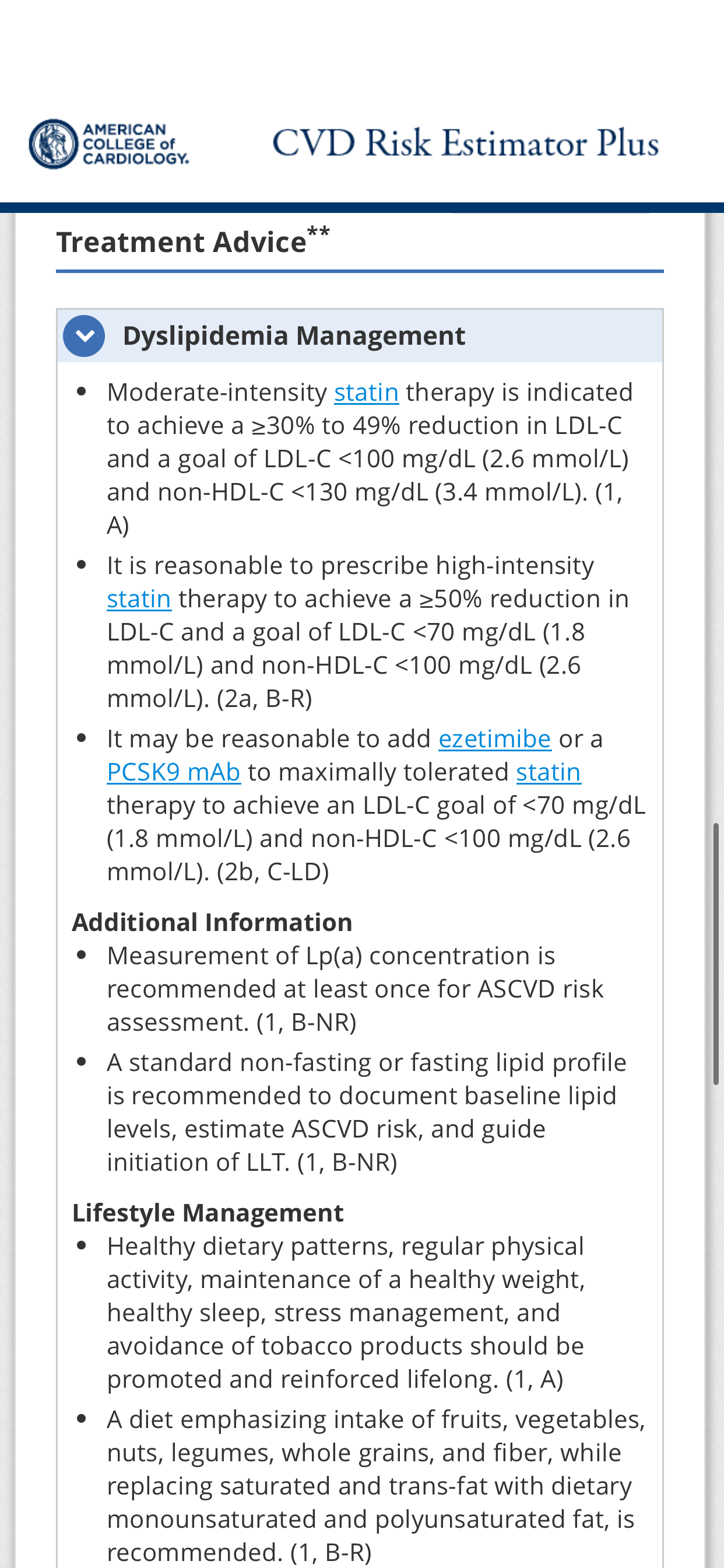
- Personalized recommendations guided by statin therapy considerations, lifestyle interventions, and risk enhancing clinical factors.
- Export functionality supporting print and email of results for documentation and patient communication.
- Resources page with related tools and informational resources for both clinicians and patients, as well as links to reference documents.
The results and recommendations provided by this application are intended to inform but do not replace clinical judgment. Therapeutic options should be individualized and determined after discussion between the patient and their care provider.
Search "CVD Risk Estimator Plus" on the web or in your app store to download the app for free.
How was this App developed?
Predicting Risk of Cardiovascular Disease EVENTs equations (PREVENT™):
The PREVENT™ equations were developed by select members of the American Heart Association Cardiovascular-Kidney-Metabolic Scientific Advisory Group. The risk equations were derived and validated in a large, diverse sample of over 6 million individuals.
- Khan SS, Matsushita K, Sang Y, et al. Development and Validation of the American Heart Association Predicting Risk of Cardiovascular Disease EVENTs (PREVENTTM) Equations. Circulation 2023. DOI: 10.1161/CIRCULATIONAHA.123.067626.
- Khan SS, Coresh J, Pencina MJ, et al. Novel Prediction Equations for Absolute Risk Assessment of Total Cardiovascular Disease Incorporating Cardiovascular-Kidney-Metabolic Health: A Scientific Statement From the American Heart Association. Circulation 2023;148(24):1982-2004. DOI: 10.1161/CIR.0000000000001191.
The information derived from the use of PREVENT™ is based on PREVENT™ 1.0.0. Updates and future adaptations of PREVENT™ may yield different results and conclusions.
Pooled Cohort Equations (PCE):
PCE 10-year ASCVD risk is calculated via the Pooled Cohort Equation published as part of the 2013 ACC/AHA Guideline on the Assessment of Cardiovascular Risk. The Risk Estimator was designed and vetted through collaboration with the authors of the source documents noted below, as well as other ACC clinical members. It was further refined via user testing with physicians, nurse practitioners, and pharmacists.
- Goff, D, Lloyd-Jones, D, Bennett, G. et al. 2013 ACC/AHA Guideline on the Assessment of Cardiovascular Risk: A Report of the American College of Cardiology/American Heart Association Task Force on Practice Guidelines. JACC. 2014 Jul, 63 (25_Part_B) 2935–2959. https://doi.org/10.1016/j.jacc.2013.11.005
- Lloyd-Jones D.M., Leip E.P., Larson M.G., et al. (2006) Prediction of lifetime risk for cardiovascular disease by risk factor burden at 50 years of age. Circulation 113:791-798 https://doi.org/10.1161/CIRCULATIONAHA.105.548206
Additional References
- Blumenthal, R, Morris, P, Gaudino, M. et al. 2026 ACC/AHA/Multisociety Guideline on the Management of Dyslipidemia: A Report of the American College of Cardiology/American Heart Association Joint Committee on Clinical Practice Guidelines. JACC. 2026. https://doi.org/10.1016/j.jacc.2025.11.016
- Jones, D, Ferdinand, K, Taler, S. et al. 2025 AHA/ACC/Multisociety Guideline for the Prevention, Detection, Evaluation, and Management of High Blood Pressure in Adults: A Report of the American College of Cardiology/American Heart Association Joint Committee on Clinical Practice Guidelines. JACC. 2025 Nov, 86 (18) 1567–1678. https://doi.org/10.1016/j.jacc.2025.05.007
- Social deprivation index (SDI). Robert Graham Center - Policy Studies in Family Medicine & Primary Care. (2018, November 5). Retrieved November 29, 2021, from https://acctools.short.gy/sdi-graham
Disclaimer: The American College of Cardiology Foundation is an independent entity and is not affiliated with, endorsed by, sponsored by, or approved by American Heart Association ("AHA"). Use of the PREVENT™ risk model and related materials is pursuant to a license from AHA and does not imply any partnership or association.
App Screenshots