Introduction: Read an address by ACC CEO Cathy Gates and 2024-2025 ACC Cathleen Biga, MSN, FACC

Dear Members and Colleagues,
Education also advanced significantly in 2025. The ACC is redefining what it means to learn in a rapidly evolving scientific and clinical environment. We are moving beyond traditional content delivery toward personalized, adaptive learning experiences that integrate human expertise with digital intelligence. The creation of the Fuster Prevention Program, the expansion of the Emerging Faculty Program and an exceptional ACC.25 in Chicago all reflect this evolution. By modernizing live education to emphasize mastery and clinical judgment, and by expanding artificial intelligence (AI)-enabled online learning and flexible, on-demand offerings, we continue to deliver high-value education that supports lifelong professional growth for cardiovascular professionals.
Innovation and digital transformation were equally prominent throughout the year. As AI moves from concept and early experimentation into daily clinical reality, the ACC is leading the way. The AI Resource Center, ACC/MedAxiom Care Transformation tools, a dedicated innovation podcast series, and resources like our integration tool to help clinicians leverage Apple Watch data in clinical interactions, all exemplify our commitment to delivering actionable knowledge at the point of care. Our new partnership with OpenEvidence, combined with digital health policy advocacy and the work of JACC Journals and the Health Care Innovation Member Section, also positions the College at the forefront of shaping the future of cardiovascular care.
Advocacy in 2025 was both vigorous and impactful. ACC advanced major priorities – including Medicare payment reform and increased funding for the National Institutes of Health (NIH) and Centers for Disease Control and Prevention (CDC), and mobilized more than 400 clinicians on Capitol Hill. We secured bipartisan support for prior authorization reform, made progress on state-level noncompete laws and AED access, and helped expand payer coverage for innovative therapies. Our efforts also strengthened maternal health legislation and supported specialists navigating new value-based care models. On the clinical guidance front, we released three new Clinical Guidelines with the AHA, seven Concise Clinical Guidance reports, eight Scientific Statements and five additional documents, ranging from new Expert Consensus Decision documents to the much-anticipated Advanced Training Statement for advanced imaging.
These achievements reflect meaningful progress toward our Strategic Plan: increasing relevance as the professional home for cardiovascular clinicians; generating and delivering actionable knowledge; advancing quality, equity, and value in care; and sustaining the College through strong fiscal stewardship. With the 2026 budget approved and a solid financial foundation in place, we are well-positioned for the year ahead.
Thank you for your dedication, your expertise and your partnership. Together, we continue to shape the future of cardiovascular care.
Sincerely,
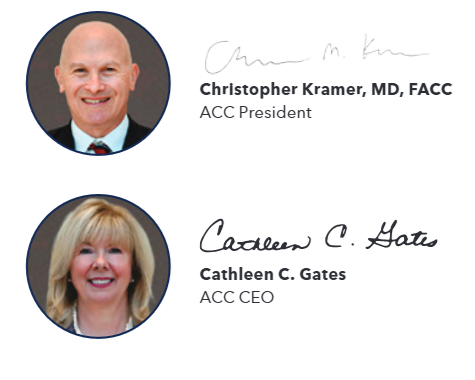
Christopher Kramer, MD, FACC
ACC President
Cathleen C. Gates
ACC CEO
About ACC
- Leadership & Governance
- The ACC Foundation
- Advocacy
- Health Equity
- Innovation Program
- Jobs at the ACC
- Our Bylaws and Code of Ethics
- Industry Relations
- Award Programs
- Book Our Conference Center
Membership
- Become a Member
- Renew Your Membership
- Benefits of Your Membership
- Member Sections
- Chapters
- Global Hub
- ACC Member Directory
Donate Today
Solutions & Tools
- Clinician Well-Being
- Cardiology as a Career Path
- Cardiology Careers: Job Board
- Practice Solutions
- Clinical Solutions for Everyday Practice
- Infographics
- Educational Products
- Equipment Buyers Guide
- AI Resources
- Mobile and Web Apps
