OCEAN-Mitral Registry: M-TEER Feasible, Safe, Effective in Patients With Very Severe LV Dysfunction
Among patients with ventricular functional mitral regurgitation (MR) and very severe left ventricular (LV) dysfunction (LVEF <20%), mitral transcatheter edge-to-edge repair (M-TEER) was found to be feasible and associated with meaningful symptomatic improvement, according to findings published Aug. 17 in JACC: Advances.
Because patients with very severe LV dysfunction are often excluded from research, Kazunori Omote, MD, FACC, et al., analyzed data from 1,538 patients (mean age, 75 years; 34% women) with significant LV dysfunction (LVEF ≤40%) in the multicenter Japanese registry who had M-TEER. They compared outcomes in the 103 patients with LVEF <20% and the 1,435 patients with LVEF between 20% and ≤40%.
Patients with LVEF <20% were slightly younger, had lower BMI and had more HF hospitalizations in the year preceding enrollment. Additionally, they were more likely to be taking a mineralocorticoid receptor antagonist or SGLT2 inhibitor than patients with LVEF ≥20%.
Following M-TEER, acute procedural success was similar between the two LVEF categories (100% vs. 97%). Patients in the two groups had comparable residual MR, postprocedural transmitral pressure gradients, postprocedural pulmonary venous flow patterns and procedure-related complications. In-hospital mortality was also similar.
Results at one year showed significant improvement in NYHA functional class overall, yet NYHA functional class remained worse in those with LVEF <20%.
For the primary endpoint of all-cause death and HF hospitalization, after adjustment there was no significant difference between the LVEF categories (adjusted hazard ratio, 1.24). However, an LVEF <20% was independently associated with higher cardiovascular mortality (15% vs. 8%; HR, 2.00).
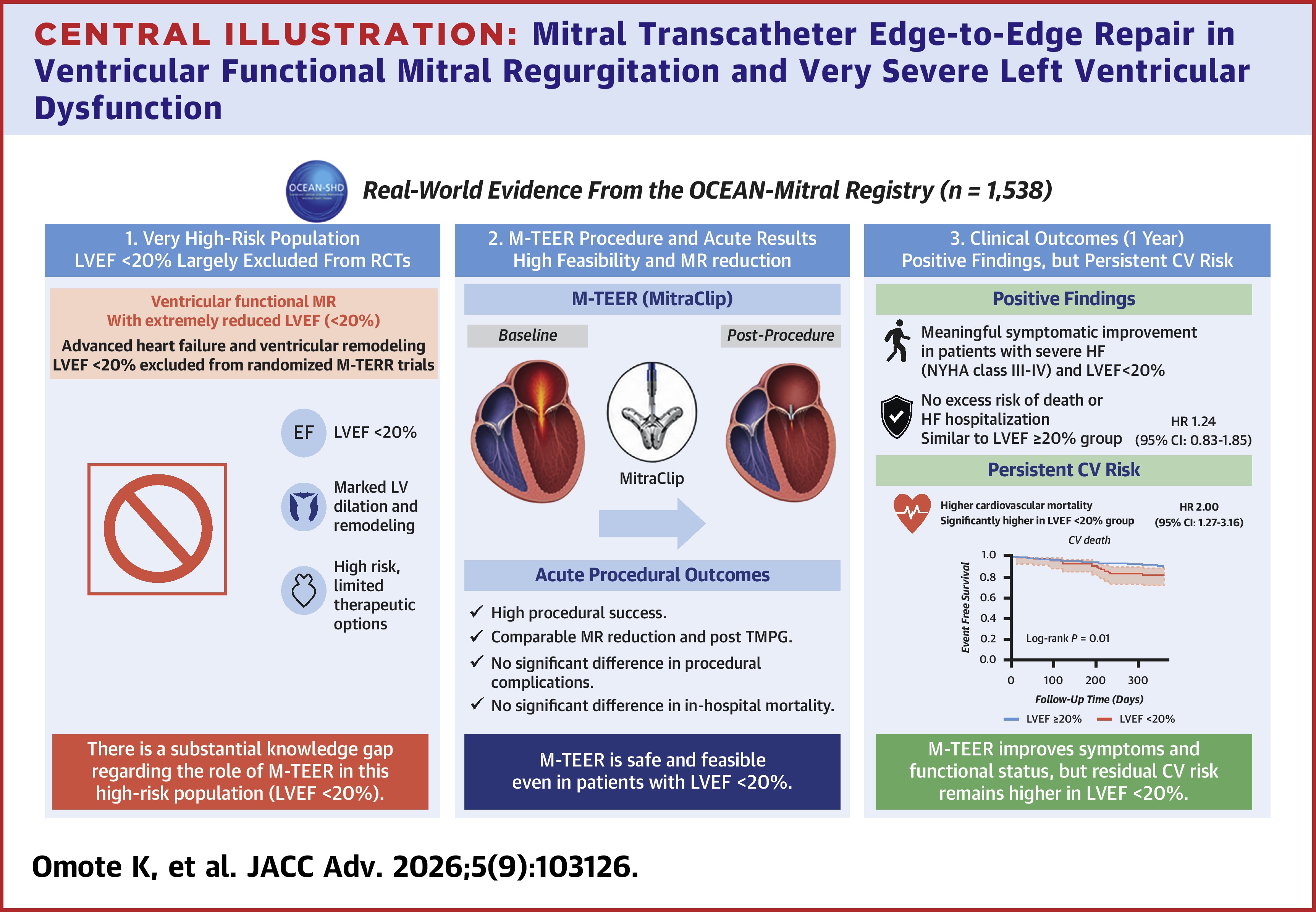
"Low EF alone may not preclude consideration of M-TEER," write Omote and colleagues. "However, persistently higher [cardiovascular] mortality and residual HF symptoms in the very severe LV dysfunction group highlight the advanced disease stage of this population and indicate that M-TEER should be viewed as a complementary strategy for symptom relief rather than a definitive therapy for progressive cardiomyopathy."
Clinical Topics: Heart Failure and Cardiomyopathies, Valvular Heart Disease, Mitral Regurgitation
Keywords: Ventricular Dysfunction, Left, Mitral Valve Insufficiency
