PCM GENES: Pediatric HCM, Severe LVH and Gene Variants
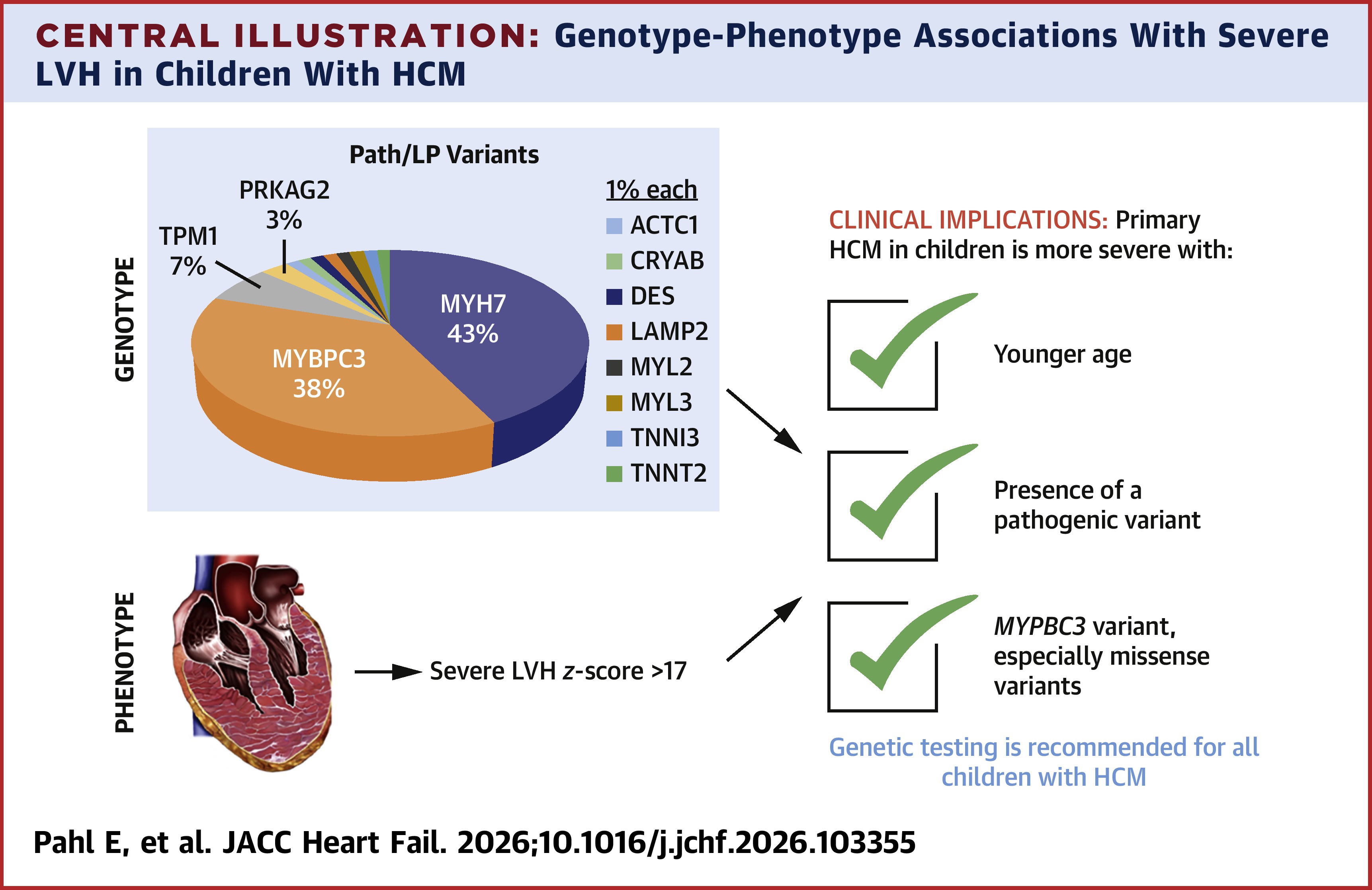
Severe left ventricular hypertrophy (LVH) was associated with younger age at enrollment and a higher likelihood of a pathogenic variant in MYBPC3 in children with hypertrophic cardiomyopathy (HCM), according to research published Sept. 24 in JACC: Heart Failure.
In the retrospective PCM GENES ancillary study of the Pediatric Cardiomyopathy Registry, investigator Elfriede Pahl, MD, FACC, and colleagues identified 143 children (median age at enrollment, 11.5 years; 31% female) with primary HCM and echocardiograms sufficient to determine LVH severity.
Results showed that 40 children (28%) had severe LVH, defined as an LV septal or posterior wall thickness z-score of ≥17; 25 children (17%) had moderate LVH (z-score, ≥12) and 78 children (55%) had mild LVH (z-score, <12). Children with severe LVH were more likely to be diagnosed at a younger age than those with mild LVH (median, 6.4 years vs. 12.9 years; p=0.005). There were no sex differences in the distribution of severity.
"Given the early age of onset, clinical screening should not be delayed but initiated at the time risk status is confirmed," write the investigators. "Our data support the conclusion that clinical genetic testing of all children with HCM is indicated and should be followed by cascade testing after a familial disease-associated variant is identified."
Among the children, 51% had a pathogenic variant, of which 93% were in sarcomeric genes such as MYH7 and MYBPC3. Those with severe LVH were more likely to have these pathogenic variants, driven mostly by pathogenic MYBPC3 variants, which were associated with about fourfold higher odds of severe LVH (odds ratio, 4.1). Missense variants predominated over stop, insertion-deletion and splicing variants in these severe cases (10/14 cases), which Pahl and colleagues write is "a proportion strikingly different from that in adult HCM."
"This finding should not be interpreted to mean that MYBPC3 missense variants are uniformly more penetrant or malignant than truncating variants," write Takanori Suzuki, MD, and Seema Mital, MD, FACC, in an accompanying editorial comment. "The observed association may therefore reflect a limited number of unique variants, the influence of recurrent variants, or unmeasured genetic and nongenetic modifiers." They also note that classifying LVH from wall thickness alone may not fully capture disease severity and caution against equating genotype, wall thickness severity and clinical outcomes.
Clinical Topics: Cardiovascular Care Team, Heart Failure and Cardiomyopathies, Acute Heart Failure
Keywords: Hypertrophy, Left Ventricular, Cardiomyopathies, Heart Failure, Cardiomyopathy, Hypertrophic, Hypertrophy
