ADDICT-ICCU: Recreational Drug Use Predicts MACE Risk Post ICCU
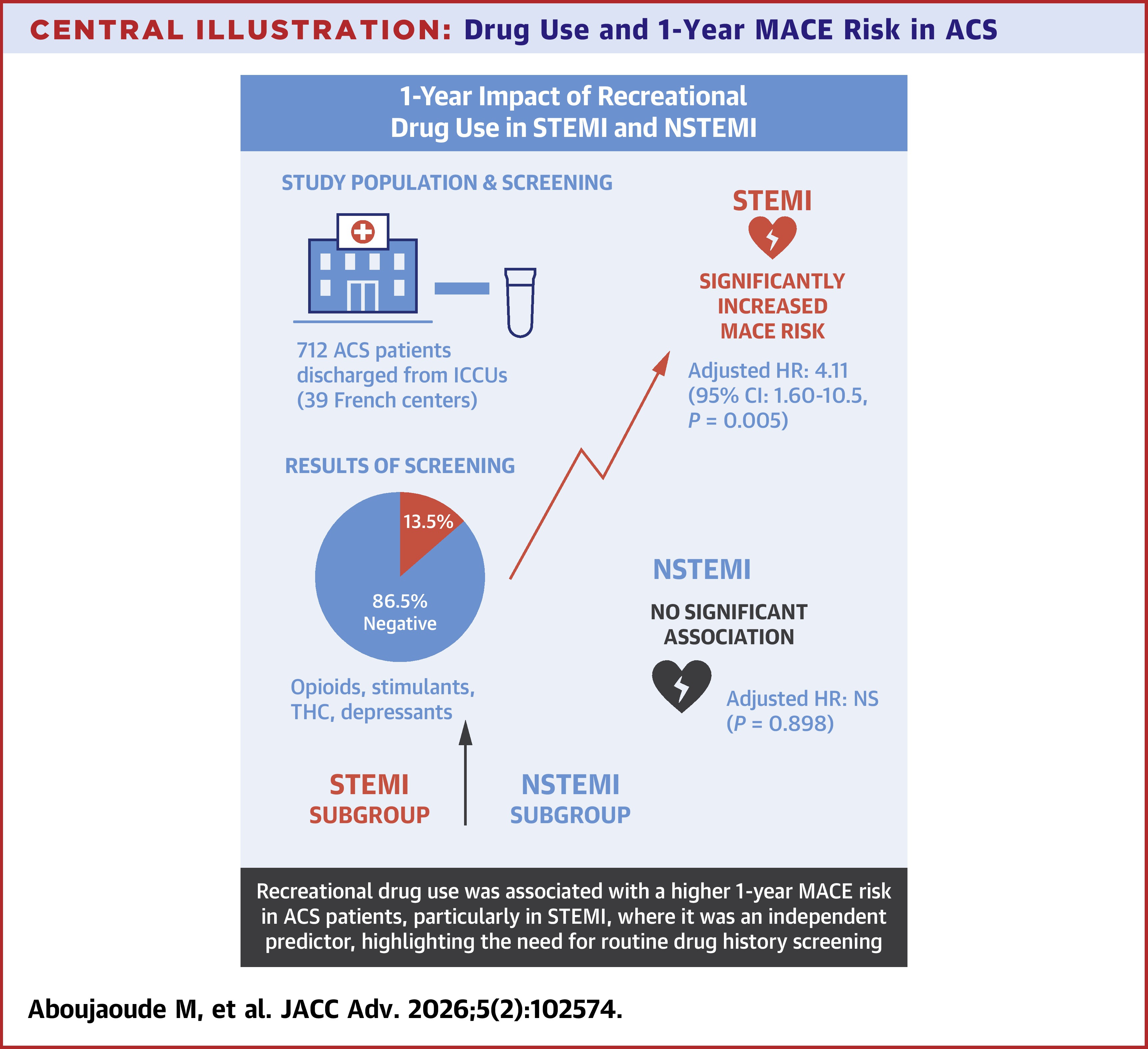
Recreational drug use is a strong, independent predictor of worse one-year cardiovascular outcomes in patients with acute coronary syndrome (ACS), significantly in those with STEMI, according to results from the ADDICT-ICCU study published Jan. 23 in JACC: Advances.
The observational cohort study screened all intensive cardiac care unit (ICCU) patients at 39 centers across France via prospective urinary testing and tracked subsequent major adverse cardiovascular events (MACE; cardiovascular death, nonfatal MI or stroke) through clinical visits and other direct contact.
During screening, 96 (13.5%) of 712 ACS patients (mean age 64 years; 26% women; 57% NSTEMI, 43% STEMI) tested positive for recreational drugs. The most common were tetrahydrocannabinol (n=86), followed by opioids (n=34), stimulants (n=18) and depressants (n=8), with some patients testing positive for multiple substances. Drug detection could not differentiate between acute or chronic drug use, nor were patients tested during follow-up.
Results at one year showed that MACE occurred in 7.0% (n=50) of all patients, including 13% of drug-positive patients vs. 6% of drug-negative patients. Multivariable Cox analysis confirmed that recreational drug use was an independent predictor of MACE (hazard ratio [HR], 2.70; p=0.013). This was a significant association solely in STEMI patients (HR, 4.11; p=0.005), confirmed through propensity matching (HR, 3.39; p=0.022).
"Our findings establish recreational drug use as a clinically meaningful prognostic factor in ACS and underscore the importance of incorporating drug use history into risk assessment," write study authors Michael Aboujaoude, MD, PhD candidate; Théo Pezel, MD, et al. "Furthermore, these results highlight the potential long-term effects of drug use indicating a need for continued monitoring of recreational drug use within at least [one] year following discharge from the ICCU."
Clinical Topics: Acute Coronary Syndromes, Stable Ischemic Heart Disease, Vascular Medicine, Chronic Angina
Keywords: Recreational Drug Use, Acute Coronary Syndrome, ST Elevation Myocardial Infarction
< Back to Listings


