Strength Training Linked to Lower CVD Risk in Women
Women who participate in resistance training (RT) may have a lower risk of cardiovascular disease, particularly myocardial infarction (MI), especially when combined with aerobic exercise, according to a large cohort study published June 17 in JACC.
Researchers analyzed a prospective cohort of 117,025 women in the U.S. from the Nurses’ Health Study (NHS) (2002-2020: n=45,669) and NHS II (2003-2017: n=71,356) with a mean age at baseline of 69 years and 48 years, respectively. RT was assessed every four years and reported separately for the arms and legs. TV viewing time was the primary measure of sedentary behavior and was assessed as average hours per week.
Tianyue Zhang, MD, et al., set the primary outcome as incident major cardiovascular disease, defined as nonfatal or fatal MI, stroke, and CABG or PCI.
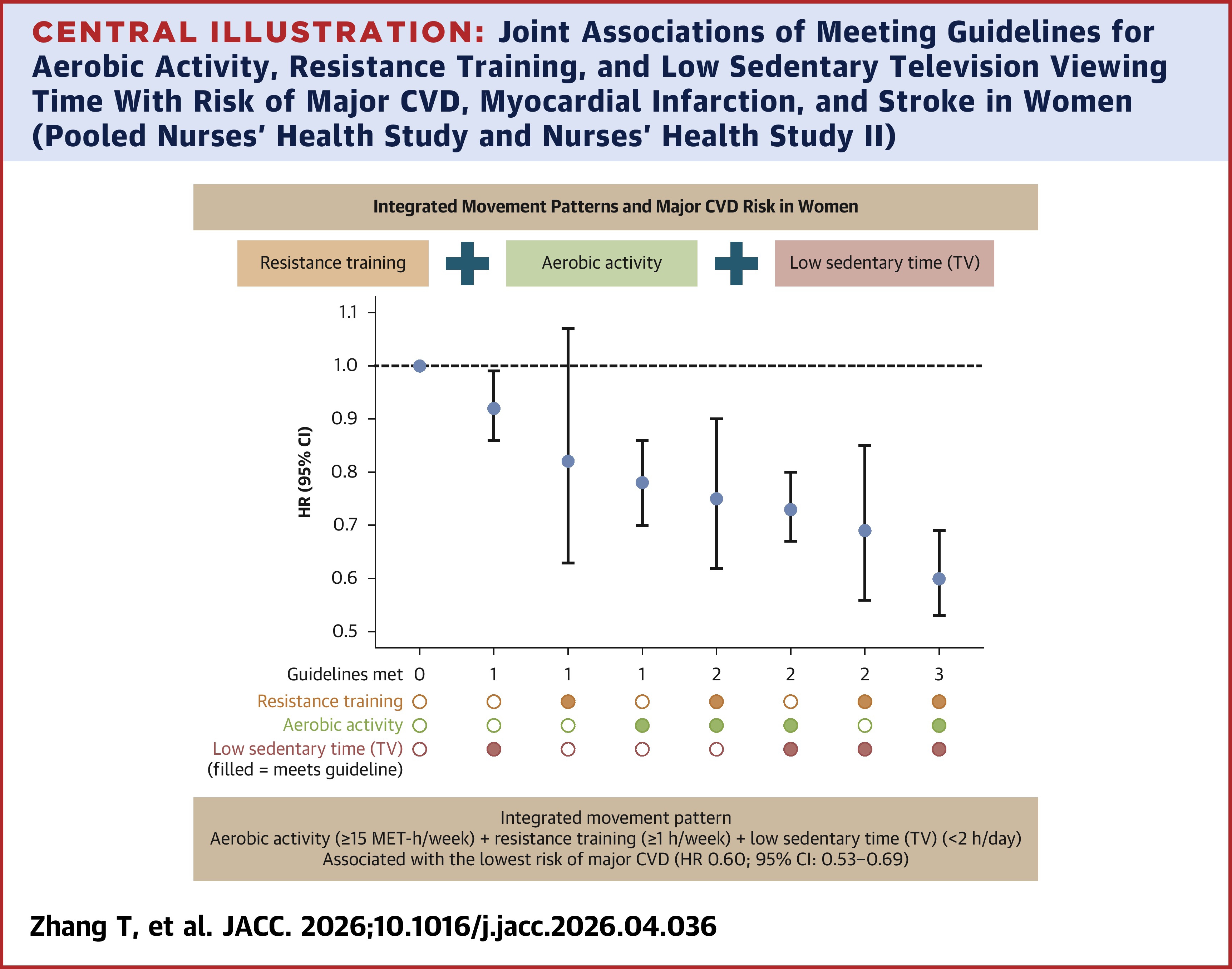
Over the follow-up of nearly 15 years, higher levels of RT were associated with a lower risk of major cardiovascular disease, especially MI – however, no significant association was observed for stroke.
In terms of volume of exercise, compared with no RT, ≥2 of RT per week was associated with a 20% lower risk of the primary outcome (hazard ratio [HR], 0.80; 95% CI, 0.69-0.92; p for trend = 0.007) and a 44% lower risk of MI (HR, 0.56; 95% CI, 0.41-0.76). Each additional hour per week of RT was associated with a 5% lower risk of major cardiovascular disease and a 14% lower risk of MI. Of note, these associations became somewhat weaker after adjusting for BMI and cardiometabolic conditions such as diabetes, high blood pressure and high cholesterol.
RT offered additional benefit among women who also did aerobic activity. In this subgroup, women who did RT for ≥2 hours per week in addition to 150 minutes of aerobic activity per week had a 45% lower risk of MI than those with no physical activity; associations for major cardiovascular disease changed slightly.
In an integrated analysis of movement patterns that considered RT, aerobic activity and TV viewing time together, women who met all three recommendations had the lowest risks of major cardiovascular disease, MI and stroke compared with those who met some or none of the recommendations.
“These findings suggest that, within an already active population, RT is associated with additional reductions in [cardiovascular disease] risk above and beyond overall aerobic activity,” said Zhang, the study’s lead author. “Alongside aerobic activity and reductions in sedentary behavior, RT may be an important component of public health strategies for cardiovascular prevention in women.”
Clinical Topics: Cardiovascular Care Team, Diabetes and Cardiometabolic Disease, Prevention, Sports and Exercise Cardiology, Exercise
Keywords: Resistance Training, Women, Myocardial Infarction
