Cover Story | Tricuspid Valve Intervention: Clinical Decision-Making For Patient Selection
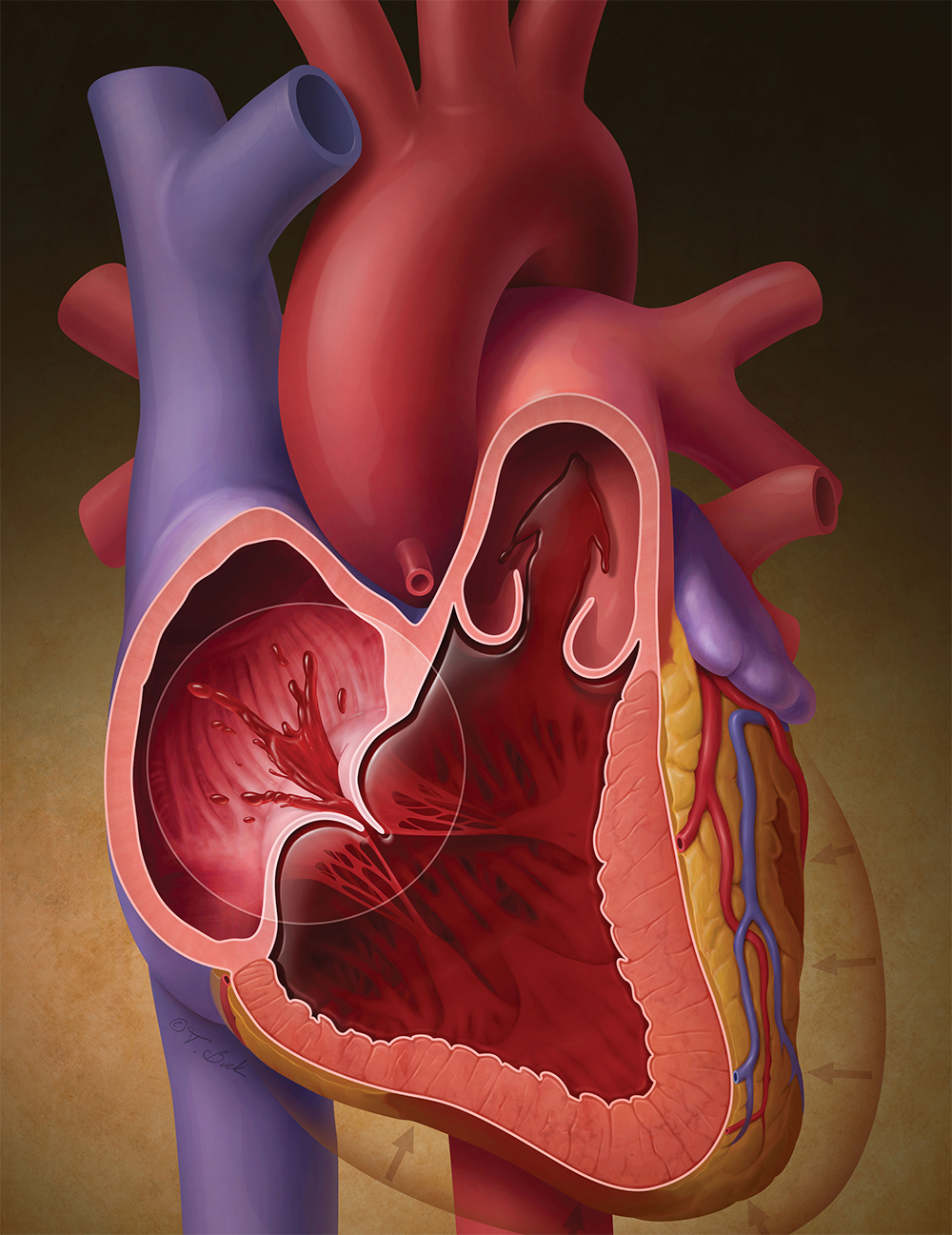
For decades, cardiologists have referred to the tricuspid valve as "the forgotten valve." One reason for this neglect is that tricuspid regurgitation (TR) often goes unnoticed, explains Robert O. Bonow, MD, MACC, Distinguished Professor at Northwestern University Feinberg School of Medicine in Chicago, IL.
Late presentations are common. With increasing TR severity, symptoms of systemic venous congestion, such as edema and those reflective of reduced forward cardiac output, including dyspnea and fatigue, may emerge.
"Tricuspid regurgitation can brew for years and suddenly manifest with symptoms like fatigue, edema and dyspnea," Bonow states. "Also, the tricuspid murmur is typically very soft, unlike the prominent murmur we see with mitral regurgitation (MR)." Assessment of the jugular venous pulse can be diagnostic, although often overlooked in a routine physical exam, and this can be challenging in patients with obesity.
The medical management of TR primarily involves the use of diuretics, which is a Class IIa recommendation. The larger issue arises when diuretics stop working.
With two transcatheter devices approved by the U.S. Food and Drug Administration (FDA) now available, a landmark ACC Expert Consensus Decision Pathway published in 2025,1 and rapidly evolving evidence for transcatheter intervention,2 the question is no longer whether severe TR can be treated, but when to refer.
The Referral Threshold
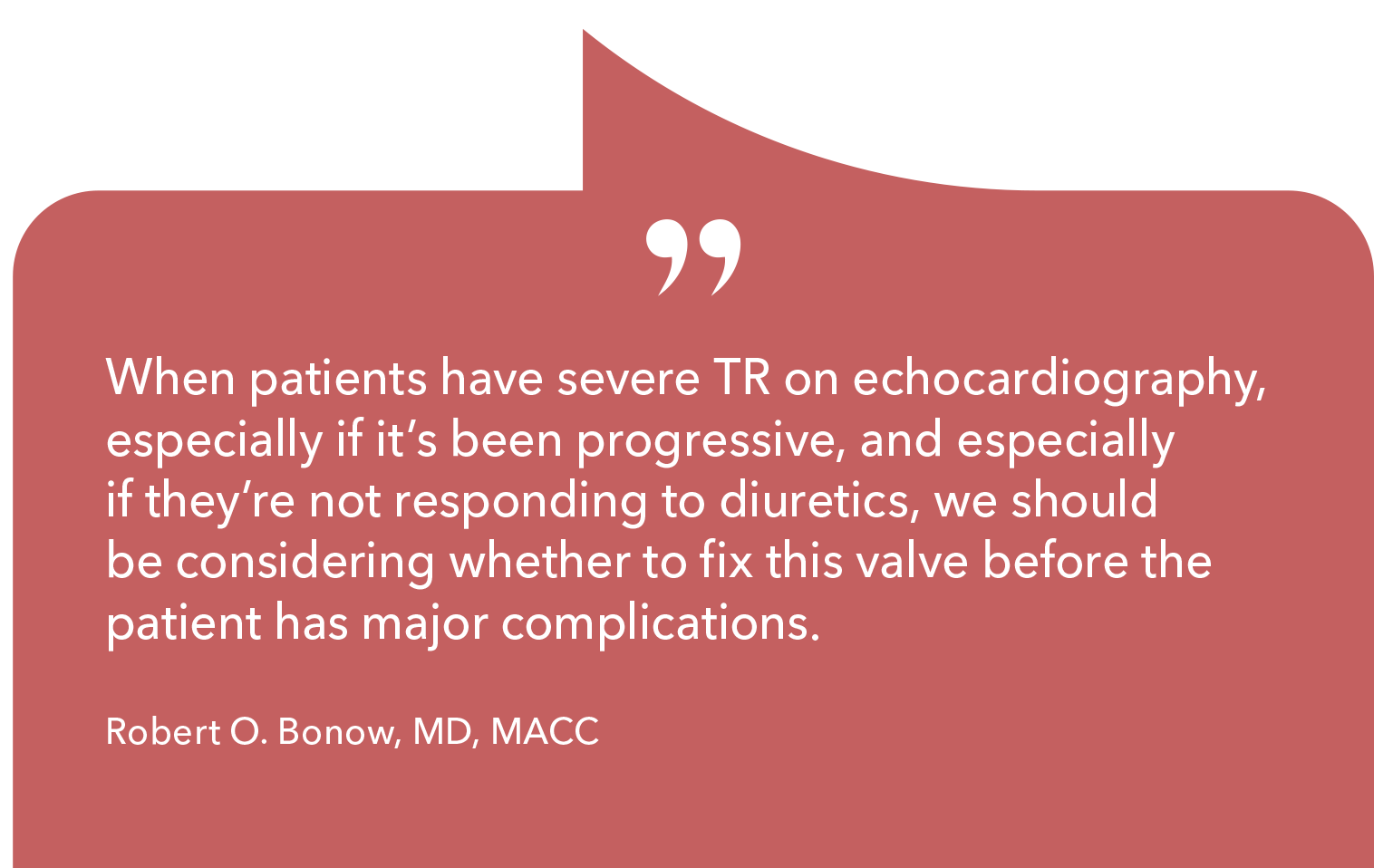
Bonow's threshold is clear. "When patients have severe TR on echocardiography, especially if it's been progressive, and especially if they're not responding to diuretics, we should be considering whether to fix this valve before the patient has major complications," he says. "If your patient has developed liver enzyme abnormalities, you've waited too long."
Also, adds Bonow, "when a patient has mitral disease, we should always be looking for tricuspid disease." Although likely an underestimation of TR prevalence, in an analysis from the STS/ACC Transcatheter Valve Therapy Registry (2019-2021), 14.7% of those undergoing mitral transcatheter edge-to-edge repair (M-TEER) had severe TR at baseline (compared with 2.3% of TAVI patients).1
More advanced manifestations of right-sided congestion, such as abdominal bloating, worsening peripheral edema, weight gain and anorexia, follow later in the course of TR and are ominous.
For Rajendra R. Makkar, MD, FACC, from Cedars-Sinai Medical Center in Los Angeles, referral for TR intervention is related to the lack of randomized trials of medical therapy for TR. "If you have patients who are symptomatic despite reasonable medical therapy, they can be considered for device therapy and, at the very least, should be referred for proper imaging."
Bonow, editor-in-chief of JAMA Cardiology and editor of Braunwald's Heart Disease, and Makkar, whose Cedars-Sinai program is likely the world's largest for transcatheter tricuspid intervention, both bring decades of perspective on the field's evolution.
The Echo Problem
Both experts converge on a striking practical point: the single most important thing a community cardiologist can do is obtain a high-quality echocardiogram, which often means referring them to a comprehensive valve center.
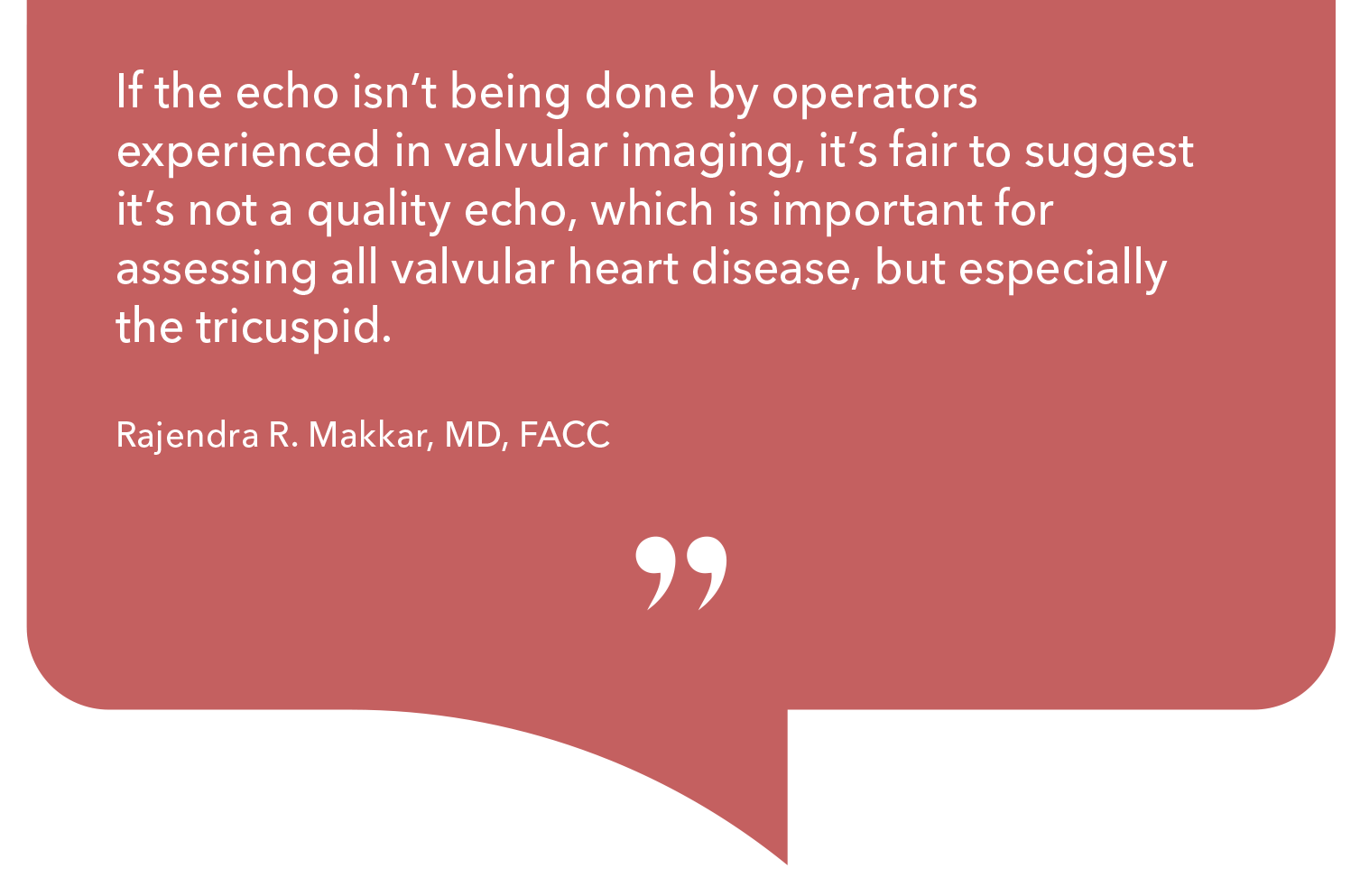
"If the echo isn't being done by operators experienced in valvular imaging, it's fair to suggest it's not a quality echo, which is important for assessing all valvular heart disease, but especially the tricuspid," Makkar says. Without it, severity can be grossly underestimated.
The tricuspid valve is "the hardest to image accurately," adds Bonow. A well-done echo can be relied on to determine TR severity, but "a good 3D transesophageal echocardiogram (TEE) will allow for not just a determination of severity but also the mechanism of the TR."
The Mechanism Equation
Given that secondary TR accounts for about 80% of patients and TR related to implantable device leads accounts for another 10-15% of TR,1 properly identifying the mechanism changes everything, says Makkar. He points to three growing secondary TR drivers: 1) left-sided heart disease progressing to right-sided failure; 2) atrial functional TR – the fastest growing cause – secondary to enlargement of the atria from atrial fibrillation; and 3) cardiac implantable electronic device (CIED) leads that cross the tricuspid and trap the valve leaflets.
CIED-related TR used to prompt lead extraction before intervention, but this has changed. In TRISCEND II, about one-third of patients undergoing transcatheter tricuspid valve replacement (TTVR) had leads left in place.
In real-world registry data from Makkar and colleagues, about 38% of patients had CIEDs.2 The lead is simply "pushed aside – it just goes into the commissure of the valve." Outcomes were similar with patients without leads.
The Device Decision
Two FDA-approved transcatheter options now exist: edge-to-edge repair (T-TEER) with the TriClip (Abbott) and full valve replacement with the Evoque system (Edwards Lifesciences). Makkar summarizes the trade-off crisply. "With replacement, 95-97% of patients will have mild or less residual TR. With repair, almost 30% will have moderate or more residual regurgitation."
Replacement appears more effective at eliminating TR, while repair has shown a more favorable early safety profile. Thirty-day mortality is very low, with no pacemaker risk. Replacement carries more upfront cost. In TRISCEND II, new pacemaker rates were nearly 25% in patients without preexisting CIEDs. In real-world practice, notes Makkar, citing his just-published STS/ACC registry analysis of 1,034 US patients undergoing Evoque TTVR, the rate has dropped to roughly 15% in patients without preexisting CIEDs. "We're better at sizing the valve now, and maybe that puts less pressure on the conduction system." Bleeding complications were reportedly lower in the real-world data, possibly from simplified anticoagulation, among other reasons.
Makkar provides context for the 3.1% 30-day TTVR mortality rate seen in the most recent data, noting that the mortality after surgical tricuspid replacement is in the 8-10% range.
The Staging Advantage
Indeed, a structural advantage of transcatheter therapy is the ability to stage. "With surgery, there's a tendency to fix it all in one shot, which can lead to unnecessary procedures," says Makkar. "About half the time, when you fix the left-sided pathology, the right-sided pathology will improve."
His usual protocol: fix the left-sided lesion first, reassess at 30 days, follow over months to see if a right-sided fix is still needed. With that, he flags mechanisms that will not resolve with left-sided correction: "TR related to leads, prolapse or flail of the valve, or carcinoid heart is obviously not going away because you treated the mitral valve."
The Mortality Question
Neither transcatheter repair nor replacement has demonstrated a consistent reduction in mortality. Approvals thus far rest on TR reduction, symptom improvement and quality-of-life gains. Bonow suggests caution is warranted. "Since it's quality of life driving the composite, there could be a big placebo effect. But these patients are often quite sick, so a mortality reduction might be hard to show," he says.
While the initial pivotal trials did not demonstrate a benefit in reduction in heart failure (HF) hospitalization, extended follow-up from the Tri.FR trial, just presented at ACC.26, may shift that narrative. With no crossover permitted before 24 months (addressing a key limitation of TRILUMINATE) Tri.FR showed that T-TEER (compared with optimal medical therapy) reduced the composite of first HF hospitalization, tricuspid valve surgery or cardiovascular death by 44% (hazard ratio, 0.56; p=0.01), and cut recurrent HF hospitalizations roughly in half (rate ratio, 0.52; p=0.007), with the benefit emerging primarily beyond the first year of follow-up. Mortality itself was not significantly different between groups (30 deaths optimal medical therapy vs. 32 T-TEER).
Makkar reframes the question in disease-trajectory terms: "When you fix aortic stenosis or MR, you see dramatic mortality reduction. But TR is at the end of the cascade. The situation is a little burnt out, so it is harder to show an impact on mortality." Still, one-year mortality in TRISCEND II was similar with – or slightly better than – medical therapy alone.
Makkar's clinical experience convinces him the symptom benefit is real. "I have had patients who were severely compromised, and when you fix their TR, they're suddenly up and functioning."
The Timing Challenge
Both Bonow and Makkar expect the pattern seen with aortic stenosis and MR – initial skepticism followed by expansion to earlier and less-sick patients – to play out with TR. Longer follow-up may yet reveal a mortality signal.
Meanwhile, the message for referring cardiologists is practical: "Obtain for your patient the benefit of a multidisciplinary team totally involved in this area," Bonow says. "Earlier referral to a comprehensive valve center is key – at least to go get the good echo."

Practice Support For the Care Team

Get Certified!
Elevate your structural heart program with ACC's Transcatheter Valve Certification, designed for hospitals performing TAVR and mitral TEER procedures. Built on rigorous quality standards, the certification supports multidisciplinary collaboration, shared decision-making and evidence-based care while leveraging STS/ACC TVT Registry data to drive measurable improvement.
Programs also receive dedicated guidance from an ACC Accreditation Review Specialist to support long-term success and enhanced patient outcomes.
Learn more about valve certification!
Procedural Intervention in Valve Disease Clinical Solutions
The management of patients with valvular heart disease continues to be transformed by advanced imaging and treatment technologies.
ACC's Solution Set helps to close gaps in care related to diagnosis, referral and treatment patterns, as well as provides information on access for novel valve replacement procedures for eligible patients, along with expert consensus decision pathways, patient resource on TR and more.
Make the Most of ACC's Find Your Heart a Home
ACC's Find Your Heart a Home tool now includes hospitals that have earned ACC accreditations and certifications, helping patients and families identify trusted providers. Powered by NCDR and CardioSmart, the tool allows users to search, compare and select hospitals that meet their care needs. Participating institutions demonstrate a clear commitment to quality cardiovascular care. Explore patient resources, hospital profiles, and data reports at FindYourHeartaHome.org.
Download the Latest Guidance Now!
This article was authored by Debra L. Beck, MSc.
References
- O'Gara PT, Lindenfeld J, Hahn RT, et al. 10 Issues for the Clinician in Tricuspid Regurgitation Evaluation and Management: 2025 ACC Expert Consensus Decision Pathway: A Report of the American College of Cardiology Solution Set Oversight Committee. J Am Coll Cardiol. 2026;87:447-486.
- Makkar RR, Gupta A, O'Neill BP, et al. Real-World Outcomes of Transcatheter Tricuspid Valve Replacement: Analysis From the STS/ACC TVT Registry. JAMA. Published online April 13, 2026.
Clinical Topics: Invasive Cardiovascular Angiography and Intervention, Noninvasive Imaging, Interventions and Imaging, Interventions and Structural Heart Disease, Angiography, Echocardiography/Ultrasound, Nuclear Imaging
Keywords: Cardiology Magazine, ACC Publications, CM-Jun-2026, Tricuspid Valve, Tricuspid Valve Insufficiency, Regurgitation, Echocardiography, Transcatheter Cardiovascular Therapeutics, Angiography
