
 Log in to MyACC
20-Year Outcomes For PVI in Patients With Drug-Refractory Paroxysmal AFib
Twenty years after pulmonary vein isolation (PVI) during catheter ablation, stable sinus rhythm was maintained in a quarter of patients with symptomatic drug-refractory paroxysmal atrial fibrillation (PAF), including those taking antiarrhythmic drugs and those who had multiple ablation procedures, according to findings from a study published Feb. 17 in JACC: Clinical Electrophysiology.
This analysis included 154 (median age 76 years, 21% women) of the 161 patients who had electroanatomic mapping–guided, circumferential PVI with irrigated radiofrequency current (confirmed by the double-lasso technique) from 2003 to 2004. Of note, freedom from atrial fibrillation (AFib) or atrial tachycardias (ATs) after repeat ablation procedures was evaluated in all patients. Very late AT recurrence was classified as recurrence >10 years after last ablation, and cardiovascular outcomes were analyzed over 20 years post PVI.
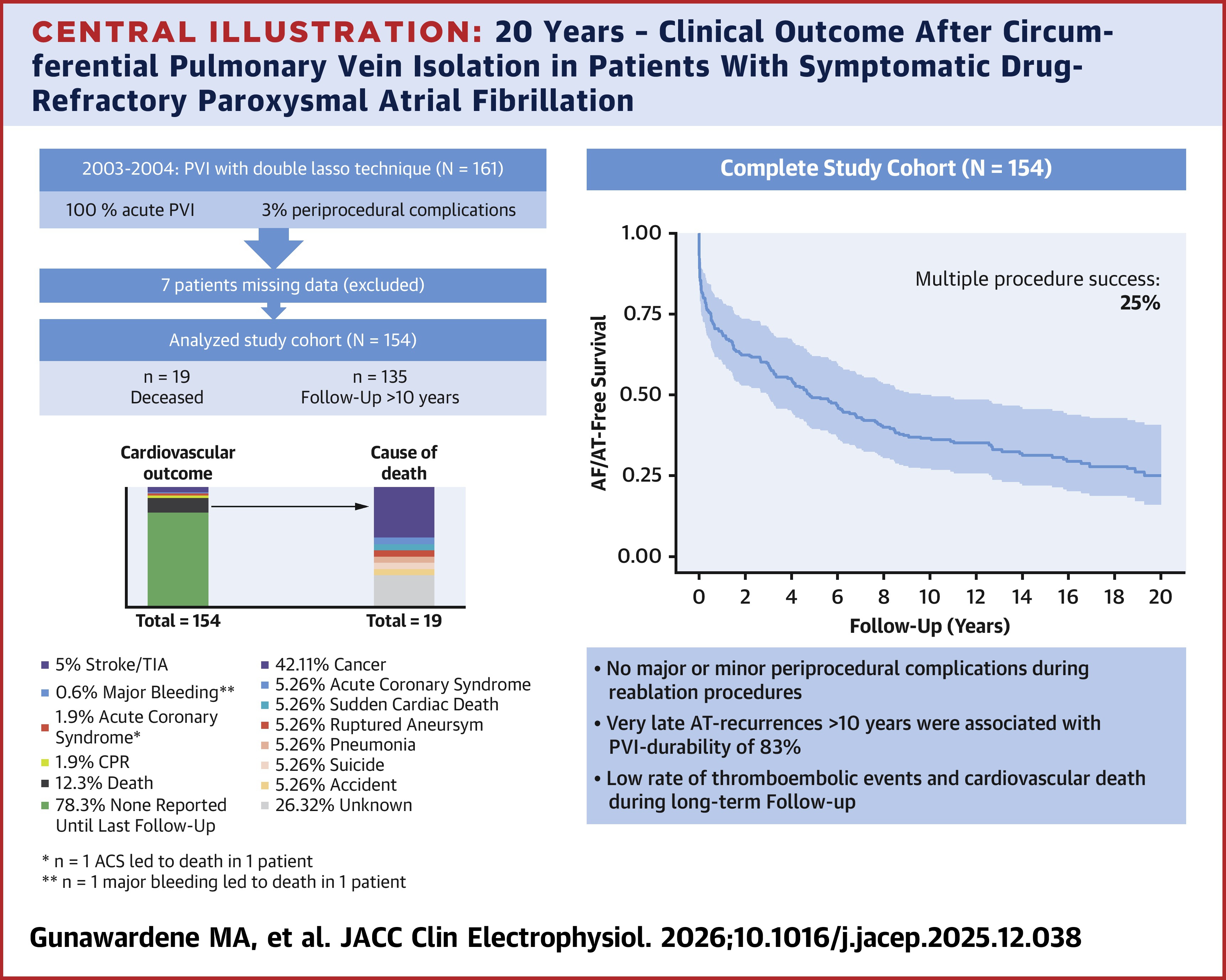
Results showed that multiple procedural success was 25% with a mean of 2±1 ablation procedures; 24% of patients were still taking antiarrhythmic drugs. Additionally, 20 of 154 patients (13%) progressed from PAF to persistent AFib, and 3% of patients experienced very late atrial arrhythmia recurrences between 10 and 20 years after the index PVI. Very late AT recurrences were associated with high (83%) PVI durability, suggesting alternative underlying mechanisms beyond PV triggers. Oral anticoagulation was discontinued in 48% of patients, and of those 73% were still in stable sinus rhythm at their last follow‑up.
Long-term outcomes included thromboembolic events (4.5%), cardiopulmonary resuscitations (2%), acute coronary syndromes (2%) and major bleeding (0.6%). Nineteen patients of the overall cohort died (16% cardiovascular).
Study limitations include the absence of a prospectively matched control group, unknown cause of death in some patients and limited generalizability.
“Our findings are consistent with previous studies highlighting the persistent nature of arrhythmia recurrence despite catheter ablation,” write Melanie A. Gunawardene, MD, et al. “…further studies with larger populations are needed to confirm [these study findings].”
Clinical Topics: Acute Coronary Syndromes, Anticoagulation Management, Arrhythmias and Clinical EP, Anticoagulation Management and ACS, Anticoagulation Management and Atrial Fibrillation, Implantable Devices, EP Basic Science, SCD/Ventricular Arrhythmias, Atrial Fibrillation/Supraventricular Arrhythmias
Keywords: Acute Coronary Syndrome, Anti-Arrhythmia Agents, Atrial Fibrillation, Pulmonary Veins, Catheter Ablation, Electrophysiology, Anticoagulants, Hemorrhage, Tachycardia
< Back to Listings


