Africa Remains Significantly Underrepresented in Clinical Trials
African populations remain markedly underrepresented in the randomized controlled trials (RCTs) that shape global cardiovascular care, according to a new systematic review of studies published between 2019 and 2024 in leading general and cardiovascular journals.
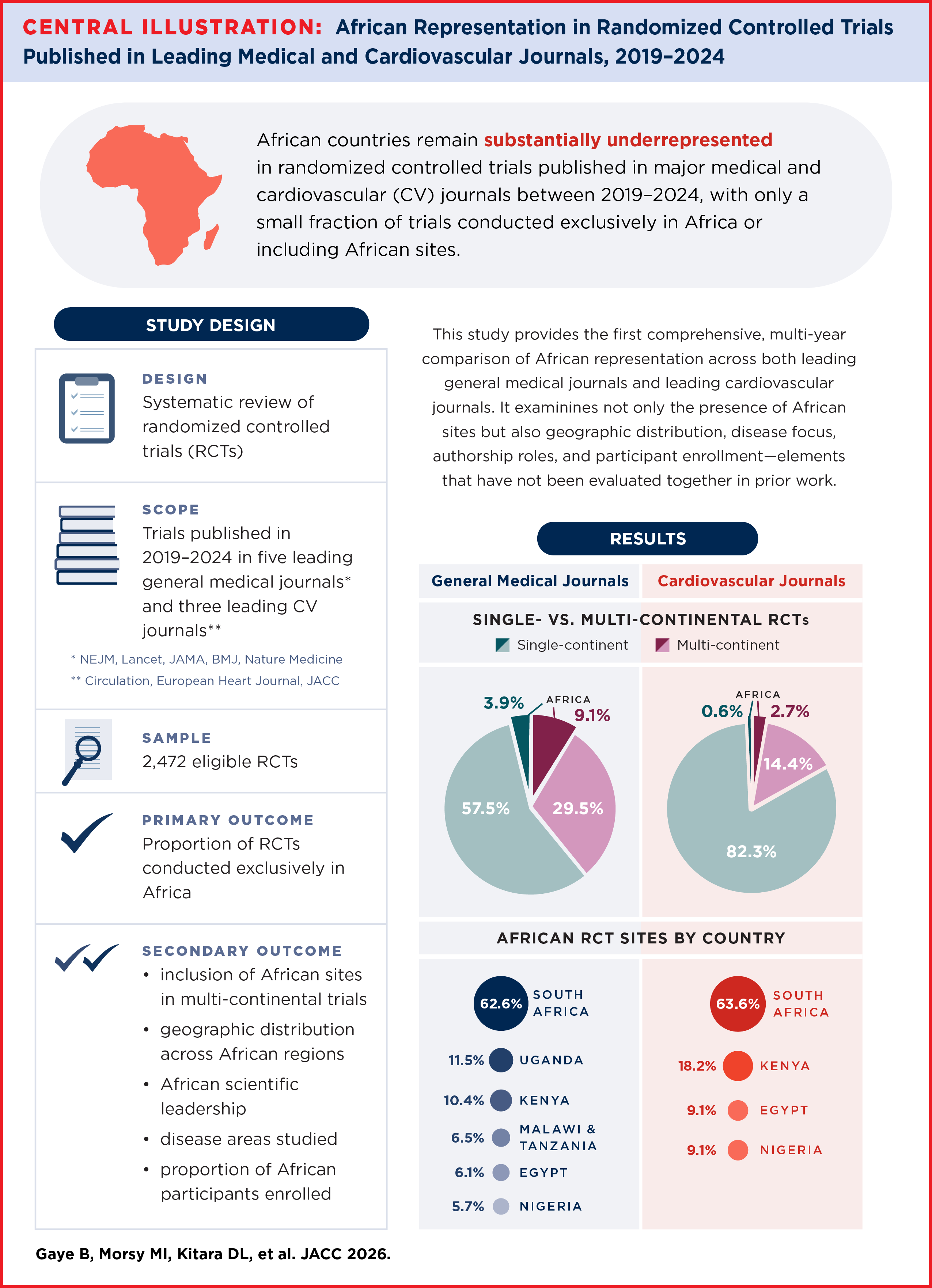
The review, published in JACC, found that across 2,138 RCTs included in top general medical journals, only 83 (3.9%) were conducted exclusively in Africa, and only 195 (9.1%) included African sites. Representation was even lower in cardiovascular-specific journals: just 2 of 334 trials (0.6%) were Africa-only, and 9 (2.7%) included any African participation. South Africa accounted for most activity, with southern Africa dominating regionally and central Africa minimally represented.
The research focus of RCTs also diverged, with Africa-only trials largely centered on infectious diseases (75.9%). Only three trials addressed cardiovascular disease. In contrast, African participation in multicontinental trials more often involved noncommunicable diseases, including cardiovascular disease. Additionally, while African investigators frequently led trials conducted solely on the continent, they were rarely in leadership roles in global studies.
The findings point to a structural imbalance with direct clinical implications, the authors say. “Despite a rapidly rising burden of [cardiovascular disease], Africa accounts for a disproportionately small share of global cardiovascular RCTs. This gap reflects not a lack of clinical need or scientific capacity, but persistent structural constraints, including limited domestic investment, underdeveloped cardiovascular trial infrastructure, shortages of specialized research personnel, and funding that favors infectious diseases,” write Bamba Gaye, MD, PhD; Moustafa I. Morsy, MSC, et al.
The lack of representation also raises concerns about generalizability and treatment applicability across diverse populations. Gaye, Morsy and colleagues emphasize that inclusion is essential to scientific validity. “The inclusion of African populations in biomedical and clinical research is not simply an issue of representation. It is fundamentally a matter of innovation,” they write. “Excluding African populations produces biased evidence, incomplete biology, reduced generalizability, suboptimal therapeutics, and missed discovery opportunities.”
The researchers highlight that closing this gap will require investment in trial infrastructure, workforce capacity, and equitable leadership to ensure evidence reflects global disease burden. The outline priority actions needed by funders, journals and academic societies to advance equitable clinical trials in Africa, noting that “meaningful inclusion” will ultimately strengthen “external validity, causal inference, precision medicine, drug safety, and novel discovery.”
Clinical Topics: Cardiovascular Care Team
Keywords: Global Burden of Disease
< Back to Listings


