TREAT-PVC: LLTS vs. Sham Stimulation in Reducing Premature Ventricular Complexes
Both low-level tragus stimulation (LLTS) of the auricular branch of the vagus nerve at the tragus and sham stimulation similarly reduced premature ventricular complexes (PVCs) and influenced the heart rate variability (HRV) parameters in patients with idiopathic PVC," based on findings from the TREAT-PVC trial presented at HRS 2026 and simultaneously published in JACC: Clinical Electrophysiology. The results suggest "substantial placebo effects" that should be explored in future transcutaneous neuromodulation studies, researchers said.
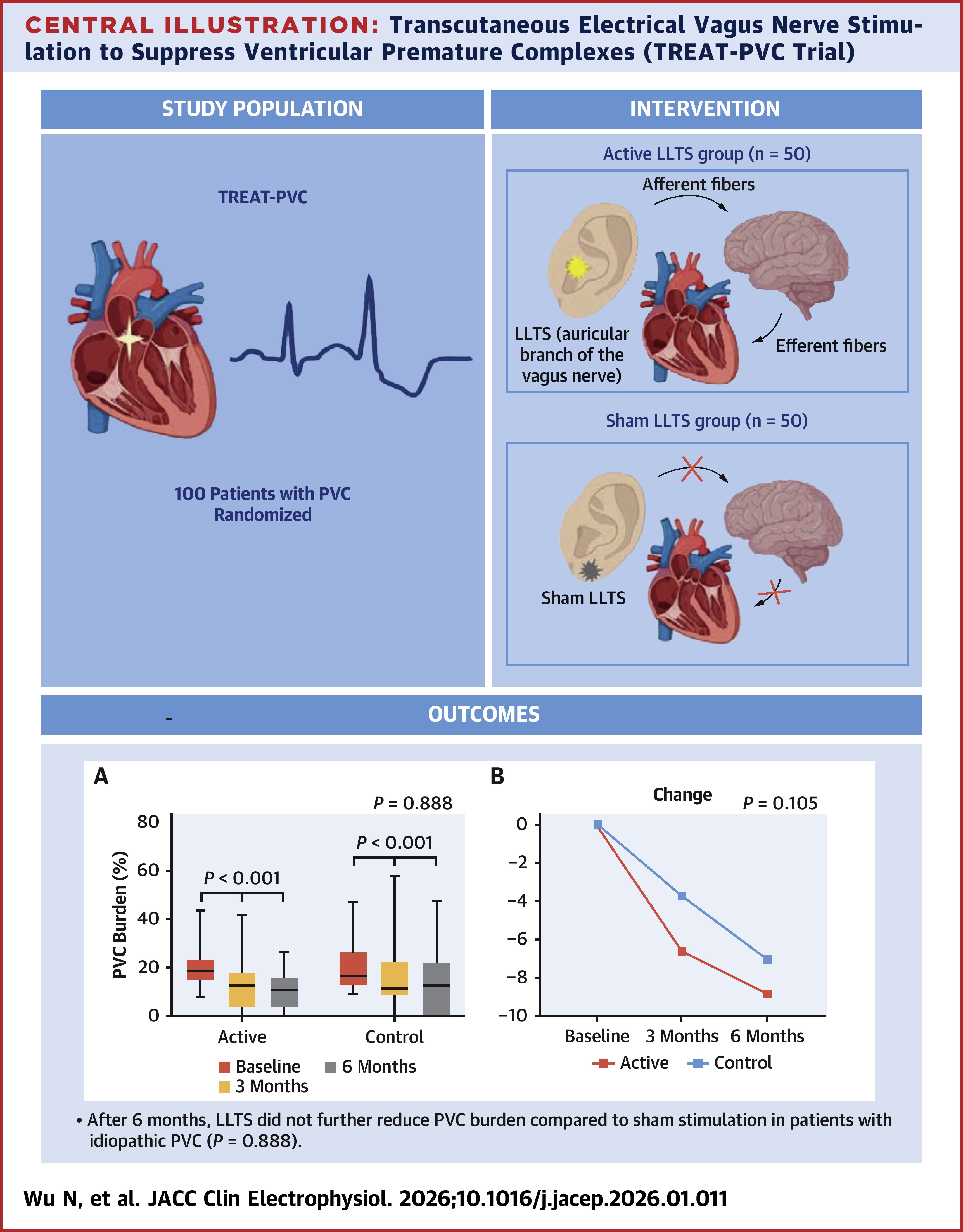
The trial, conducted by Nan Wu, MD, et al., randomized 100 patients with >10% PVC burden to either LLTS or sham stimulation to the earlobe (20 Hz, 1 mA below the discomfort threshold; 1 hour daily). Researchers assessed the PVC burden in both groups at six months using 10-day ambulatory electrocardiographic monitoring.
Overall results found both groups had reduced PVC burden at six months, with the LLTS median value ranging from 18.7% to 11.1% [p<0.01] and the sham median value ranging from 16.7% to 12.6% [p<0.01]). No significant differences were observed between the two groups.
Similarly, both LLTS and sham stimulation led to significant changes in the frequency domain of HRV parameters (increased low frequency, high frequency, and very low frequency power; and a reduced low frequency/ high frequency ratio), "suggesting that autonomic balance shifted toward parasympathetic dominance," according to the study investigators. Again, no major differences between the two groups were noted.
In other findings, skin sympathetic nerve activity and inflammatory markers remained unchanged in both groups, according to the researchers.
"Further studies are needed to elucidate the mechanisms underlying PVCs and identify subgroups responsive to neuromodulation therapies," said Wu and colleagues. They add that future studies should also explore optimal stimulation sites, parameters, and devices for patients with PVC.
In a related editorial comment, Xiao Liu, MD, PhD, and Peng-Sheng Chen, MD, add, "These findings highlight the substantial influence of placebo effects and intrinsic variability in PVC burden, underscoring the need for cautious interpretation of neuromodulation efficacy in ventricular arrhythmias."
Clinical Topics: Arrhythmias and Clinical EP, Implantable Devices, SCD/Ventricular Arrhythmias, Atrial Fibrillation/Supraventricular Arrhythmias
Keywords: Vagus Nerve, Electrocardiography, Ambulatory, Arrhythmias, Cardiac, Placebo Effect, Electrocardiography
< Back to Listings


