Integrated Polygenic Risk Scores Offer Implementable Framework For Predicting CV Traits
Integrated polygenic risk scores (PRS) offer an implementable framework for genetic risk reporting and are available as a clinically orderable test, according to a validation study using Mass General Brigham Biobank participants and published April 29 in JACC.
Researchers analyzed clinical and genotype data from three large biobanks, ultimately using Mass General Brigham Biobank participants for validation, which included 53,306 genotyped participants in a multihospital academic health system.
Using an elastic-net approach called PRSmix, Anika Misra, BS, et al., developed the PRS for eight cardiovascular traits using the National Institutes of Health’s All of Us Research Program genomic data: coronary artery disease (CAD), atrial fibrillation (AFib), type 2 diabetes (T2D), venous thromboembolism (VTE), thoracic aortic aneurysm (TAA), extreme hypertension, severe hypercholesterolemia and elevated lipoprotein(a) (Lp[a]). Integrated PRS were externally validated in participants using logistic regression and adjusting for age, sex and ancestry.
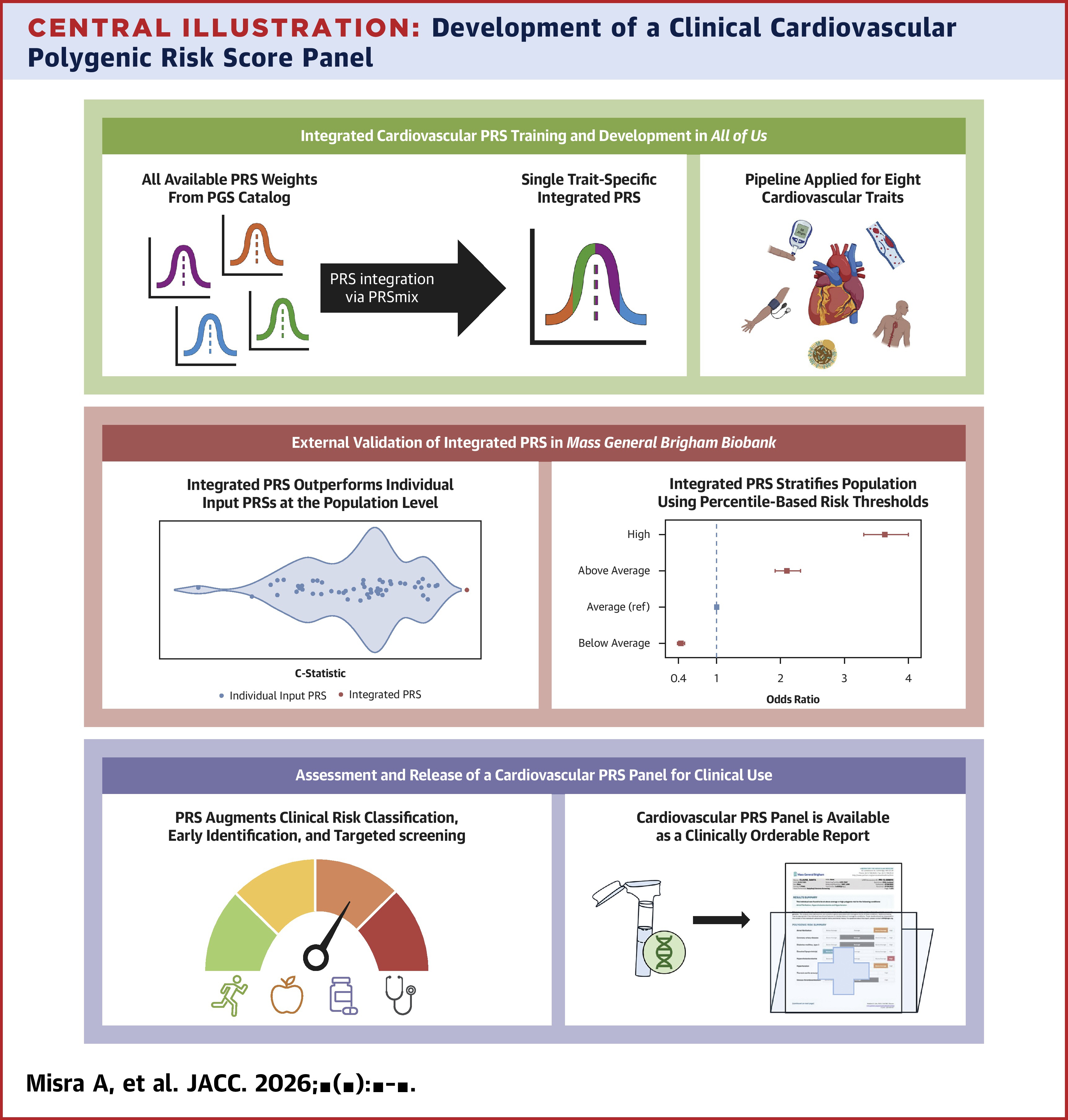
Of the included participants (mean age of 53 years, 56% women, 55% European), integrated PRS demonstrated appropriate calibration and robust discrimination across the eight cardiovascular traits. Participants in the highest genetic risk category (top 10% of PRS distribution, or top 20% for rarer TAA and VTE]) demonstrated significantly increased odds of disease compared with those at average genetic risk (26th-75th percentiles, or 21st-80th percentiles for TAA and VTE).
Observed odds ratios were 3.7 for CAD, 3.1 for T2D, 3 for AFib, 2.1 for hypertension, 4.1 for hypercholesterolemia and 41 for elevated Lp(a), with lower but still significant associations for VTE (1.9) and TAA (1.7).
Of note, integration of PRS into multivariable clinical risk models enhanced risk stratification, with prospective analyses demonstrating significant associations with cardiovascular events.
Misra and colleagues write that their approach “provides a foundation for consistent performance evaluation and illustrates how polygenic risk might complement traditional predictors in preventive care.” They emphasize the need for “prospective studies and broader validation across diverse populations to determine how integrated PRS can inform risk assessment, guide interventions and promote equitable implementation.”
Clinical Topics: Cardiovascular Care Team
Keywords: Genotype, Risk
< Back to Listings


