ORBITA Analysis: Microvascular Resistance Impacts PCI Benefit
Patients with lower microvascular resistance (MVR) saw greater placebo-controlled benefit from PCI, according to a retrospective analysis of the ORBITA trial published April 29 in JACC: Cardiovascular Interventions.
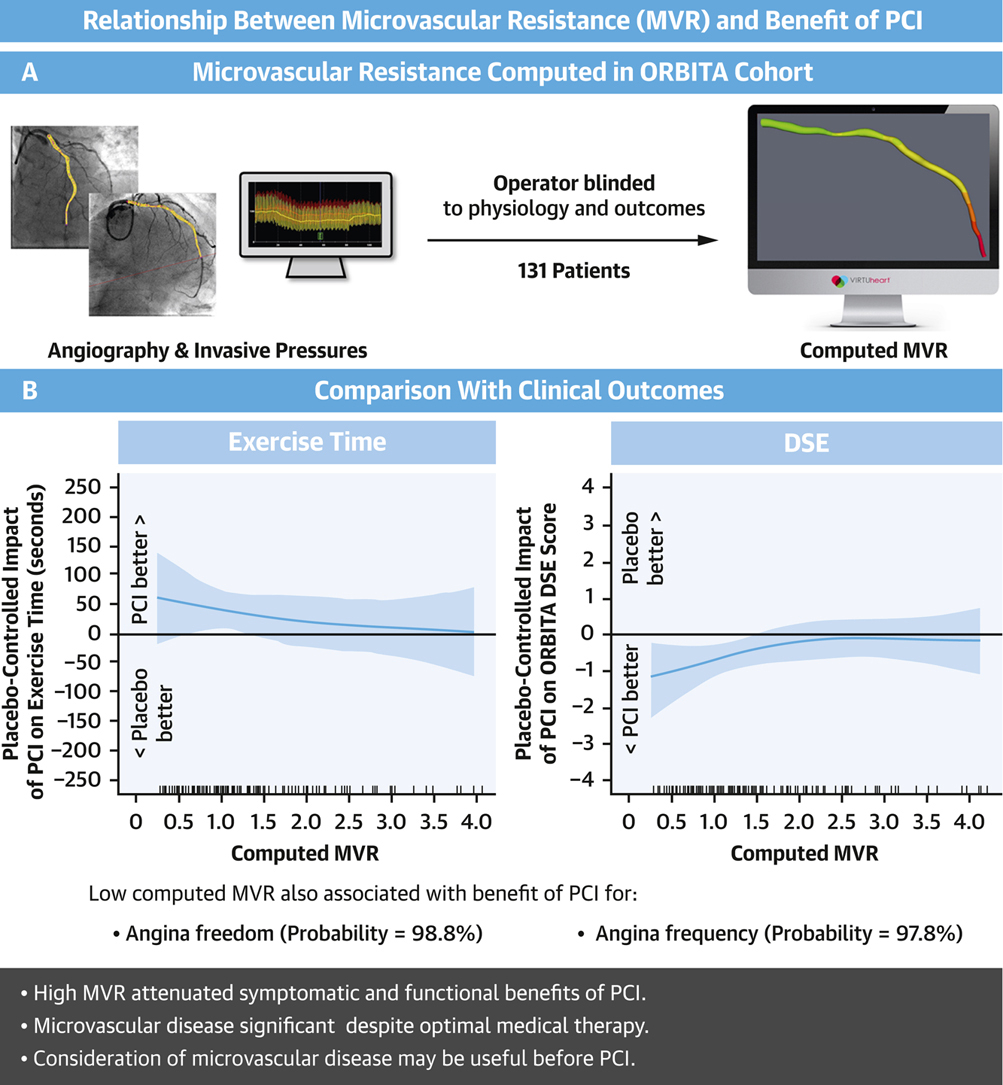
Investigators Daniel J. Taylor, MBChB, and colleagues used computational fluid dynamics (CFD) to calculate the hyperemic MVR (MVRCFD) of 131 patients (mean age, 66; 31% women; median MVRCFD, 1.38 mm Hg•min/mL) with stable angina, severe single-vessel coronary artery disease and optimal antianginal medication enrolled in the double-blind ORBITA trial, randomized 1:1 to either PCI or placebo.
Results at six weeks showed that baseline exercise time correlated with MVRCFD (ordinal correlation coefficient, 0.20). Patients with the lowest resistance (20th centile of MVRCFD) experienced a 48-second placebo-controlled increase in exercise time (probability of benefit [Pr], 98.5%) while those with the highest resistance (80th centile) derived only a 16-second benefit (Pr, 75.2%) with modest statistical evidence for interaction (Print, 83.1%).
Low MVR was also associated with a 3.5-fold higher likelihood of complete freedom from angina (Pr, 98.8%; Print, 90.0%), and improvements in dobutamine stress echocardiography score (Pr, 99.9%; Print, 96.5%) and angina frequency (Pr, 97.8%; Print, 89.2%).
Conversely, those with the highest resistance showed little or no benefit from PCI across these outcomes, suggesting coronary microvascular dysfunction may blunt the procedure's effects.
"In recent years, the significance of [coronary microvascular dysfunction] for myocardial ischemia has been drawn into sharp focus... The results of this study suggest an important, biologically plausible, relationship between MVRCFD and response to PCI in those with significant epicardial stenoses," write Taylor, et al. "The ability to better identify those likely to derive benefit from PCI and those who may be better suited to medical therapy alone is clearly beneficial but requires prospective evaluation, including MVR diagnostic threshold determination for dichotomizing patients."
Clinical Topics: Invasive Cardiovascular Angiography and Intervention, Noninvasive Imaging, Stable Ischemic Heart Disease, Atherosclerotic Disease (CAD/PAD), Interventions and Coronary Artery Disease, Interventions and Imaging, Echocardiography/Ultrasound, Chronic Angina
Keywords: Constriction, Pathologic, Coronary Artery Disease, Hydrodynamics, Angina, Stable, Echocardiography, Stress, Percutaneous Coronary Intervention
< Back to Listings


