Reimagining Quality: From Individual Projects to a Collective Movement
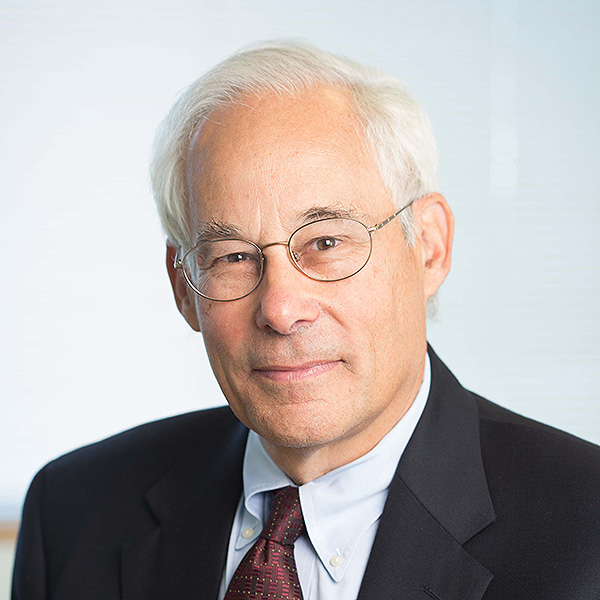
Meet Donald Berwick, MD, MPP – cofounder, president emeritus and senior fellow of the Institute for Healthcare Improvement (IHI). His work in the quality space has spanned many roles, from a longstanding faculty member at Harvard Medical School to former administrator of the Centers for Medicare and Medicaid Services and beyond.
As this year's Ralph G. Brindis Keynote speaker, Berwick will explore how the definition of quality has evolved, expanding to encompass equity, advocacy and the power of collective action. His address will challenge quality professionals to reimagine quality as more than an initiative, but instead as a movement that champions health, dignity and lasting change.
1. What challenges will you tackle in your Keynote?
Since the quality movement in health care first started in the late 1990s, the scope and content of quality as a concept have continually evolved. We still must engage projects – one-at-a-time focused, team-based efforts with clear, circumscribed aims and (usually) limited duration. Over time, we have learned to engage culture change to allow improvement methods to thrive, as well as domains of performance, such as equity, coproduction of care and patient safety, that demand continual change and do not fit neatly into project thinking. Meanwhile, the improvement movement has taken notice of challenges of collective action, which often abut efforts in other sectors. And more recently, the quality movement has encountered political challenges, which demand attention and from which the effort to improve cannot escape.
2. You describe quality as a movement. Was there a moment when you began to see quality as more than individual projects or metrics?
When IHI was founded and the quality improvement sciences reached the attention of health care leaders, most of the health care professionals who engaged were more or less mavericks. The enterprise of improvement was not generally on the strategic screen of organizations. Two reports from the Institute of Medicine, "To Err Is Human" (1999) and "Crossing the Quality Chasm" (2001), were watersheds to me. More mainstream leaders became convinced that health care had serious, pervasive quality problems and deserved the attention of executives. Large-scale programs, such as IHI's 100,000 Lives Campaign, gave momentum to this growth.
3. What role does health equity, community engagement and advocacy play in advancing high-quality care?
It has been crystal clear that many important improvements in care and health require that health care systems link with other systems and give deference to communities and groups who are much more proximate to the challenges of daily life, especially at the margins of our economy and political power. 'There is no quality without equity' has, properly, become a rallying cry.
4. What advice would you give clinicians looking to champion quality at their institutions?
I'd say get started. Action is a masterful teacher, and the "Plan, Do, Study, Act" cycle is a mnemonic for the learning that is at the heart of scientific improvement. I'd also say find your friends. Groups of like-minded clinicians can achieve wonders that soloists cannot. Finally, become a student. Books, courses and networks focused on health care improvement are abundant and worth your time.
5. If quality is a movement powered by collective action, what does future success look like?
Given the current financial and political climate, we are in danger of losing our way as professionals and as professional organizations. The risks are enormous, and I now believe that political activism is essential. Unless we, as healers, rise to protect the least wealthy and most challenged among us, then who will?
Keywords: Quality Summit, Quality of Health Care, Quality Improvement, Registries
