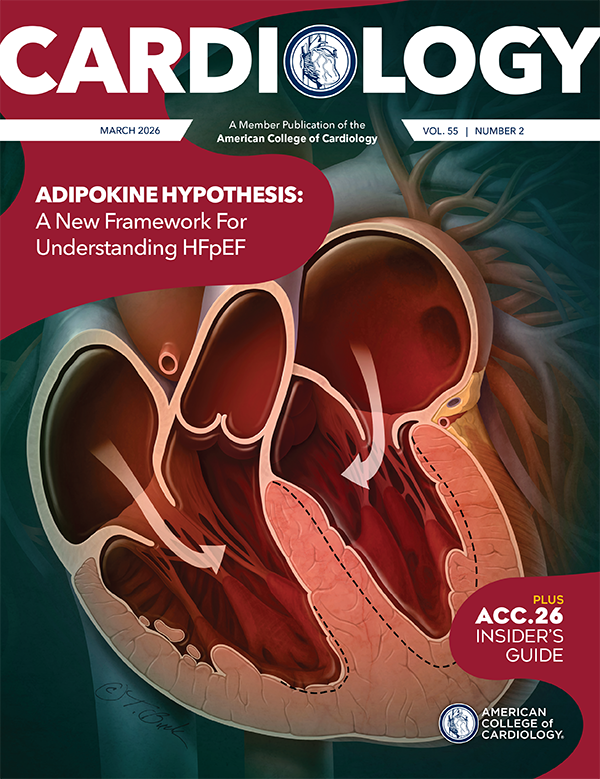
Cover Story | The Adipokine Hypothesis: A New Framework For Understanding HFpEF
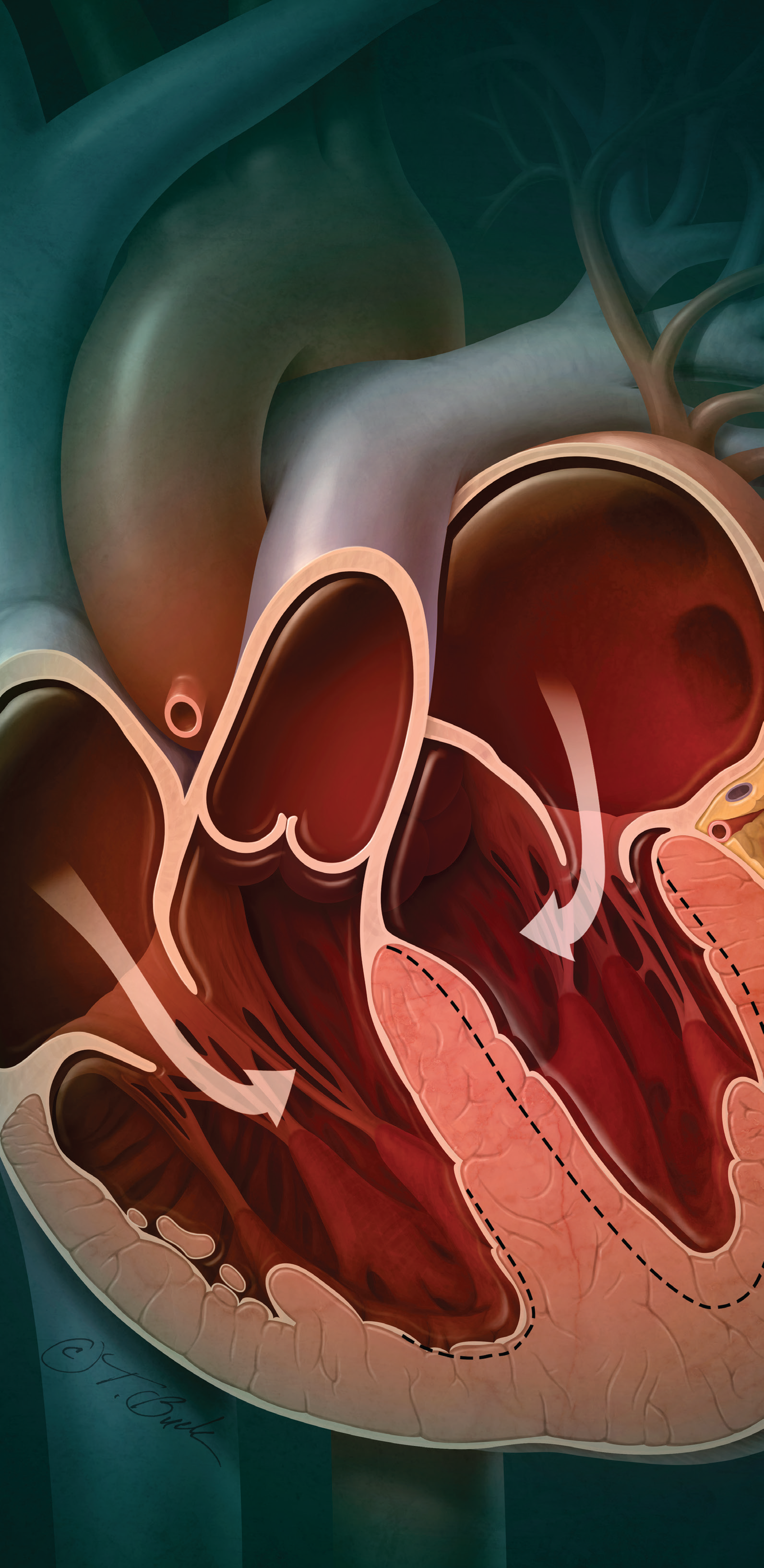
Fourteen hours a day, nearly every day for a year. That's how long it took Milton Packer, MD, FACC, to write his groundbreaking hypothesis connecting adipokines and visceral adiposity to heart failure with preserved ejection fraction (HFpEF).1 It marks the pinnacle of his extraordinary career and bookends his neurohormonal hypothesis for heart failure with reduced ejection fraction (HFrEF), published 33 years ago.2
The adipokine hypothesis is a 105-page paper with more than 1,800 references and 28,000 words published in JACC in October 2025, with an entire issue subsequently devoted to the topic.
The paper assembles and synthesizes decades of evidence, Packer says, incorporating countless threads that link adiposity and HFpEF. "I didn't do that because I had plenty of spare time on my hands," he says of the massive number of references the paper contains. "It was important to show this was not just a crazy idea that came out of thin air. This is a formal proposal of a hypothesis with incredibly diverse components that were developed over decades. It was so important to put hundreds of pieces of the puzzle together in one place."
The hypothesis offers a unifying framework that could revolutionize how clinicians conceptualize and treat HFpEF. At its core is the understanding that HFpEF is not a disorder of cardiomyocytes or comorbidity-driven pathways. Instead, it is a disease of dysfunctional visceral adipose tissue, long thought of as merely a storage vehicle for triglycerides. However, visceral fat – the kind that surrounds internal organs – is now widely recognized as a metabolically active endocrine organ that secretes signaling molecules, i.e., adipokines, which transmit the biological state of adipose tissue to other organs.

Adipose tissue in a lean, healthy person exerts cardioprotective, anti-inflammatory and antifibrotic effects, Packer explains. But as visceral adipose tissue mass increases, the biology changes. It becomes proinflammatory, prohypertrophic, profibrotic and antinatriuretic. "The heart is particularly sensitive to the effect of these adipokines," he says.
Studies show that higher levels of proinflammatory adipokines increase the risk and severity of HFpEF, as well as convey a worse prognosis.
This altered adipokine milieu explains the defining features of HFpEF, his hypothesis contends. Sodium retention leads to plasma volume expansion; systemic and myocardial inflammation promotes coronary microvascular dysfunction and cardiac fibrosis; and prohypertrophic signaling drives pathological ventricular remodeling.
HFpEF is the cumulative result of years of adipokine-mediated injury. Adipokines progressively remodel the heart, altering its structure and distensibility long before overt clinical HF appears. The disease emerges slowly, molecule by molecule, signaling cascade by signaling cascade.
Understanding Adipokines
Packer groups adipokines into three domains:
- Domain I Adipokines: Cardioprotective molecules such as adiponectin, which protect against inflammation and fibrosis.
- Domain II Adipokines: Cardioprotective molecules that are upregulated by adiposity as a compensatory response mechanism – the body's attempt to counteract the damage caused by visceral fat.
- Domain III Adipokines: Proinflammatory, prohypertrophic, profibrotic and antinatriuretic proteins whose secretion is heightened in adiposity.
"HFpEF results from an adiposity-driven imbalance that promotes domain III adipokines but suppresses domain I adipokines, with domain II adipokines unable to completely counter this imbalance," he writes.
Supporting the Hypothesis
The adipokine hypothesis is built on 12 mutually reinforcing lines of evidence, including:
- Obesity and HFpEF exhibit numerous parallels in their molecular, pathophysiological and clinical features, including neurohormonal activation, sodium retention, plasma volume expansion, cardiac hypertrophy and systemic inflammation.
- Mendelian randomization studies link visceral adiposity with HFpEF.
- Changes in visceral adiposity and circulating adipokines are observed years before diagnosis, predicting HFpEF but not HFrEF.
- 85-95% of people with HFpEF have abdominal obesity and excess visceral adiposity.
- Adipokines have established effects on cardiac structure and function that can lead to HFpEF. The adipokine imbalance parallels the severity of the disease.
- Bariatric surgery or drug treatments for HFpEF that shrink visceral fat simultaneously increase Domain I adipokines and reduce Domain III adipokines.
- Excess adiposity appears to identify patients most likely to respond to current HFpEF treatments.
- Access the full issue. Read Packer's State-of-the-Art Review and all the Viewpoints and listen to author interviews. Don't miss a video presentation where Packer introduces the adipokine hypothesis.
- Access JACC's Adipokine Explorer, an interactive tool to navigate the evidence to support clinical decisions.
The most powerful evidence supporting the adipokine hypothesis comes from experimental studies showing that signaling molecules secreted specifically from adipose tissue cause HFpEF.
A high-fat diet is sufficient to cause HFpEF in animal models, in which adipose tissue secretes exceptionally high levels of proinflammatory adipokines. However, if the secretion of only one adipokine is silenced only in adipose tissue – but not in the heart, kidney or any other organ – the animal does not develop HFpEF. Such silencing studies have been carried out for at least seven different adipokines providing causal proof that deleterious molecular signals secreted and transmitted from dysfunctional fat causes HFpEF.
The adipokine hypothesis appears to explain why current HFpEF therapies are effective. SGLT2 inhibitors, mineralocorticoid receptor antagonists and incretin-based therapies can reduce visceral fat mass and normalize the dysfunctional biological state of adipose tissue.
The hypothesis also helps explain why the condition predominantly affects older patients and women. "As people age, their subcutaneous fat is redistributed to visceral adipose tissue depots," Packer says. "This phenomenon is particularly pronounced in women after menopause."
It seems likely that many people with obesity may have undiagnosed HFpEF, Packer notes. Importantly, addressing visceral adiposity before HFpEF develops may prevent the development of the disease.
Many physicians attribute the exertional dyspnea seen in people with obesity to their high BMI, says Packer, thus these patients never get a proper workup. "That's just not right. These patients deserve a diagnosis since we have effective treatments for HFpEF."
The Road Ahead: Testing the Hypothesis
The most important feature of the adipokine hypothesis is that it makes falsifiable predictions, Packer says, a critically important requirement for any valid scientific framework. "Some may be right, some may be wrong, some may need to be modified in some way. But the adipokine hypothesis paper presents a highly detailed roadmap for future research."
New drugs called adipokine modulators are being developed for the treatment of HFpEF. "For almost every adipokine that I identify in my paper, there is a new pharmacological modulator that specifically addresses it," he says. Early results are encouraging, particularly with drugs that antagonize activin A, a key proinflammatory adipokine.
"If we learn that targeting adipokines, rather than body weight, has an impact on HFpEF, then the adipokine hypothesis will have been fulfilled," he says.
Packer's paper required 15 reviews and three cycles of revision before JACC finally accepted it. But it was worth it. "Isn't it important to read a paper that changes how you think about things?" he asks. "A paper that changes your whole perspective of the universe of a certain disease. It may be right; it may be wrong; and it may be half right. But to be worth someone's time, a paper should stimulate readers to think. There is no more joyful human experience than that."
Future Directions: Putting the Hypothesis to the Test
Across 10 JACC Viewpoints in a special focus issue of JACC, experts outlined a road map to interrogate and validate the adipokine hypothesis, highlighting key questions and research priorities to advance the understanding of the pathophysiology of HFpEF and ultimately its diagnosis and management – and perhaps even prevention.
"Bold hypotheses require rigorous scrutiny," writes JACC Editor-in-Chief Harlan M. Krumholz, MD, SM, FACC. "...We did not publish this work because it is definitive. We published it because it is generative. It provokes new questions, offers a coherent structure for scientific exploration, and invites rigorous challenge."
While most of the authors agreed that dysfunctional adiposity, especially visceral fat and adipokine signaling, is a significant contributor to HFpEF, some noted it's not a universal driver, with HFpEF pathways that extend beyond fat-driven pathways that should not be overlooked in the research arena. Calls for deeper mechanistic research and targeted clinical trials with inclusion that evolves with the expanding understanding of adiposity-related HFpEF to validate the hypothesis and guide personalized therapy were encouraged as next steps.
A shift beyond BMI was also deemed essential. Measures such as waist circumference, visceral fat quantification, imaging-based adiposity and biomarker profiles are needed to develop a multidimensional adiposity assessment to identify patients most likely to benefit from metabolic therapies.
Key sex-based differences also remain unresolved. Open questions include whether adipokine-driven mechanisms differ between men and women, how sex hormones and reproductive transitions affect disease mechanisms, and why weight-loss therapies produce different degrees of weight loss but similar HF outcomes across sexes.
Additionally, rigorous translational research was urged to test causal links between adiposity, adipokines and HpEF, along with phenotypic stratification and biomarker identification of adipokine signatures and drug targets, as well as defining "responder" phenotypes for refining therapeutic targeting. Interventional trials of adipokine-targeted therapies beyond weight loss, and epidemiological studies of lean HFpEF and diverse ethnic populations should also be prioritized.
References
- Packer M. The adipokine hypothesis of heart failure with a preserved ejection fraction: a novel framework to explain pathogenesis and guide treatment. JACC. 2025 Oct, 86 (16) 1269-1373. https://doi.org/10.1016/j.jacc.2025.06.055
- Packer, M. The neurohormonal hypothesis: A theory to explain the mechanism of disease progression in heart failure. JACC. 1992 Jul, 20 (1) 248–254. https://doi.org/10.1016/0735-1097(92)90167-L
Clinical Topics: Diabetes and Cardiometabolic Disease, Dyslipidemia, Heart Failure and Cardiomyopathies, Hypertriglyceridemia, Lipid Metabolism, Acute Heart Failure
Keywords: Cardiology Magazine, ACC Publications, CM-Mar-2026, Myocytes, Cardiac, Anti-Inflammatory Agents, Adipokines, Adiposity, Triglycerides, Heart Failure
