Non-Pharmacologic Therapies to Reduce Morbidity, Improve Function of Patients With HF
A recent State-of-the-Art Review published in JACC: Heart Failure provides evidence-based recommendations on how to best optimize the care of patients with heart failure (HF) through non-pharmacological strategies, including diet, exercise and cardiac rehabilitation, as well as addressing sleep-disordered breathing, mood disorders and substance use disorders.
Onyedika J. Ilonze, MD, FACC, et al., describe non-pharmacological treatments for patients living with HF as "important but often underutilized," stating: "Non-pharmacologic therapies may reduce symptom burden, improve quality of life, and even improve survival when added to background guideline-directed therapy for HF."
The authors outline recommended diets for most patients with HF, including the DASH diet (low in sodium and sugar and high in fruits, vegetables and grains), Mediterranean and other plant-based diets, and emphasize the value of support from a dietitian. They also highlight the association between obesity and HF and the role of weight loss in management, recommending lifestyle changes as first-line therapy before prescribing surgery or GLP1-RAs.
Exercise training is a non-pharmacologic therapy with evidence-based benefits for both patients with HF with reduced ejection fraction ≤35% (HFrEF) and HF with preserved ejection fraction, improving exercise tolerance, lowering rates of hospitalization, and specifically for HFrEF, reducing mortality. The authors also call out the low utilization of cardiac rehabilitation, despite its clinical benefits and backing by the Centers for Medicare and Medicaid Services and inclusion in guideline recommendations.
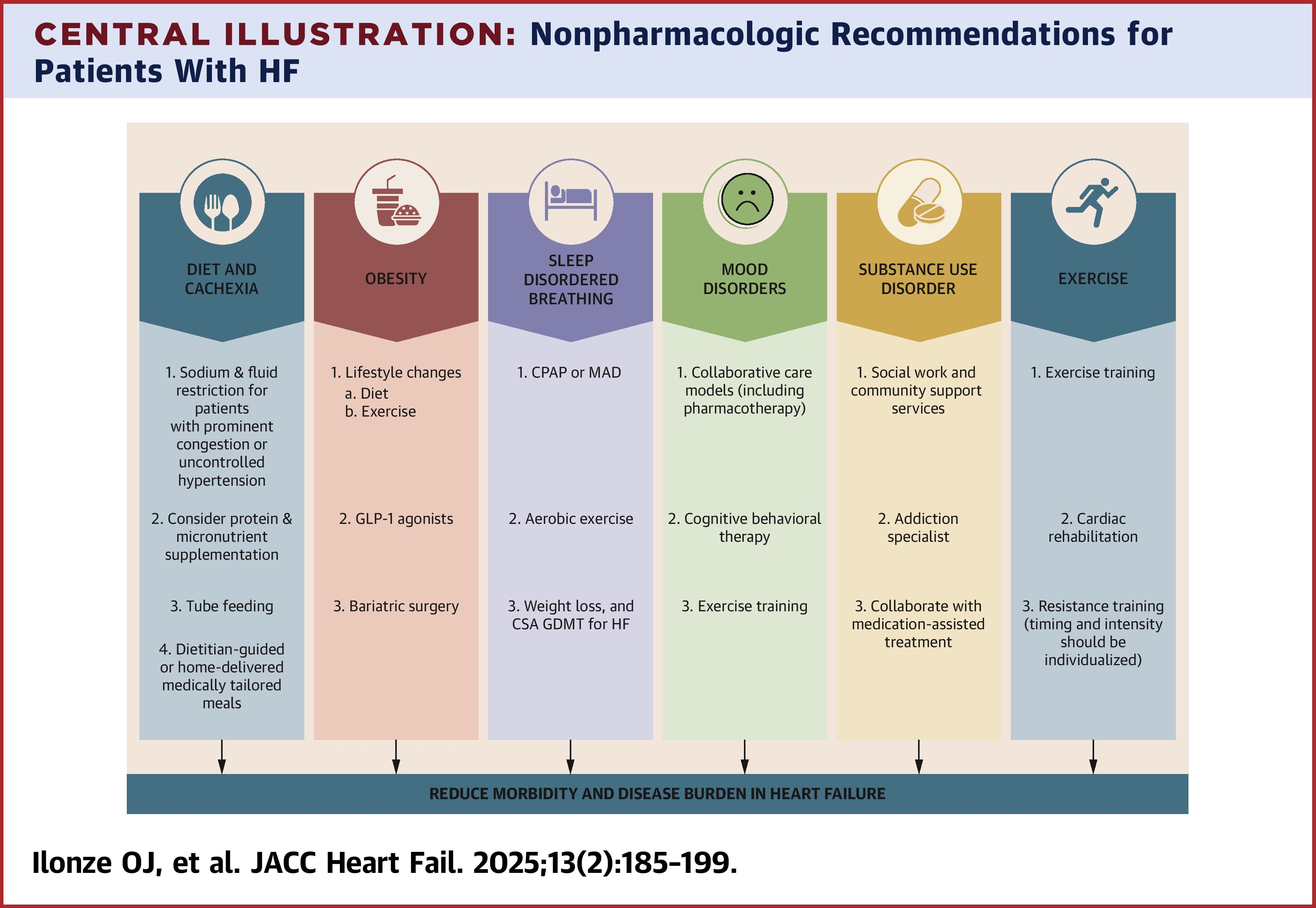
Treatment for sleep-disordered breathing, mood disorders (particularly depression and anxiety), and substance use disorders are also covered by the authors. When discussing intervention for substance use disorders, they note "multidisciplinary clinics with cardiologists and mental health providers may help engage patients and have the potential to improve outcomes through behavioral therapy and contingency management."
Clinical Topics: Cardiovascular Care Team, Diabetes and Cardiometabolic Disease, Heart Failure and Cardiomyopathies, Prevention, Acute Heart Failure, Diet, Exercise
Keywords: Life Style, Quality of Life, Heart Failure, Diet, Exercise
< Back to Listings


