ACC’s First Concise Clinical Guidance Focuses on Evaluation and Management of Cardiogenic Shock
The ACC has released its first Concise Clinical Guidance focused on best practices for the evaluation and management of patients with cardiogenic shock (CS).
This new clinical policy type was developed to complement clinical guidelines and provide additional support on topics with new and evolving evidence like CS. Writing Committee Chair Shashank S. Sinha, MD, MSc, FACC, describes the document as "a key component of solution sets," where clinicians can access guidance that is "highly focused, limited in scope, and aim[s] to illustrate clinical decision-making processes using figures, tables and checklists."
The document provides a one-hour and 24-hour roadmap to visualize key considerations for CS management, walking through initial evaluation, initial management with CS team activation, stabilization with serial reassessment of shock trajectory "to ensure hemodynamic stability, restore tissue perfusion and mitigate end-organ damage," and further escalation or reconfiguration of temporary mechanical circulatory support (tMCS) if deemed appropriate.
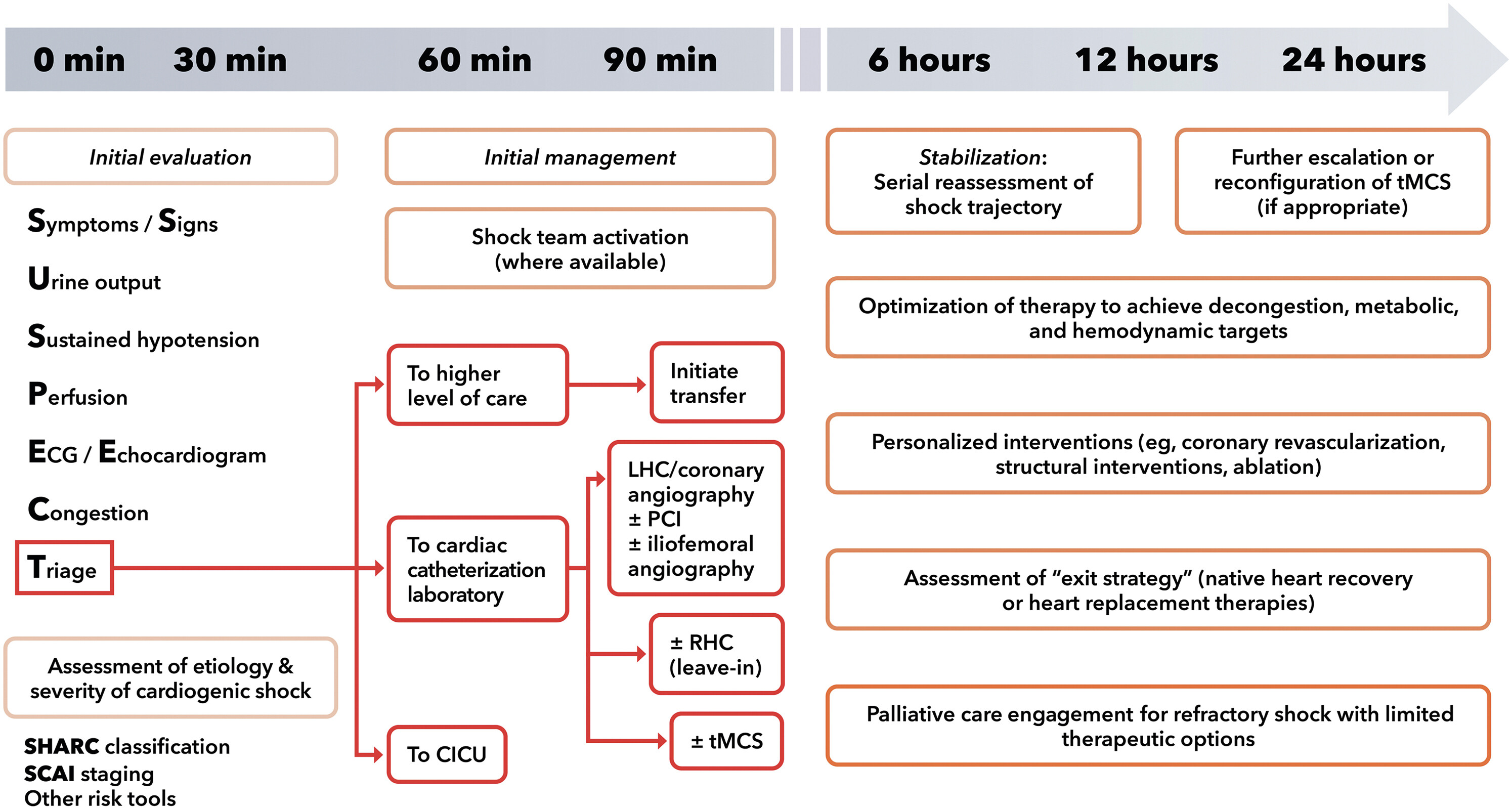
Stressing the importance of early recognition of CS, the writing committee highlights the "SUSPECT CS" mnemonic, which includes laboratory markers along with clinical assessment for congestion and hypoperfusion, and recommends a standardized, interdisciplinary team-based approach to treat patients with CS.
"Community-based centers with limited resources should identify an on-site clinician to serve as their 'shock champion' as well as a center providing advanced heart failure therapies to partner with on complex CS cases," Sinha says. "These partnerships are a key ingredient to successful strategies for managing this complex syndrome."
In addition to delving into factors that may impact therapy selection, such as patient selection, CS features, therapeutic considerations and systems of care, the document emphasizes the utility of invasive hemodynamics in determining CS phenotype, assessing shock severity and guiding tMCS.
The guidance also covers the pharmacological management of CS, compares commonly used tMCS devices in CS treatment, and presents additional considerations for critical care management.
A session at ACC.25 – "ACC's Solutions Sets: Real-Time Support for the Frontline Cardiovascular Clinician," taking place Monday, March 31 at 11:30 a.m. CT – will review how ACC-led clinical policy, including Concise Clinical Guidance (CCGs) and Expert Consensus Decision Pathways, align with one of the College's key initiatives – guidance at the point of care.
A JACC Leadership Page by ACC President Cathleen Biga, MSN, FACC; Ana Barac, MD, PhD, FACC; and Nicole Bhave, MD, FACC, discusses the College's commitment to clinical guidance, whether through clinical guidelines, appropriate use criteria, expert consensus decision pathways and newer methods like CCGs and Scientific Statements. They note that CCGs, in particular, are "designed to be limited in scope and to deliver brief, actionable, consensus- and evidence-based guidance using tools like figures, tables and checklists to illustrate clinical decision-making processes."
Clinical Topics: Heart Failure and Cardiomyopathies, Acute Heart Failure
Keywords: Shock, Cardiogenic, Myocardial Infarction, Shock, Hemodynamics, Cardiovascular Critical Care, Heart Failure, Critical Care
< Back to Listings


