

 Log in to MyACC
Does Number of CVD Risk Factors Influence Plaque Vulnerability in ACS?
The number of cardiovascular risk factors was strongly associated with greater plaque vulnerability, especially for culprit lesions, in patients with acute coronary syndromes (ACS), according to new research published in JACC.
In the study, Marco Corvani, MD, et al., identified 1,581 patients (median age 66; 20% women; 69% NSTE-ACS, 42% STEMI) with ACS who underwent optical coherence tomography before their intervention from three cohorts: the Massachusetts General Hospital Optical Coherence Tomography Registry, Predictors for Coronary Plaque Erosion in Patients with ACS Registry, and the Massachusetts General Hospital and Tsuchiura Kyodo General Hospital Coronary Imaging Collaboration.
In terms of cardiovascular risk factors, 64% of patients had hypertension, 69% had hyperlipidemia, 33% had diabetes and 38% were current smokers. Overall, 75 patients had no risk factors, 376 had one, 633 had two, 415 had three and 82 had four. Patients with more risk factors were more likely to be younger and male. STEMI was more common in patients with two or more risk factors while the opposite was seen with NSTE-ACS.
Of 2,187 plaques, 1,581 were culprit and 606 were nonculprit. In total, 50% of patients had plaque rupture, 40% had plaque erosion and 11% had calcified plaque.
Results showed that in culprit plaques, an increase in the number of cardiovascular risk factors was strongly associated with an increase in five vulnerabilities: prevalence of lipid-rich plaques, thin-cap fibroatheromas, macrophages, microvessels and cholesterol crystals. An independent association was found between the presence of two or more risk factors and these features except for lipid-rich plaques.
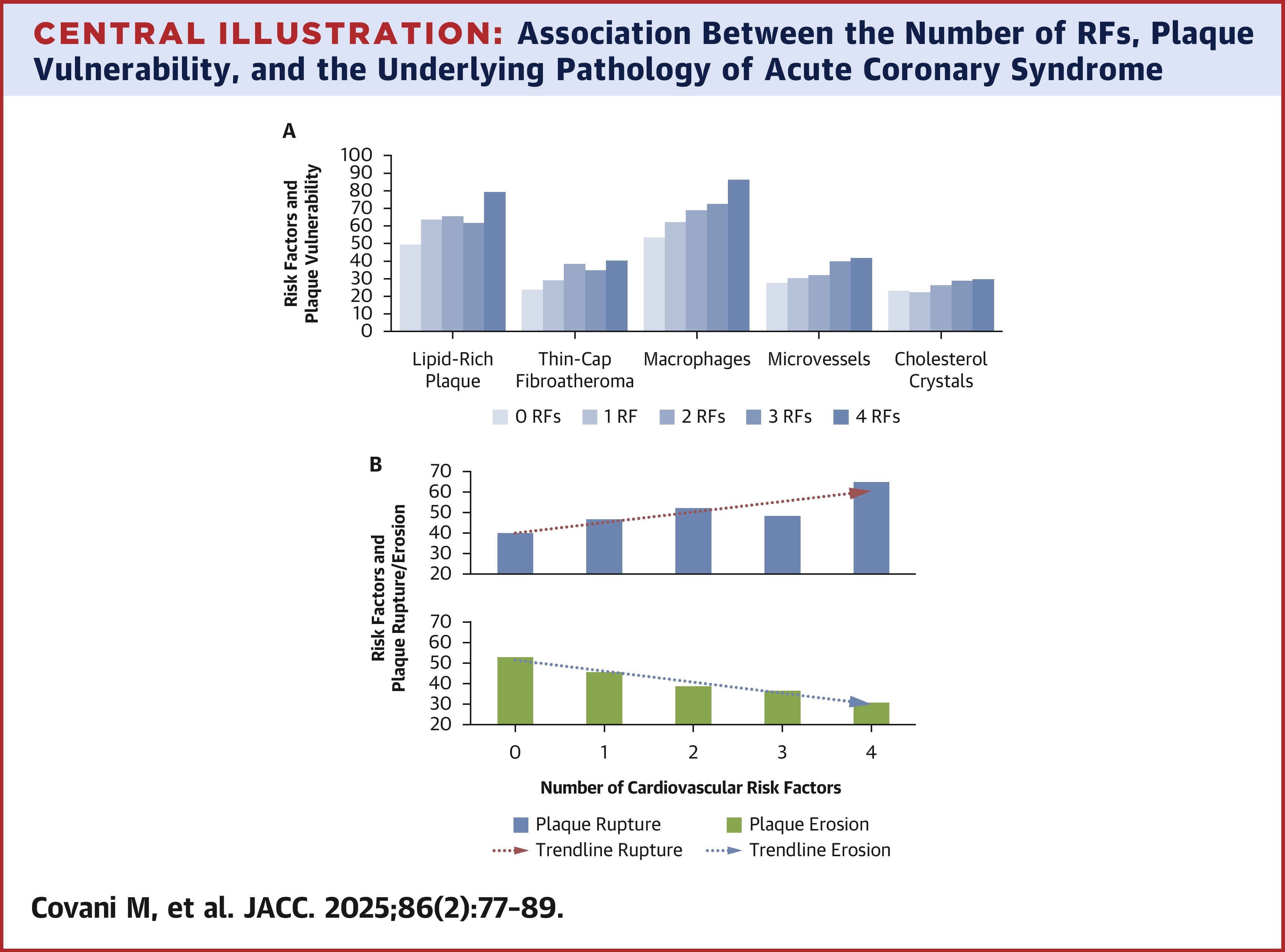
Of note, while the prevalence of plaque rupture increased as risk increased, there was an inverse relationship with the prevalence of plaque erosion. Additionally, in nonculprit plaques, only macrophages, cholesterol crystals and the cumulative number of vulnerable features had a positive association with the number of risk factors.
"Although the association between risk factors and poor outcomes is well established, the mechanisms through which risk factors contribute to increased event rates remain incompletely understood," write the authors. "These findings suggest that risk factors may not induce vulnerability through distinct and independent mechanisms. Instead, they appear to converge on a common final pathway, which may ultimately serve as the principal driver of plaque vulnerability. If this finding were to be confirmed, it would further support the idea that cardiovascular risk is the result of a complex interplay of multiple factors and cannot be fully represented by the presence of isolated factors."
In an accompanying editorial comment, Ori Ben-Yehuda, MD, FACC, points to the association with plaque erosion as warranting further study. "Appearing to be counterintuitive on first blush, this finding is consistent with the known different phenotype of erosion-prone plaques: less lipid rich and associated with less inflammation," he writes. "As lipid lowering has become more aggressive, the incidence of lipid-poor endothelial erosion-prone plaques may be increasing in incidence compared with the plaque rupture–prone lipid-rich plaques."
Clinical Topics: Acute Coronary Syndromes, Noninvasive Imaging
Keywords: Acute Coronary Syndrome, Tomography, Optical Coherence, Cardiovascular Diseases, Plaque, Atherosclerotic, Atherosclerosis, Heart Disease Risk Factors
< Back to Listings


