Single-Pill Combination Therapy Could Prevent Up to 72 Million CVD Deaths By 2050
Single-pill combination (SPC) therapies, consisting of a statin and one or more antihypertensive drugs with or without aspirin, could potentially prevent up to 72 million deaths from cardiovascular disease and 130 million cases of cardiovascular disease in an intermediate-to-high risk population by 2050, according to one scenario in a new modeling study published in JACC. By simplifying prevention and accelerating the uptake of evidence-based care, SPCs could save millions of lives.
David A. Watkins, MD, MPH, et al., used state-transition and demographic modeling on data from three global surveys to predict the effects of primary and secondary prevention programs across 182 countries (95% of global population) utilizing SPCs in two different scenarios: targeted strategies to increase adherence and decrease therapeutic inertia in people already in care and wider population-based strategies to provide SPCs to people at intermediate-to-high risk.
Results showed that in the targeted model, SPCs could prevent up to 29 million deaths (due to myocardial infarction [MI] or stroke) and 51 million cases of cardiovascular disease (defined as nonfatal MI, stroke or new-onset heart failure events) cumulatively from 2023-2050, reducing all-cause premature mortality by 2%. The population-based model predicted prevention of up to 72 million deaths and 130 million cases – reducing all-cause premature mortality by 3%. The greatest share of both fatal and nonfatal events prevented would be in South and East Asia and the Pacific, driven by population size and demographics.
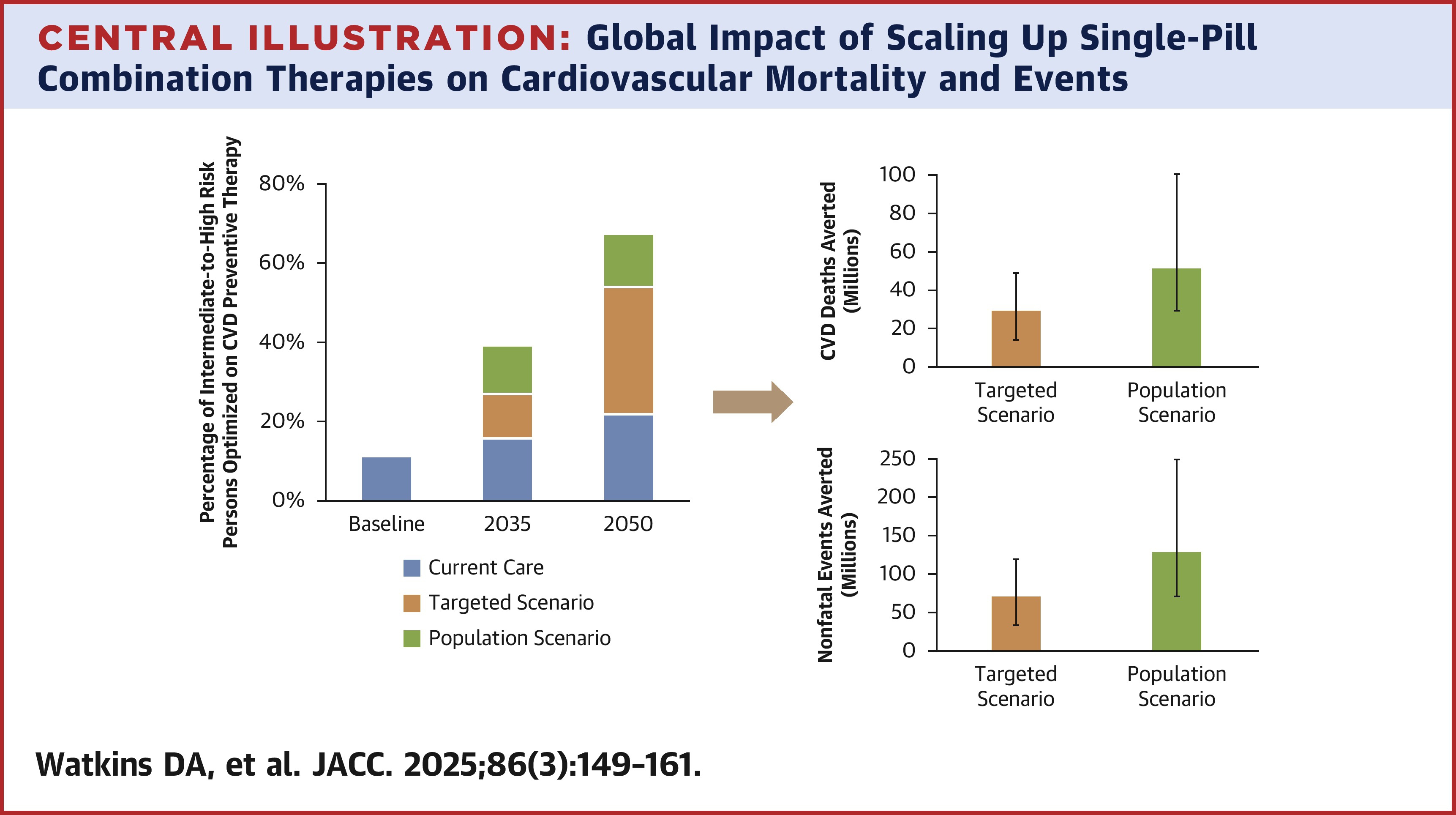
Results did not show any increases in event-related mortality due to SPCs that would offset the reductions in cardiovascular disease deaths, but did predict an additional 150-340 million cases of dizziness and 27 million cases of gastrointestinal bleeding (when SPCs contain aspirin). Modeling did not predict increases in rates of renal disease, peptic ulcer disease and dyspepsia, hemorrhagic stroke or death due to any cause of bleeding.
"The cost of maintaining the status quo is massive: up to 100 million avoidable [cardiovascular disease] deaths and 250 million avoidable heart attacks, strokes, and new cases of heart failure could occur between now and 2050," write the authors, adding that SPCs could additionally reduce rates of cognitive impairment, dementia and some cancers.
In an accompanying editorial comment, Anthony Rodgers, MBChB, PhD; Gautam Satheesh, PharmD; and Adrianna Murphy, MSc, PhD, called the paper "timely," arriving in advance of the Fourth United Nations High-Level Meeting on Noncommunicable Diseases in September.
"For policymakers, the paper highlights important implementation challenges," they write. "SPCs will not be widely adopted without system-level innovations, including standardized treatment protocols, task-sharing with nonphysician providers and public procurement models ensuring availability and affordability."
Watkins, et al., add: "To achieve high coverage levels of SPC therapies around the world, concerted efforts need to be made to incentivize large-scale production and address barriers to market entry."
Clinical Topics: Dyslipidemia, Nonstatins, Novel Agents, Statins
Keywords: Public Health, Global Health, Antihypertensive Agents, Cardiovascular Diseases, Hydroxymethylglutaryl-CoA Reductase Inhibitors
< Back to Listings


