Peripheral Ischemia Accelerates Cancer Growth | Bidirectional Cardio-Oncology Focus Issue
Peripheral ischemia accelerates cancer growth by increasing inflammaging of hematopoietic stem cells, and these changes to antitumoral immunity are long-lasting, according to a study published Aug. 19 in a Bidirectional Cardio-Oncology Focus Issue of JACC: CardioOncology.
Investigating the mechanisms by which peripheral ischemia affects tumor progression, Alexandra A.C. Newman, PhD, et al., looked at mammary cancer in mice assigned to either hind limb ischemia (HLI) or sham surgery. They assessed the tumor immune microenvironment, circulatory immune cells and hematopoietic stem and progenitor cell (HSPC) compartment. Bone marrow transplantation was also performed to evaluate the long-term effects of ischemia on the epigenetic reprogramming of HSPCs.
The authors report a two-fold increase in the tumor growth of mice assigned to HLI vs. control, regardless of whether the intervention preceded or followed tumor implantation.
Newman and colleagues describe an increase in "monocyte and neutrophil output and at the expense of lymphocytes." This imbalance, driven by a shift toward CD150hi myeloid-based hematopoietic stem cells, was associated with an enrichment of tumors with myeloid cells and regulatory T cells. "Our analyses revealed that ischemic injury biases the most immature progenitors toward myelopoiesis while inducing inflammatory and aged epigenetic and transcriptomic changes that are associated with a cancer-permissive environment," write the authors.
Mice receiving bone marrow transplants from HLI-treated mice also exhibited accelerated cancer growth and increased tumoral myeloid cell accumulation, indicative of durable epigenetic reprogramming.
"Our results reveal a direct mechanism by which ischemia drives cancer growth, reprogramming stem calls in ways that resemble aging and promote immune tolerance," says Newman. "These findings open the door to new strategies in cancer prevention and treatment, like earlier cancer screening for patients with peripheral artery disease and using inflammation-modulating therapies, to counter these effects."
In an accompanying editorial comment, Pilar Martín, PhD, adds that "these results broaden the 'reverse cardio-oncology' framework by showing that a vascular insult itself, could directly reprogram tumor behavior."
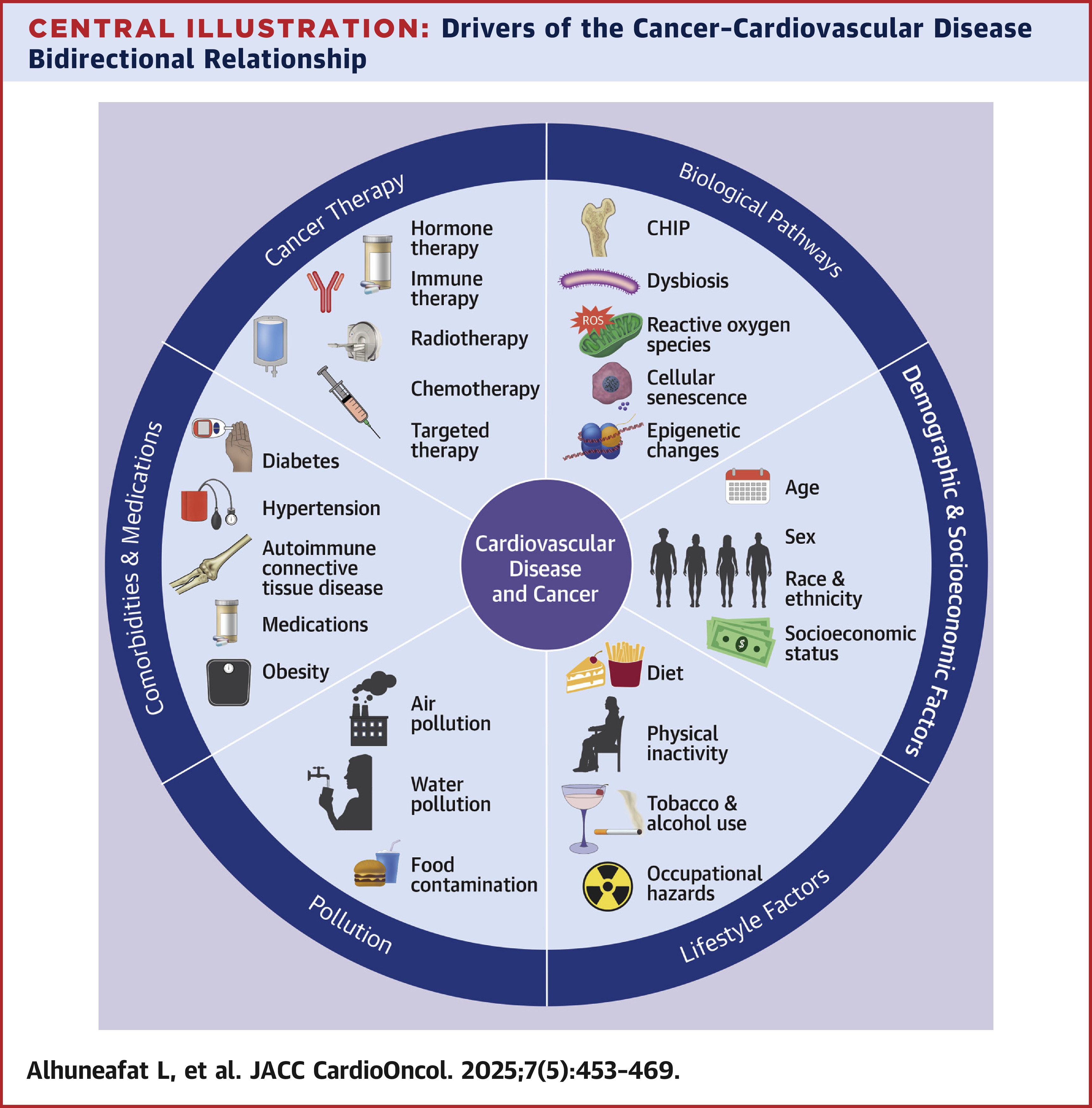
This focus issue of JACC: CardioOncology also features a State-of-the-Art Review covering the shared risk factors, mechanisms and clinical implications of cancer and cardiovascular disease.
Laith Alhuneafat, MD, et al., establish that both conditions are leading causes of death and share risk factors like age, comorbidities, lifestyle and sociodemographic traits.
According to the authors, shared biological pathways like chronic inflammation, oxidative stress, epigenetic dysregulation, clonal hematopoiesis, etc., offer opportunities for integrated prevention and management strategies.
More studies from the issue explore cardiovascular disease and cancer mortality in renal cell carcinoma patients, cancer development in atherosclerotic cardiovascular disease, the bidirectional implications of cancer-related immune therapies, and more. On the topic of bidirectional cardio-oncology, JACC: CardioOncology Editor-in-Chief Bonnie Ky, MD, MSCE, FACC, writes, "Increasingly, we are recognizing patterns and fundamental biological mechanisms shared between these two major diseases, including overlapping genomic profiles and biomarkers." Explore the full issue.
Citations:
- Newman, A, Barcia Durán, J, Von Itter, R. et al. Ischemic Injury Drives Nascent Tumor Growth Via Accelerated Hematopoietic Aging. J Am Coll Cardiol CardioOnc. 2025 Aug, 7 (5) 559–577. https://doi.org/10.1016/j.jaccao.2025.06.005
- Alhuneafat, L, Guha, A, Blaes, A. et al. Cancer and Cardiovascular Disease: Shared Risk Factors, Mechanisms, and Clinical Implications: JACC: CardioOncology State-of-the-Art Review. J Am Coll Cardiol CardioOnc. 2025 Aug, 7 (5) 453–469. https://doi.org/10.1016/j.jaccao.2025.07.001
Clinical Topics: Invasive Cardiovascular Angiography and Intervention, Prevention
Keywords: Hematopoietic Stem Cells, Cardiovascular Diseases, Cardio-oncology, Ischemia
< Back to Listings


