JACC State-of-the-Art Review: Inflammation Strategies Post-AMI
With inflammation increasingly recognized as a key driver of recurrent cardiovascular events and worse outcomes following acute myocardial infarction (AMI), a new JACC State-of-the-Art Review synthesizes emerging evidence and therapeutic innovations, as well as takes a closer look at current knowledge gaps and opportunities for further research.
The review explores the biphasic nature of post-AMI inflammation, where early pro-inflammatory responses are essential for healing, but prolonged activity can lead to adverse left ventricular remodeling and heart failure. This nuanced understanding underscores the importance of timing and precision in anti-inflammatory interventions.
As such, Antonino Imbesi, MD, MSc, et al., dive into current research looking at plaque progression and destabilization, as well as expansion of myocardial injury, adverse left ventricular remodeling, and the efficacy of anti-inflammatory drugs in addressing cardiovascular risk.
On the drug front, while colchicine remains the only guideline-endorsed anti-inflammatory agent, recent CLEAR trial findings contradicting previous results from COLCOT have "fueled skepticism" regarding its benefits and sparked debate over patient selection and trial design.
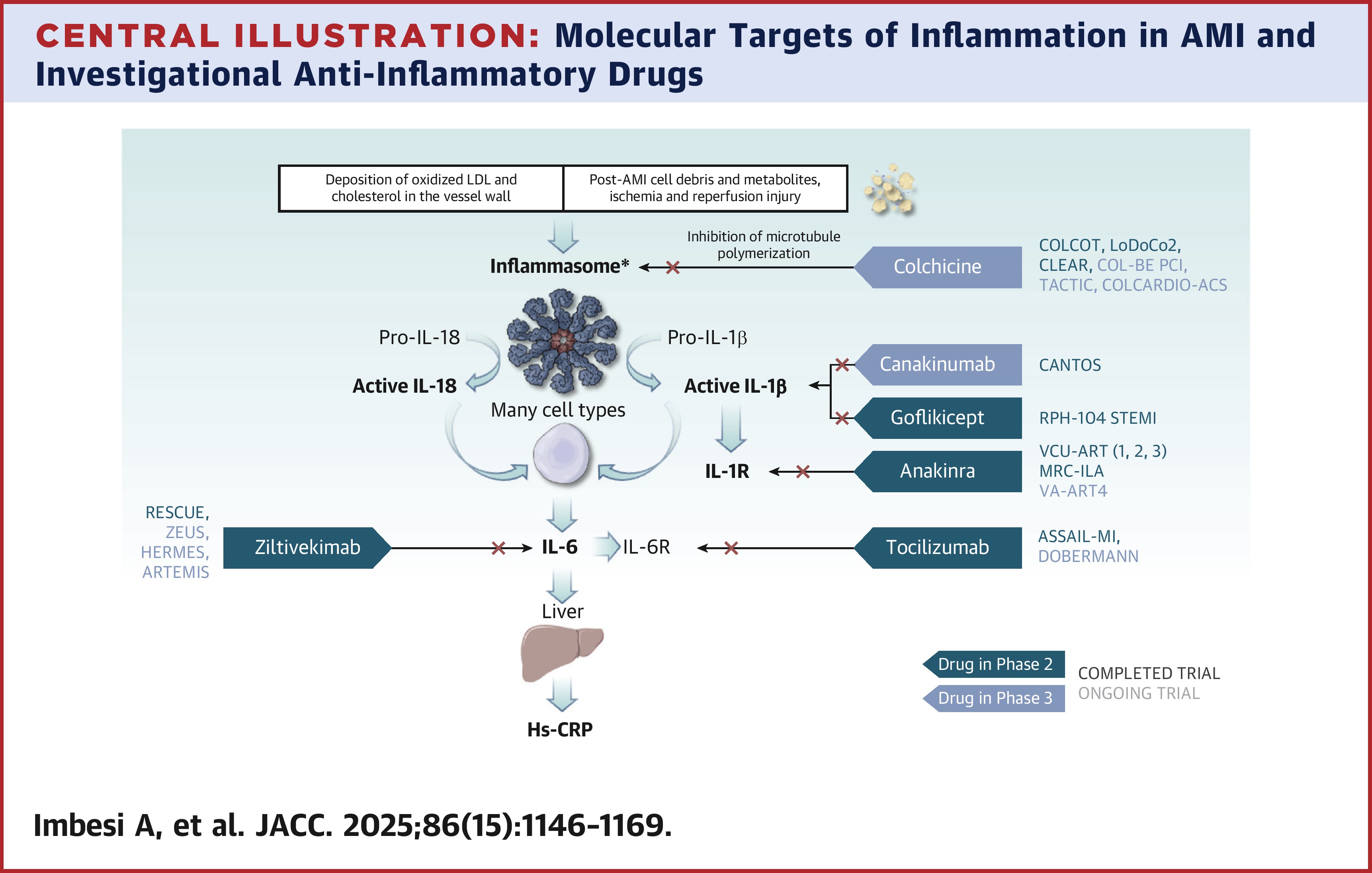
According to the review authors, other investigational agents targeting interleukin (IL)-1 and IL-6 pathways, such as anakinra, canakinumab, goflikicept, tocilizumab and ziltivekimab, are showing promise, particularly in patients with elevated inflammatory biomarkers. Other drugs such as methotrexate and low-dose corticosteroids are also under evaluation.
The review also provides a closer look at clinical trials looking to define the therapeutic potential and most promising pathway for anti-inflammatory agents, with a focus on optimal dosing and treatment duration.
"Several randomized trials are ongoing to address key unresolved questions, including the balance between efficacy and safety, and the selection process of ideal candidates in the light of inflammatory burden, [acute coronary syndrome] subtype and comorbidities," the authors write. "Importantly, although many anti-inflammatory agents under investigation aim to reduce inflammation broadly and were designed primarily to target vascular inflammation and atherothrombosis, an increasing number of trials are now exploring therapies that may modulate myocardial-specific inflammatory responses and postinfarction remodeling."
Looking ahead, the authors highlight key knowledge gaps and opportunities for additional research. Among these, a need to better understand potential class effects, drug choice and safety, patient selection and optimal timing for administration. They also point to a "need for mechanistic studies, biomarker-guided trials, and pragmatic designs to clarify who benefits, when to intervene, and how to balance efficacy with acceptable risk."
Looking for additional guidance in inflammation and cardiovascular disease, read the recently released ACC Scientific Statement on this topic.
Keywords: Anti-Inflammatory Agents, Myocardial Infarction, Inflammation, Colchicine, Atherosclerosis
< Back to Listings


