Shoulder-to-Shoulder on the Hill: A CV Administrator's First-Time ACC Legislative Conference Experience
An advocacy day during a government shutdown may seem counterintuitive, but patient care doesn't stop when the government closes, and neither should our advocacy efforts. Holding tight to this truth made me stand a little taller as I shuffled together with over 400 cardiologists and care team members for our group picture on the front steps of the U.S. Capitol Building on Oct. 7, 2025.
As a first-time attendee at the ACC Legislative Conference, I was representing my health system alongside others from across the country. As an administrator, I see every day how legislation can hinder or amplify care for our patients. From workforce challenges to prior authorization delays, these issues affect both patient care and the professionals delivering it.
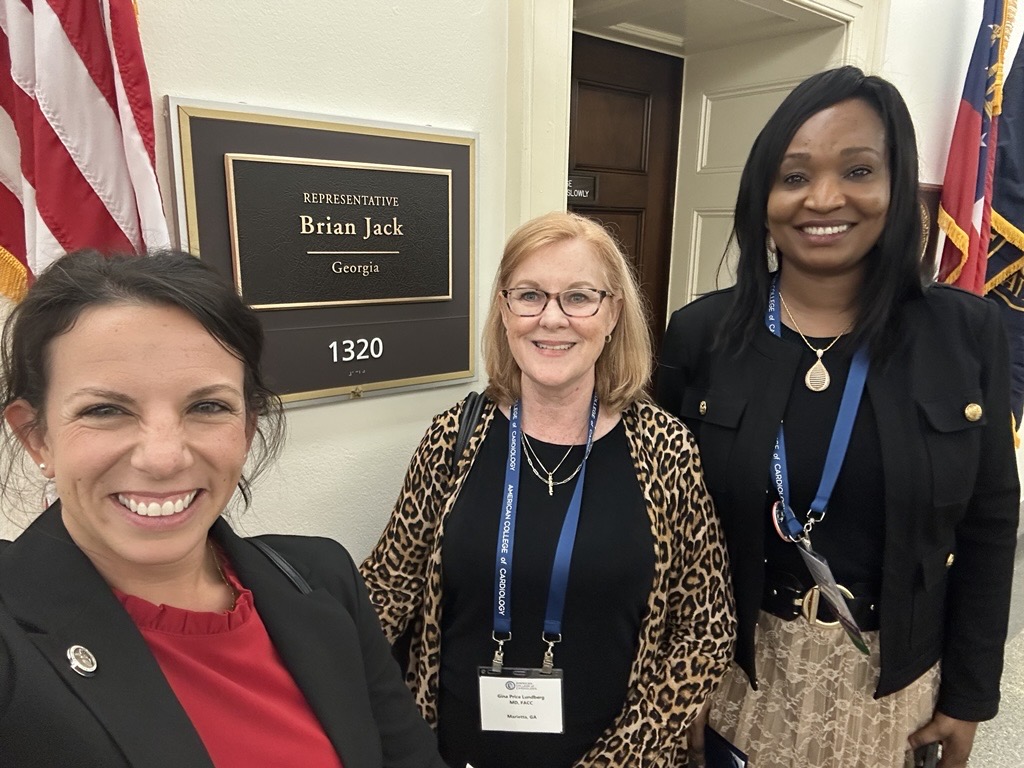
Armed with our talking points and a little grit, we broke off into state contingencies and split up for our meetings. The day was a blur of in-person and virtual meetings with staff members from our state delegations. Walking the long marble halls of the senate and congressional office buildings built a sense of anticipation and fueled a deeper desire to be seen and heard.
This year, our advocacy focused on bipartisan priorities, including restoring telehealth flexibilities, expanding remote cardiac rehab and maternal remote monitoring programs, and addressing prior authorization challenges. Even amid a government shutdown, it was inspiring to see that, despite political differences, there are things we can agree on especially when it comes to our patients.
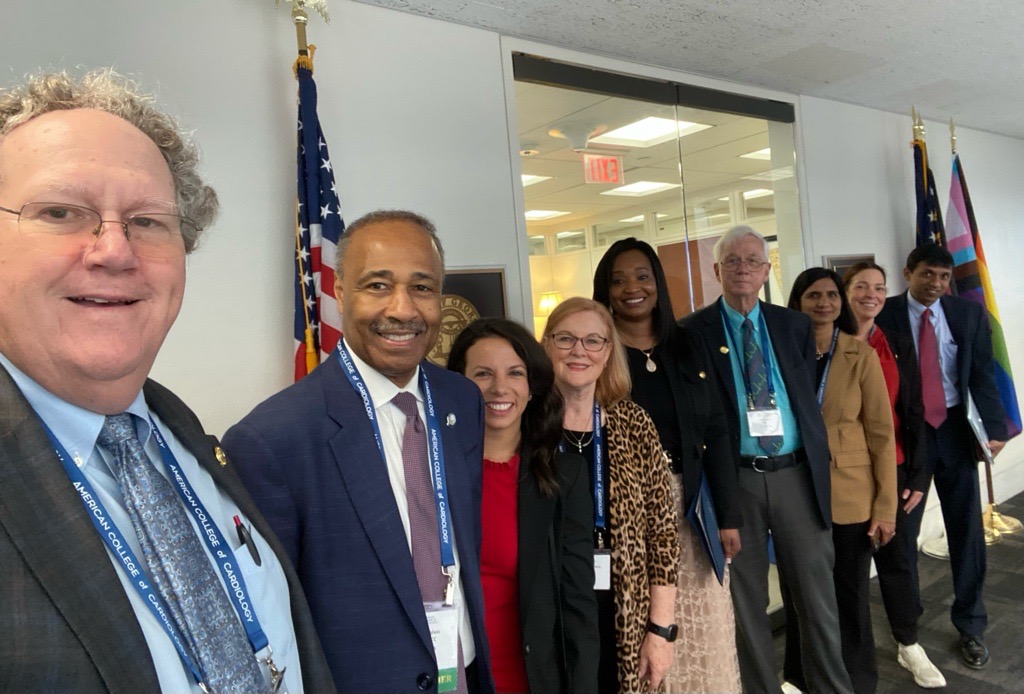
The experience was both humbling and energizing. I saw firsthand how powerful it is when the full cardiovascular care team shows up together – clinicians, nurses and administrators. Instead of feeling like an outsider as an administrator, I was able to clearly amplify the voices of the physicians and the full care team in service of heart health. Together we create a stronger and more credible message for lawmakers.
Listening to policymakers and their staff respond to our priorities was both eye-opening and encouraging. I was able to see firsthand how relationships and consistent engagement can lead to meaningful, long-term change.
Leaving Washington, I felt a renewed sense of hope in my ability to connect policy to patient outcomes and foster partnerships that drive system-wide improvement. Leadership in health care means stepping beyond day-to-day to influence the policies that shape patient care. Advocacy isn't just for one group or another, it's for anyone committed to improving care. Advocacy begins with showing up and grows through collaboration. The future of cardiovascular care depends on all of us – clinicians, nurses, and administrators – using our collective voice for our patients. Advancing heart health takes all of us.
This article was authored by Corrin McCloskey, MPH, FACC, executive director, Heart and Vascular Services, Tanner Health System and a member of ACC's Cardiovascular Management Section Leadership Council.
Clinical Topics: Cardiovascular Care Team
Keywords: Legislative Conference, Patient Care Team, ACC Advocacy, Telemedicine, Workforce, Policy, Delivery of Health Care, Population Health, Patient Care, Prior Authorization, Quality Improvement
