New ACC/AHA Guideline Addresses Management of Congenital Heart Disease in Adults
The ACC and AHA, in collaboration with several leading medical societies, have released a new clinical guideline focused on the management of adults with congenital heart disease (ACHD). The guideline provides updated recommendations for monitoring, counseling and treating ACHD and replaces previous guidance released in 2018.
Among the highlights, the guideline emphasizes the importance of access to routine care at ACHD centers and in collaboration with ACHD cardiologists, providing recommendations about when specialized expertise is warranted and how specialists can partner with other clinicians to broaden access to care.
"We know we need to be diligent in our efforts to get pediatric patients into [ACHD] care," says Writing Committee Chair Michelle Gurvitz, MD, MS, FACC. "We still have a lot of patients who stop receiving specialized care as they transition and transfer from pediatric to adult care, and a lot of patients who can't access physicians for other reasons like insurance or geography."
It also includes updated recommendations around exercise and physical activity, specifically stating that "participation in competitive sports is reasonable following a comprehensive evaluation by an ACHD specialist that incorporates functional status and individualized assessment of risks and benefits."
Mental health and neurocognitive assessment are also important topics. "Our patients have a lot of challenges with anxiety and depression, so it's important to discuss that with patients or consider sending them for further evaluation," notes Gurvitz.
Additionally, new and updated recommendations on birth control options, pregnancy and childbirth are included. Specific recommendations involve preconception counseling in collaboration with an ACHD cardiologist to discuss genetic testing, maternal health risks, fetal risks, and safe birthing options. According to the guideline, most pregnant patients with ACHD can undergo a vaginal delivery safely, with appropriate individual risk stratification and monitoring.
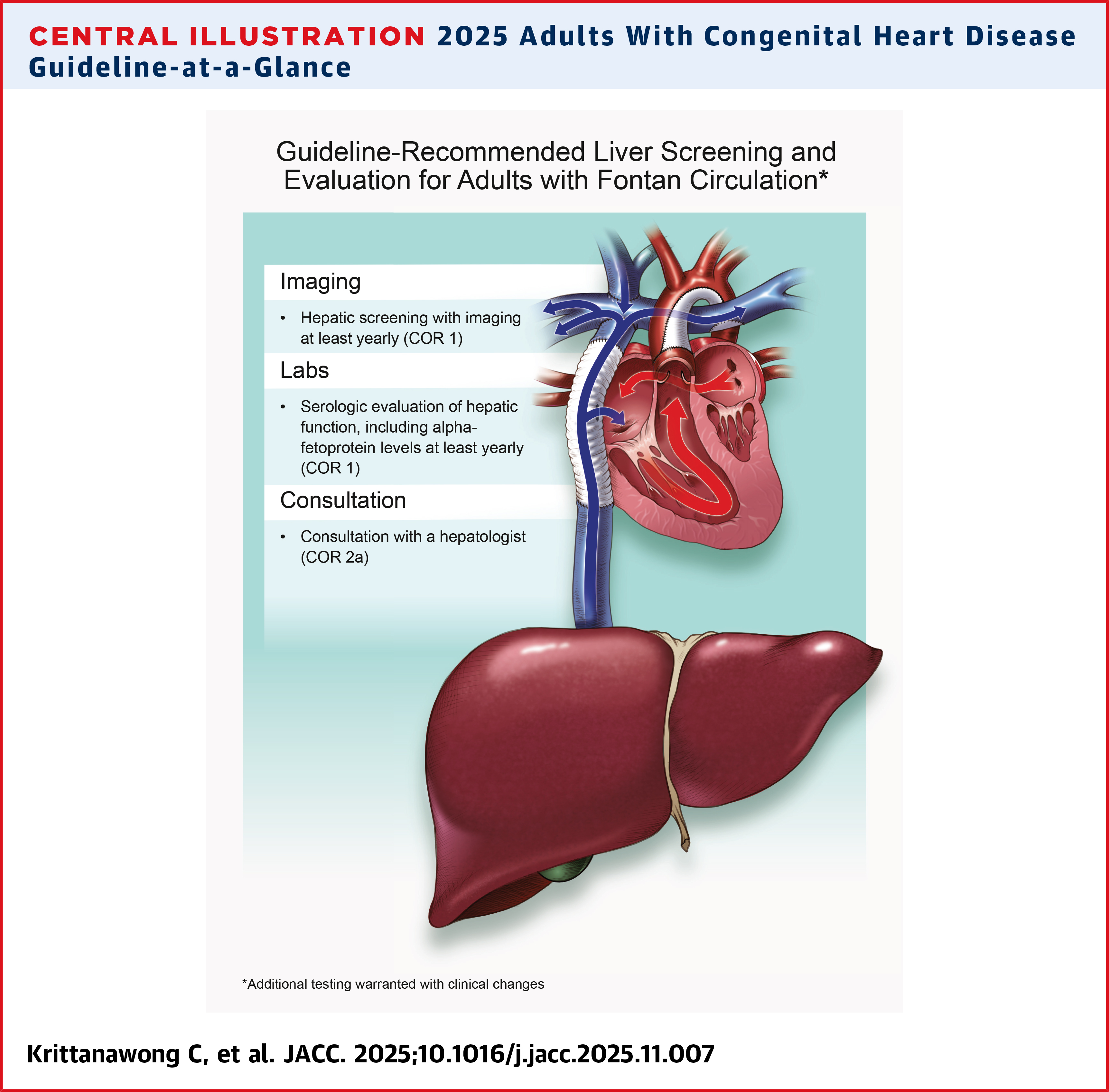
Updated guidance on surgical practices, guideline-directed medical therapy for heart failure patients with ACHD, and management of specific forms of congenital heart disease like tetralogy of Fallot and Eisenmenger syndrome is also provided. Of note, the guideline stresses the importance of evaluating the possibility of endocarditis in patients with acute or subacute malfunction of bioprosthetic pulmonary valves, and updates the recommended strategies for patients with secundum atrial septal defect and pulmonary arterial hypertension to include closure. Frequency of Fontan screening for liver disease is also covered.
Looking to the future, the guideline underscores the importance of further research to inform the optimal timing for ACHD interventions, as well as to inform geriatric care approaches as more patients reach older adulthood.
"We'll continue to push the field to answer the questions because the patient population is not going anywhere – it's only getting larger," Gurvitz said. "In particular, our most complex patients are our fastest-growing group, and my hope is that some of the identified gaps will push people to try to answer those questions around what is the most efficient and effective way to deliver care to our patients."
The guideline writing committee included specialists in ACHD cardiology and interventional cardiology, congenital cardiac surgery, heart failure and electrophysiology, in addition to advanced practice nurses and a patient advocate. The guideline was developed in collaboration with and endorsed by the Heart Rhythm Society, the International Society for Adult Congenital Heart Disease and the Society for Cardiovascular Angiography and Interventions. It was published in both JACC and Circulation.
Clinical Topics: Congenital Heart Disease and Pediatric Cardiology, Heart Failure and Cardiomyopathies, Pulmonary Hypertension and Venous Thromboembolism, Congenital Heart Disease, Pulmonary Hypertension
Keywords: Pulmonary Arterial Hypertension, Eisenmenger Complex, Heart Defects, Congenital, Heart Septal Defects, Atrial, Transition to Adult Care, Tetralogy of Fallot, Pulmonary Valve
