James T. Dove Keynote Highlights Power of Teams in Delivering the Next Generation of CV Care
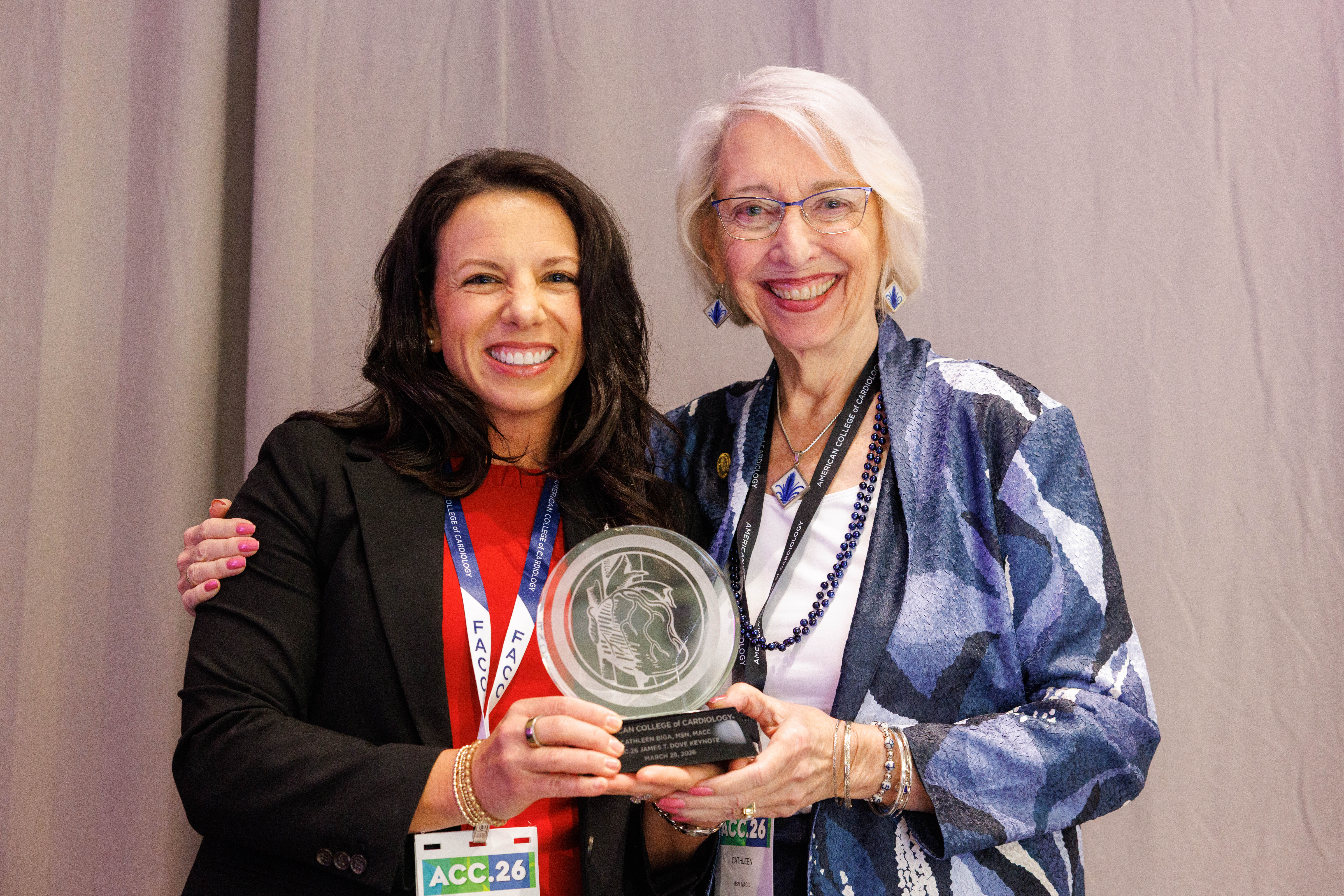
The enduring impact of teamwork in cardiovascular medicine took center stage during the James T. Dove Lecture at ACC.26, delivered by ACC Past President Cathleen Biga, MSN, MACC. Drawing on the legacy of James T. Dove, MD, MACC, Biga issued a clear and compelling call to action: the future of high-quality cardiovascular care depends not on dashboards or checklists, but on empowered, aligned teams working together with purpose.
Biga reflected on Dove’s pioneering vision, noting that he was among the first leaders to recognize that great cardiovascular care is delivered by teams – not silos. Long before team-based care became a widely embraced model, Dove championed shared accountability, transparency and the thoughtful use of data to drive improvement, she said.
Throughout her lecture, Biga challenged attendees to move beyond measurement alone and focus instead on transforming how care is delivered. While health systems are rich in data, she argued, what is often lacking is alignment, ownership and true implementation science. Real progress requires redesigning workflows and culture so that operational and clinical teams work together seamlessly.
“Quality is not about checking boxes,” she said. “Dashboards don’t change outcomes; teams do.”
Biga outlined core principles that define high-performing cardiovascular teams, including shared accountability, transparent metrics, dyad leadership, and clear operational ownership and alignment. Trust, she stressed, is foundational. “The best cardiovascular care is delivered by teams that trust each other,” she said.
She highlighted the many advantages of team-based care, including improved coordination and integration for patients, as well as greater professional satisfaction among clinicians. For health systems, Biga said effective team-based care leads to more efficient care delivery and use of resources and facilities.
Strong leadership is key to achieving these benefits. Effective team leaders create urgency, articulate a clear vision, communicate consistently, empower others to act, and celebrate wins along the way, Biga said. Just as importantly, they consolidate improvements so that success is scalable and sustainable.
Biga also emphasized the importance of culture, which is built when physicians and administrators lead together and are aligned around strategy. Operational excellence requires physician leadership, administrative partnership through dyad models, a safe work environment, shared goals, and an aligned vision, she said.
The lecture also addressed the role of teams in alleviating clinician burnout and rising complexity in care delivery. “Teams can improve the quality of the care provided and address some of the issues contributing to burnout,” Biga said. “It’s hard to stay on top of everything. That’s where having the right team work with you is going to be critical. The sum is greater than each individual part.”
In closing, Biga offered a powerful tribute to Dove’s legacy – and a challenge to the cardiovascular community. “The best way to honor Dr. Dove’s legacy is by building teams who use data that facilitate the delivery of the next generation of exceptional cardiovascular care,” she said. “No dashboard ever saved a patient. But a great cardiovascular team does it each and every day.”
Keywords: Cardiology Magazine, ACC Publications, ACC Annual Scientific Session, ACC26
