State-of-the-Art Review Focuses on Critical Care of Adults With Congenital Heart Disease
As the number of adults with congenital heart disease (ACHD) continues to grow, as well as their medical complexity, and as critical care cardiology emerges as a subspeciality, there is a need and opportunity to develop care delivery systems, focused research priorities and training pathways, write Christopher W. Valle, MD, Anne Marie Valente, MD, FACC, et al., on behalf of the ACC Critical Care Cardiology Section and Adult Congenital and Pediatric Cardiology Section in a State-of the-Art Review published on Aug. 27 in JACC: Advances.
In the Review, the authors discuss the current epidemiology of ACHD patients who require care in the intensive care unit (ICU) and review core physiology and management pearls unique to the critical care of this population, including those with Fontan circulation, systemic right ventricle and Eisenmenger syndrome, and identify cardiac and noncardiac risk factors for adverse outcomes. Additionally, they highlight available data on outcomes, identify key gaps in evidence, and address considerations for workforce development and education.
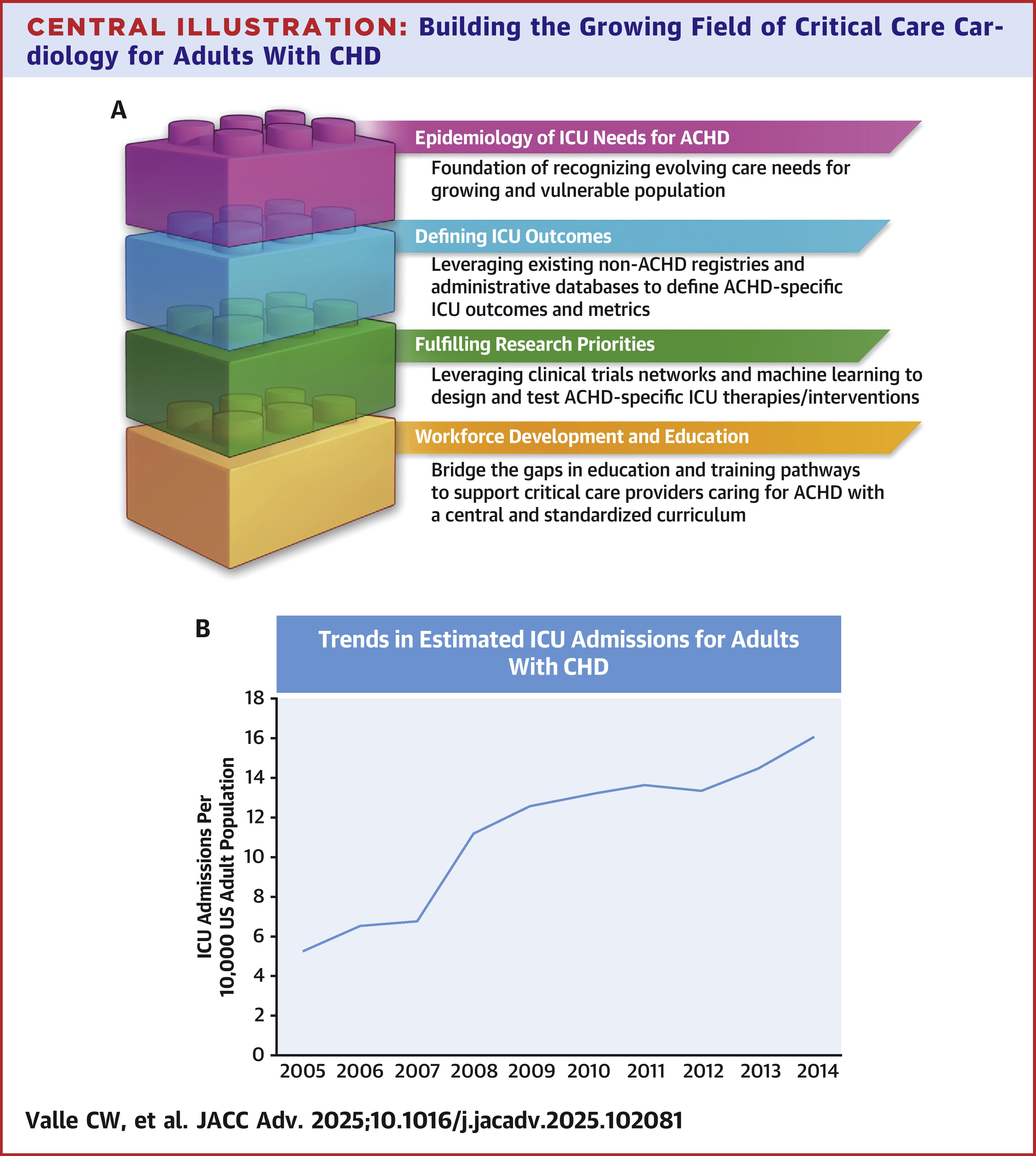
Research priorities include the critical need to capture the changing demographics of this population, and they note the overall growth may continue to put stress on an ICU system that is constrained and overburdened. To characterize the cardiac and noncardiac illnesses that may require ICU care, they suggest leveraging the growing number of accredited ACHD providers, nascent prospective registries, administrative databases and machine learning to improve risk prediction and timely intervention. Prospective studies need to assess the value of current risk prediction tools for these patients.
In terms of workforce needs, collaborative ACHD ICU care models may enhance outcomes, based on early experience. No standardized curriculum or competency-based training that ensures the "minimum necessary" knowledge has been established and the authors note such a curriculum would require spanning multiple disciplines providing ICU care to ACHD patients, thereby offering a significant opportunity for collaboration. Noting the limited number of intensivists with formal ACHD training in the U.S., the authors suggest that ICUs focus on "building highly functional teams that excel at both ACHD and ICU care" and these teams be an integral part of daily rounds for these patients. Along with highlighting the need for outreach efforts to centers without ACHD consultation, they suggest educational programs include advanced practice providers.
"Considering the current heterogeneity in practice patterns of critical care for adults with CHD, there are opportunities to develop evidence-based, standardized clinical practice guidelines and care delivery models with the goal of improving outcomes for adults with CHD across all types of ICUs," they write.
Clinical Topics: Cardiovascular Care Team, Congenital Heart Disease and Pediatric Cardiology, Congenital Heart Disease
Keywords: Heart Ventricles, Heart Defects, Congenital, Intensive Care Units, Critical Care, Workforce, Machine Learning, Cardiovascular Critical Care
< Back to Listings


