DANISH Extended Follow-Up: Who Benefits Most From Primary Prevention ICD Implantation?
Primary prevention implantable cardioverter-defibrillator (ICD) implantation did not reduce all-cause death but did reduce sudden cardiovascular death in patients with nonischemic heart failure with reduced ejection fraction (HFrEF), with possible greater benefit in younger patients, according to an extended follow-up analysis of the DANISH Trial published in JACC.
Approximately 1,100 patients with nonischemic HFrEF from Denmark were enrolled in the DANISH trial between 2008 and 2014 and randomized to either ICD implantation or to usual clinical care. In this extended follow-up analysis conducted by Jawad H. Butt, MD, et al., participants were followed for an average of 13 years – until death or until Jan. 31, 2024.
Results showed that, compared with clinical care, ICD implantation did not reduce long-term rates of all-cause death (hazard ratio, 0.96) regardless of age. All told, approximately 53% of patients in both groups died.
Broken down by event, rates of cardiovascular death were also similar across both groups (34.2%/ICD vs. 36.6%/Usual Care). However, the study authors noted that ICD implantation did reduce the long-term rate of sudden cardiovascular death by nearly half (6.8% vs. 12.5%), primarily in patients under 70 years of age.
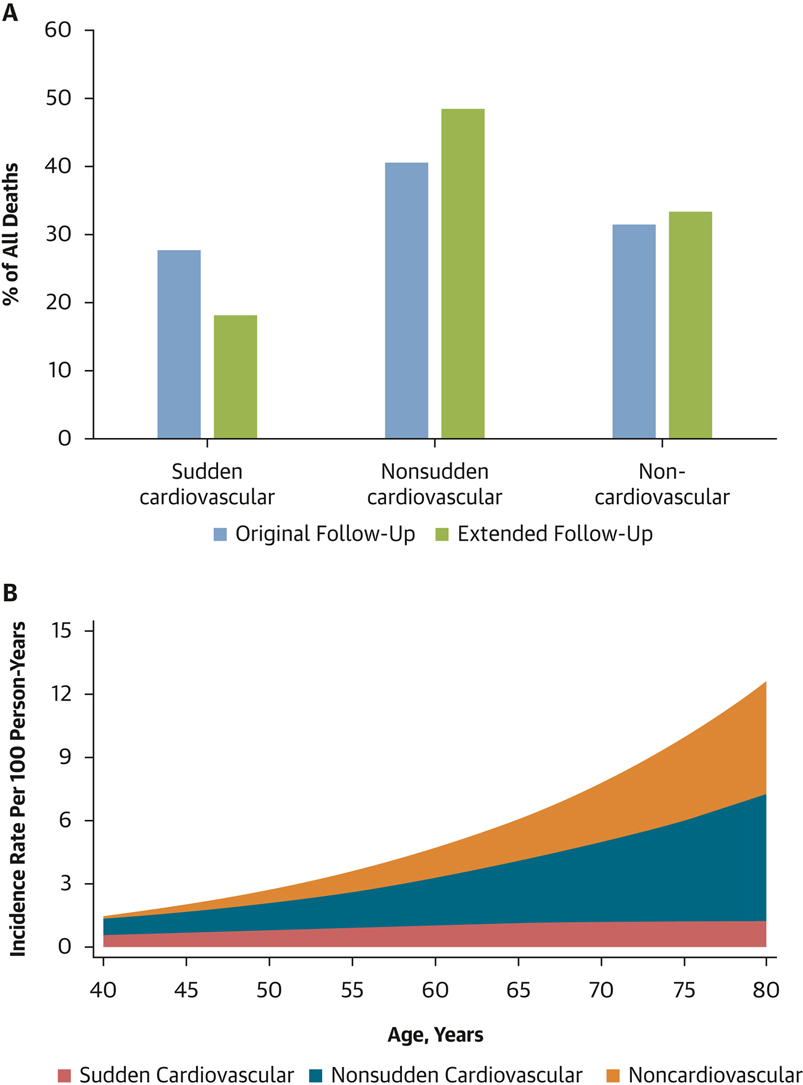
According to Butt and colleagues, their findings collectively suggest that "over time and with increasing age, patients with HFrEF are more likely to die from nonsudden cardiovascular causes and therefore may derive a lesser (mortality) benefit from ICD implantation over longer-term follow-up, underscoring the importance of conducting long-term follow-up studies such as the present one."
JACC Editor-in-Chief Harlan M. Krumholz, MD, SM, FACC, echoes these thoughts, noting that the results mirror trends in modern HF care and raise urgent questions about the role of ICDs in the ARNI/SGLT2i era. "ICDs remain remarkably effective at preventing sudden cardiac death – but over time, patients die of other causes," he said. "As heart failure care improves, we need to redefine who truly benefits from device therapy."
In an accompanying editorial comment, Daniel J. Doherty, MBChB; Mark C. Petrie, MBChB, and Roy S. Gardner, MD, FACC, say the extended analysis offers a unique and instructive perspective on the long-term effects of primary prevention ICD implantation in patients with nonischemic HFrEF.
"Although ICD therapy continued to reduce sudden cardiac death by 46%, this benefit was attenuated with advancing age, and no benefit was observed in patients >70 years of age," they write. "... In the modern era of heart failure management, we must ask the following: is the residual risk of sudden cardiac death now low enough to reconsider routine primary prevention ICD implantation across the board?"
Clinical Topics: Arrhythmias and Clinical EP, Heart Failure and Cardiomyopathies, Prevention, Implantable Devices, SCD/Ventricular Arrhythmias, Acute Heart Failure
Keywords: Defibrillators, Implantable, Death, Sudden, Cardiac, Primary Prevention, Defibrillators, Implantable Devices, Heart Failure
< Back to Listings


