CHLOVIS: Does Alcoholic Chlorhexidine Significantly Reduce Infection Rates?
In patients undergoing device implantation for cardiac resynchronization therapy (CRT), alcoholic chlorhexidine did not demonstrate a significant reduction in infection rates when compared with alcoholic povidone-iodine, according to the prospective CHLOVIS study published Jan. 20 in JACC. Both antiseptics showed similar rates of noninfectious and major infectious events.
In this randomized, multicenter trial, Antoine Da Costa, PhD, et al., assigned patients undergoing CRT pacemaker or defibrillator implantation 1:1 to receive skin antisepsis with either 2% alcoholic chlorhexidine or alcoholic povidone-iodine. Randomization was conducted centrally using an interactive web-response system and stratification was according to trial center.
The study included 2,272 patients (median age 72 years, 75% men), and data were collected from April 2013 through December 2018. The primary outcome was device-related local or systemic infection over the follow-up period of 24 months, and secondary outcomes were major cardiovascular events and noninfectious side effects.
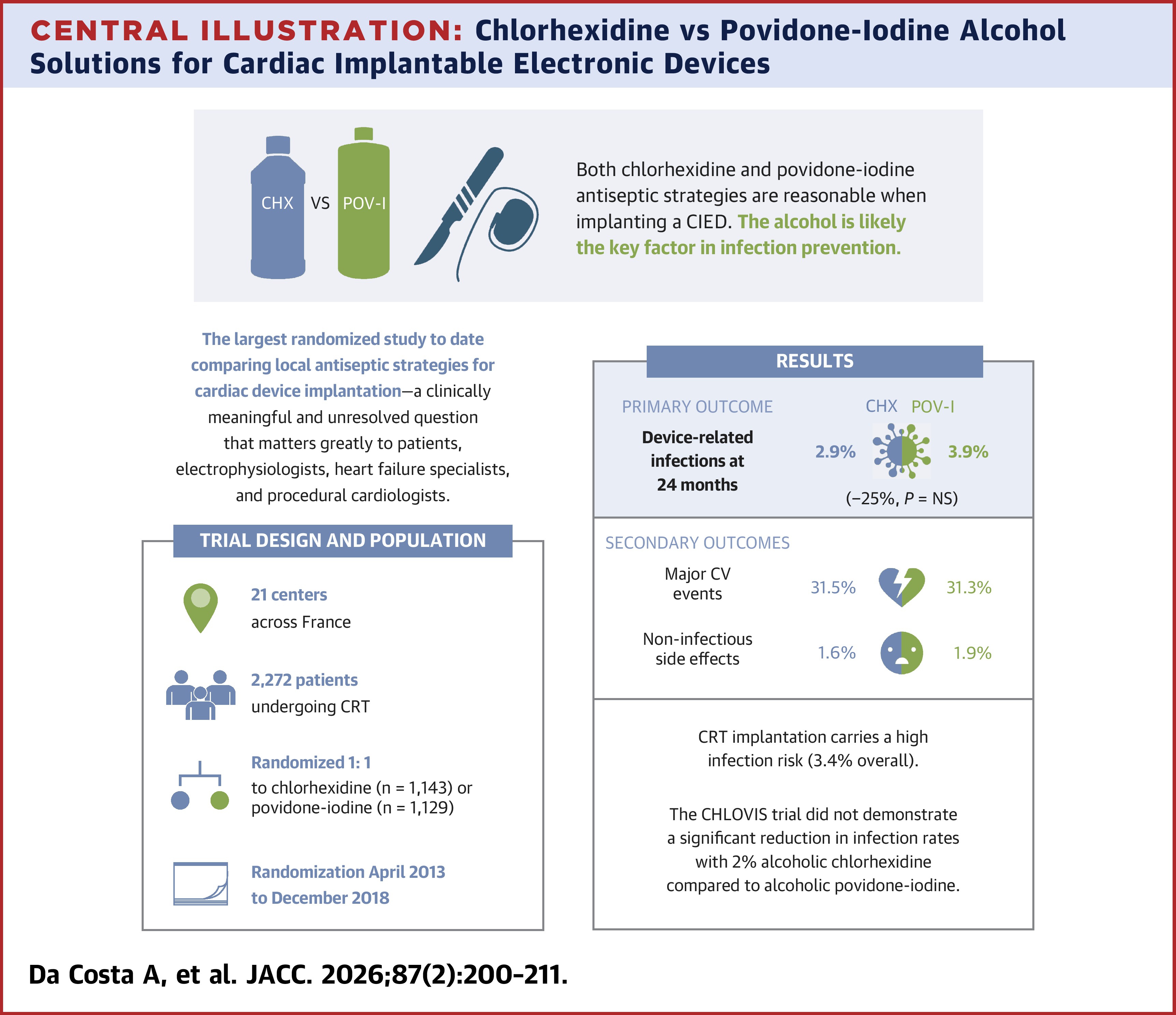
The primary endpoint was met in 3% of the chlorhexidine group and 4% of the povidone-iodine group (adjusted subhazard ratio, 0.75; 95% CI, 0.48-1.20; p=0.23). Additionally, major cardiovascular events occurred in 31.5% and 31.3% of patients, respectively, and noninfectious side effects occurred in 12.9% and 13.3%, respectively.
In what they believe is the first large, randomized, multicenter trial to compare two alcohol-based antiseptic solutions, Da Costa and colleagues note "these results indicate that while a clinically meaningful benefit cannot be excluded, the [confidence interval] also includes the possibility of no effect." They write that their findings "support the hypothesis that the alcohol component may play a more crucial role than the active antiseptic agent itself."
In an accompanying editorial comment, Supavit Chesdachai, MD, write that the CHLOVIS study "exemplifies a well-executed pragmatic trial addressing an important clinical question. Its results will likely inform updates to guidelines, promoting flexibility in antiseptic choice. Looking ahead, "the challenge will be pushing infection rates even closer to zero."
Clinical Topics: Arrhythmias and Clinical EP, Heart Failure and Cardiomyopathies, Implantable Devices
Keywords: Anti-Infective Agents, Local, Cardiac Resynchronization Therapy Devices, Pacemaker, Artificial, Cardiac Resynchronization Therapy, Antisepsis, Chlorhexidine, Povidone-Iodine
< Back to Listings


