EMPA-ICD Subanalysis: Is Sex a Factor in Effect of Empagliflozin in Patients With T2D?
In patients with type 2 diabetes (T2D) treated with ICDs, the arrhythmic effect of empagliflozin appears more pronounced in men than in women, according to a subanalysis of the EMPA-ICD trial published Jan. 22 in JACC: Asia.
The randomized, double-blind EMPA-ICD study evaluated 150 patients across 31 centers in Japan. The study included men and women aged ≥20 years with T2D and cardiovascular disease who were being treated with an ICD or cardiac resynchronization therapy defibrillator (CRT-D). The patients (83% men) were randomized 1:1 to receive either empagliflozin 10 mg daily or placebo between April 2019 and April 2021. Patients were evaluated for adverse events and clinical status every three months.
The primary endpoint, detected by ICDs/CRT-D over 24 weeks, was the change in the number of ventricular arrhythmias (VA), including nonsustained ventricular tachycardia, as well as sustained ventricular tachycardia and ventricular fibrillation.
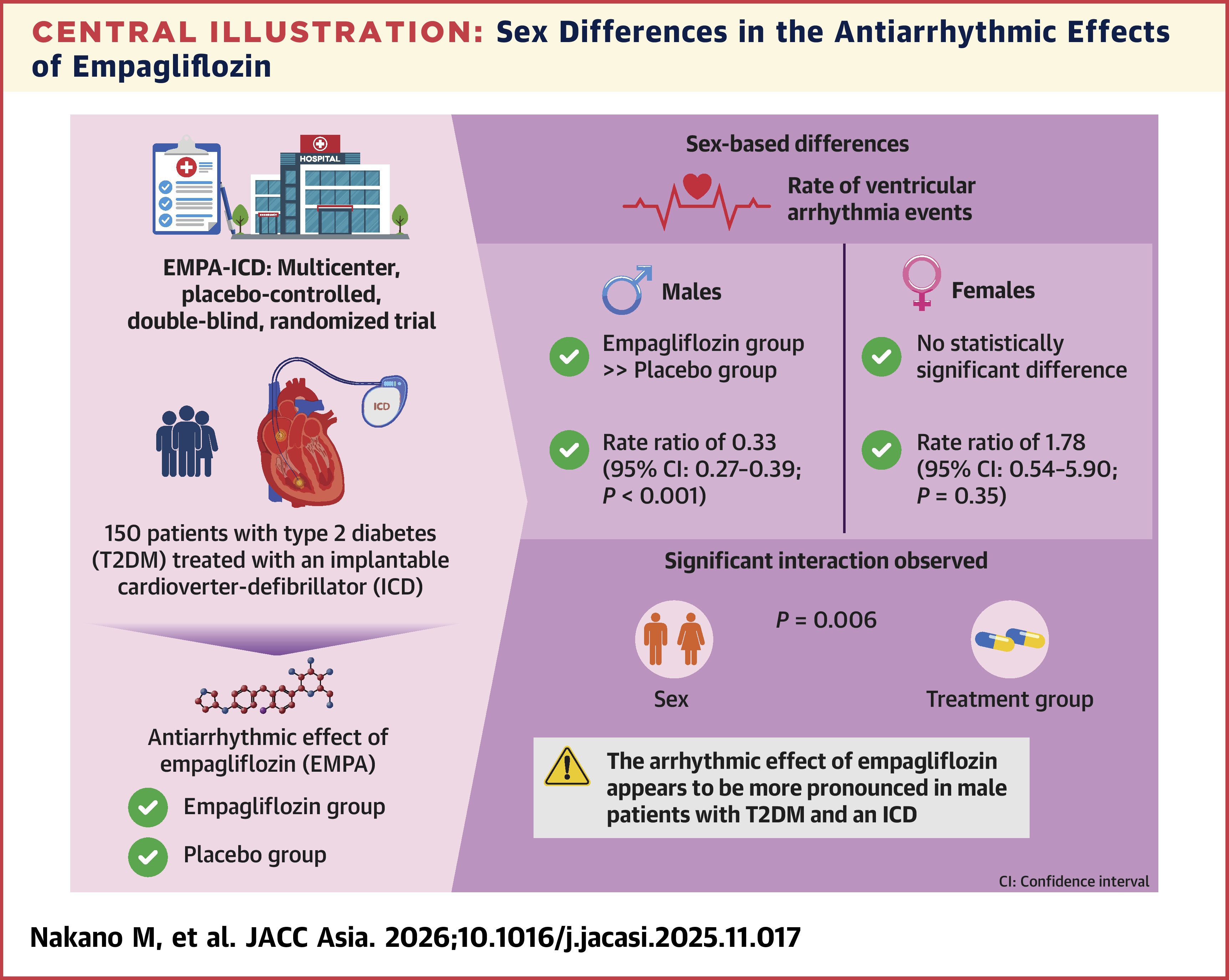
Looking at the primary outcome in men, there was a significant reduction in the number of VA events in the treatment group while they increased in the placebo group (–2.10 events vs. +2.25 events; p<0.001). In contrast, in women there was a slight increase in VAs in the empagliflozin group while there was a slight decrease in placebo group (+0.55 vs. –0.08 events; p=0.35). This translated to a rate ratio in men of 0.33 for empagliflozin vs. placebo (p<0.001), a 67% reduction in arrhythmia events. In women, there was no significant difference between groups, with a rate ratio of 1.78 (p=0.35). Moreover, a significant interaction between sex and treatment was observed, suggesting a sex-specific treatment response (p=0.006).
Miyo Nakano, MD, et al., note several limitations to their analysis, including the small number of female participants, the short follow-up period and the lack of diversity within the patient population. Despite limitations, they write "these results suggest that sex-related differences in arrhythmic substrate, comorbidities and pharmacokinetic properties of SGLT2 inhibitors may influence treatment response." Furthermore, research is needed to understand these sex-differences in treatment and pharmacokinetics to develop appropriate treatment strategies in women.
Clinical Topics: Arrhythmias and Clinical EP, Heart Failure and Cardiomyopathies, Implantable Devices, SCD/Ventricular Arrhythmias
Keywords: Diabetes Mellitus, Type 2, Cardiac Resynchronization Therapy, Follow-Up Studies, Sodium-Glucose Transporter 2 Inhibitors, Sex Characteristics, Japan, Tachycardia, Ventricular, Defibrillators
< Back to Listings


