Clinical Obesity Emerges as Independent Risk Factor For New-Onset HF, Mortality
A cohort study published May 4 in JACC: Asia identified clinical obesity as a risk factor for new-onset heart failure (HF) and all-cause mortality, largely due to related clinical conditions and excess weight. Treating clinical obesity as an independent disease may increase the effectiveness of HF prevention strategies.
Hongmin Liu, MD, et al., classified 99,131 participants (mean age of 52 years, 80% male) from the Kailuan Study cohort in China into three groups: nonobese (46%), preclinical obesity (19%) or clinical obesity (35%). Clinical obesity was defined based on BMI, waist circumference, wait-to-hip ratio and 10 clinical criteria.
Participants in the clinical obesity group had the highest proportions of salt intake, as well as higher systolic blood pressure (BP), diastolic BP, heart rate, uric acid, fasting blood glucose, high-sensitivity C-reactive protein and triglyceride levels, and also had a lower estimated glomerular filtration rate (all p<0.001). Higher rates of myocardial infarction, stroke, diabetes and hypertension were also observed.
Researchers used a Cox proportional hazards model to assess the association between clinical obesity and the risk of new-onset HF, and all-cause mortality was examined among those with HF. The primary endpoint was new-onset HF or death.
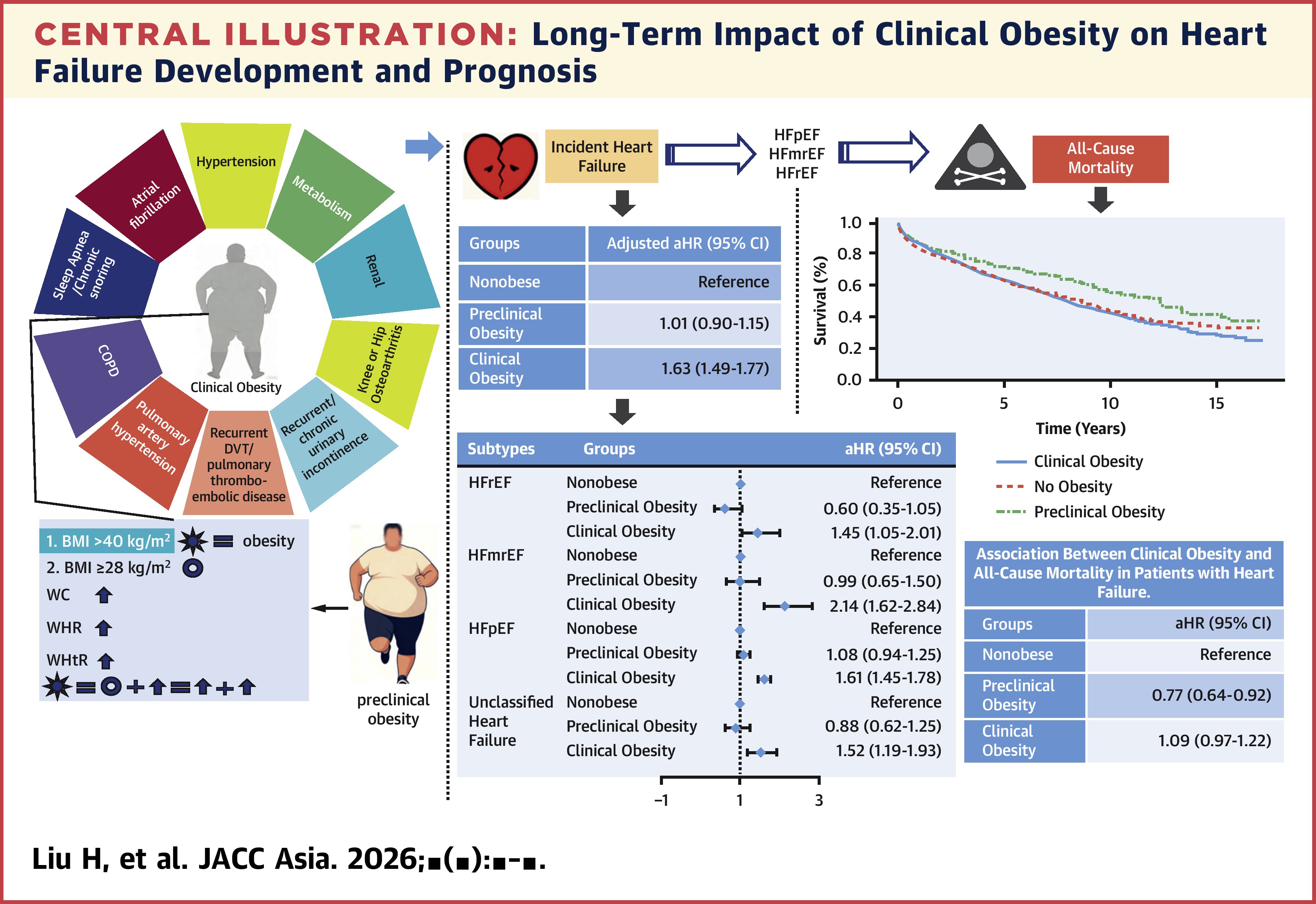
Study results showed that 3,280 participants developed HF and 19,170 deaths occurred from any cause over a median follow-up of 16 years. Notably, compared with the nonobese group, those with clinical obesity had a 63% higher risk of new-onset HF (adjusted HR [aHR], 1.63) with varying risks across HF subtypes.
Additionally, as the number of clinical criteria increased within the clinical obesity group, the HF risk increased, ranging from an aHR of 1.91 to 2.20. No association was observed between clinical obesity and increased all-cause mortality after the onset of HF.
Despite study limitations including possible residual confounding, information bias and a low proportion of female participants, the authors believe their study “has significant clinical implications, suggesting that patients with clinical obesity require not only weight reduction but also treatment for obesity-related organ and tissue dysfunctions to mitigate the risk of HF.” They write that “further research is needed to explore the relationship between clinical obesity and [HF] subtypes.”
Clinical Topics: Cardiovascular Care Team, Heart Failure and Cardiomyopathies, Acute Heart Failure
Keywords: Obesity, Heart Failure, Mortality, China, Blood Pressure
< Back to Listings


