ACC, AHA Issue New Acute Coronary Syndromes Guideline
A new clinical guideline released by the ACC and the American Heart Association includes new evidence and updated recommendations for managing patients with acute coronary syndromes (ACS). The 2025 ACC/AHA/ACEP/NAEMSP/SCAI Guideline for the Management of Patients With Acute Coronary Syndromes was published simultaneously in JACC and Circulation.
The guideline primarily focuses on the management of type 1 acute myocardial infarction – both NSTEMI and STEMI – and includes recommendations addressing initial evaluation and management of suspected ACS, standard medical therapies, reperfusion strategies, catheterization lab considerations, cardiogenic shock management, long-term management and secondary prevention, and more.
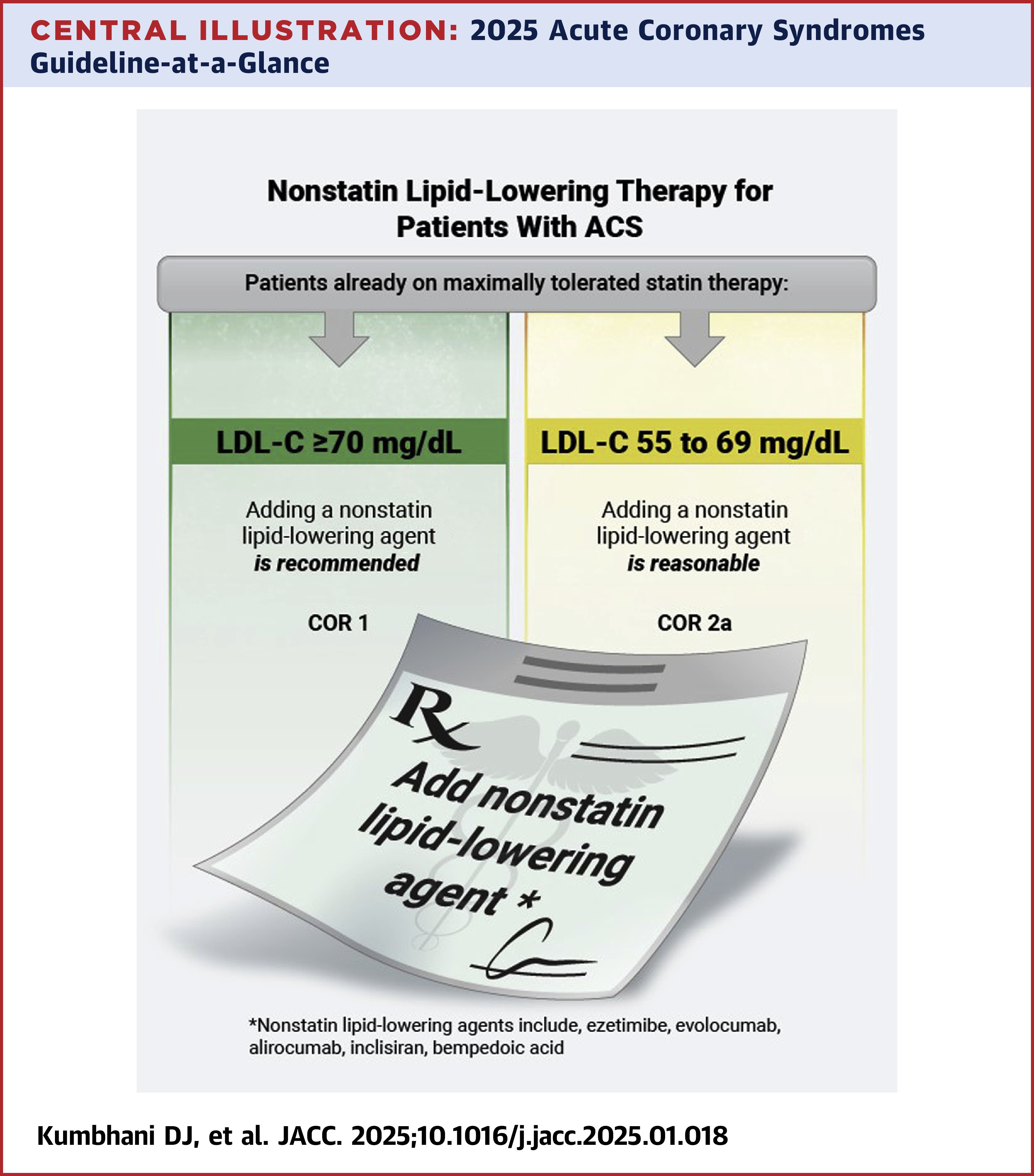
Among the highlights are updated recommendations for pharmacologic care. Dual antiplatelet therapy (DAPT) with aspirin and an oral P2Y12 inhibitor is indicated for at least 12 months as the default strategy in patients with ACS who are not at high bleeding risk, while several strategies are recommended for patients with a higher bleeding risk. Additionally, high-intensity statin therapy is recommended for all patients with ACS. For those already on maximally tolerated statins and who have an LDL-C level ≥70 mg/dL (1.8 mmol/L), a nonstatin lipid-lowering agent such as ezetimibe, evolocumab, alirocumab, inclisiran or bempedoic acid is also recommended.
On the procedural front, the guideline stresses the importance of the radial approach over a femoral approach for PCI in patients with ACS to reduce the risk of bleeding, vascular complications and death. Reflecting the latest evidence, intravascular imaging to guide the PCI procedure is now a class 1 recommendation. In addition, the guideline recommends a strategy of complete revascularization in patients with STEMI or NSTEM ACS, with the choice of revascularization method based on the complexity of the coronary artery disease and comorbid conditions.
Important recommendations for treating cardiogenic shock, including prompt revascularization, are also included in the guideline. Based on new clinical trial data, use of the microaxial flow pump is recommended for select patients with cardiogenic shock related to acute MI. However, the guideline notes that "careful attention to vascular access and weaning of support is important to appropriately balance the benefits and risks."
Secondary prevention following discharge is another important focus of the guideline, with recommendations ranging from referrals to outpatient cardiac rehabilitation (or home-based care if outpatient is not doable) to conducting a fasting lipid panel four to eight weeks after initiating or adjusting the dose of lipid-lowering therapy.
"Patients with ACS are at the highest risk for cardiovascular complications both acutely and chronically, which emphasizes the importance of staying up-to-date on the most recent evidence presented in this guideline," said Sunil V. Rao, MD, FACC, chair of the guideline writing committee. "With appropriate management, we can improve outcomes both in the hospital and over the long term."
In addition to the ACC and AHA, the guideline was written in collaboration with and endorsed by the American College of Emergency Physicians, the National Association of EMS Physicians, and the Society for Cardiovascular Angiography and Interventions.
Clinical Topics: Anticoagulation Management, Cardiac Surgery, Cardiovascular Care Team, Invasive Cardiovascular Angiography and Intervention, Stable Ischemic Heart Disease, Vascular Medicine, Aortic Surgery, Cardiac Surgery and SIHD, Interventions and Vascular Medicine, Chronic Angina
Keywords: Anticoagulants, ST Elevation Myocardial Infarction, Non-ST Elevated Myocardial Infarction, Percutaneous Coronary Intervention, Myocardial Revascularization
< Back to Listings


