
 Log in to MyACC
ORBITA-2: DSE Predicts PCI Efficacy in Patients With CAD
Ischemia as detected by dobutamine stress echocardiography (DSE) predicted the placebo-controlled efficacy of PCI in patients with single- and multivessel stable coronary artery disease (CAD) taking little or no antianginal medication, according to a secondary analysis of the ORBITA-2 trial published in JACC.
Investigators Fiyyaz Ahmed-Jushuf, MBBS, BSc, et al., assessed prerandomization DSE data on 262 patients with angina, single-vessel or multivessel CAD and ischemia who had discontinued antianginal medications (66 years old, 80% men; 27% with diabetes). The median DSE score was 1.42 among 133 patients undergoing PCI and 1.00 among the 129 patients in the placebo group.
Results showed a strong association between higher DSE scores and greater placebo-controlled improvements at 12 weeks in self-reported angina symptom score post PCI (odds ratio [OR]),1.23) and a greater reduction in daily angina episodes (OR, 1.36), which remained consistent regardless of symptom characteristics.
PCI patients with higher scores also showed greater improvement in the Seattle Angina Questionnaire frequency score (8.22) and Seattle Angina Questionnaire quality of life score (8.95).
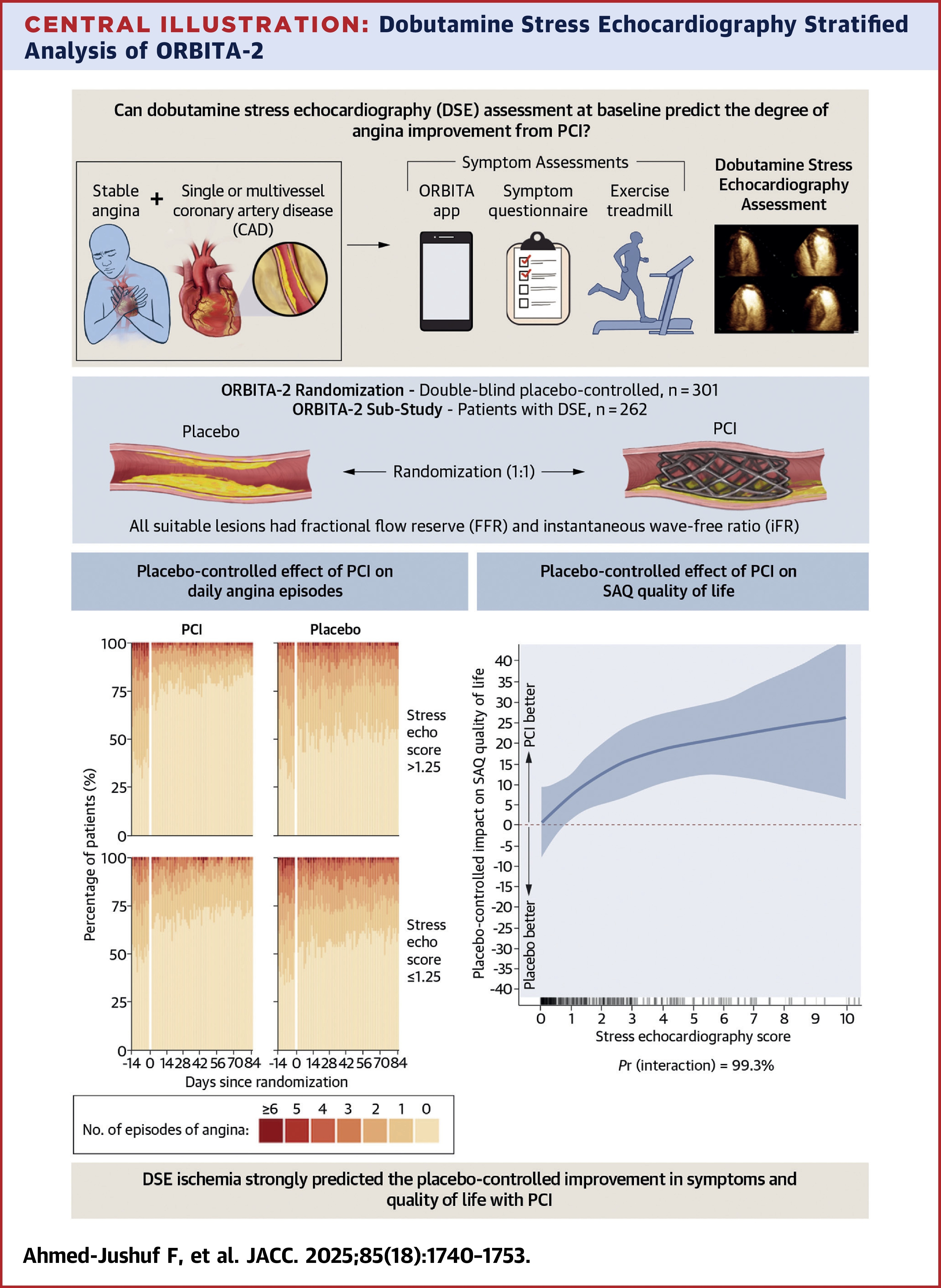
"Noninvasive tools for predicting PCI efficacy hold significant potential to transform patient management, yet they remain underexplored and underutilized," write the authors. "DSE is known for its affordability, accessibility, and favorable safety profile."
"These data can be incorporated into the clinical pathway to deliver more effective patient-centered care," they add.
In an accompanying editorial comment, Daniel B. Mark, MD, MPH, FACC; Michael G. Nanna, MD, MHS, FACC; and Pamela S. Douglas, MD, MACC, call ORBITA, ORBITA-2 and similar research by the investigators "an elegant series of trials and analyses to help elucidate more of the puzzle pieces connecting anginal symptom response to PCI with coronary anatomy and ischemic physiology," something that has eluded researchers for decades.
"The recent work by the ORBITA research group raises the intriguing possibility that shared risk-benefit decisions on the use of PCI for the Class Ia indication of angina in chronic stable CAD can be made more patient-centric with information about the likelihood that the patient will have complete resolution of symptoms with treatment," they write. "However, more investigation in a broader population (including more women, older subjects, and those with more extensive disease) with longer follow-up is needed before we can put these puzzle pieces in place."
Clinical Topics: Invasive Cardiovascular Angiography and Intervention, Noninvasive Imaging, Atherosclerotic Disease (CAD/PAD), Interventions and Coronary Artery Disease, Interventions and Imaging, Echocardiography/Ultrasound
Keywords: Percutaneous Coronary Intervention, Ischemia, Angina Pectoris, Echocardiography, Stress, Coronary Artery Disease
< Back to Listings


