PET/CT Imaging: Early Detection of Cardiac ATTR; Established and Emerging F-Labeled Tracers
PET/CT imaging using 124I-evuzamitide is able to identify myocardial amyloid in patients with wild-type transthyretin amyloidosis (ATTR) and carriers of the variant transthyretin allele when 99mTc-pyrophosphate cannot, according to a study published May 28 in JACC: Cardiovascular Imaging.
Dia A. Smiley, DO, FACC, et al., sought to determine the diagnostic performance of 124I-evuzamitide PET/CT in the early detection of cardiac ATTR compared to 99mTc-pyrophosphate. In total, they included 25 patients who underwent 124I-evuzamitide PET/CT, seven of whom had wild-type cardiac ATTR (Columbia stage I) and 18 were ATTR variant-allele carriers with cardiomyopathy and/or neuropathy.
There were 11 participants (nine with variant ATTR and two with wild-type ATTR genotypes) who had myocardial uptake of 124I-evuzamitide but had negative scans with 99mTc-pyrophosphate, suggesting greater diagnostic sensitivity of 124I-evuzamitide. The authors additionally note moderate to strong correlations between 124I-evuzamitide myocardial uptake and structural, functional and biochemical measures indicative of cardiac ATTR severity, as well as cardiac amyloid stage and health-related quality-of-life.
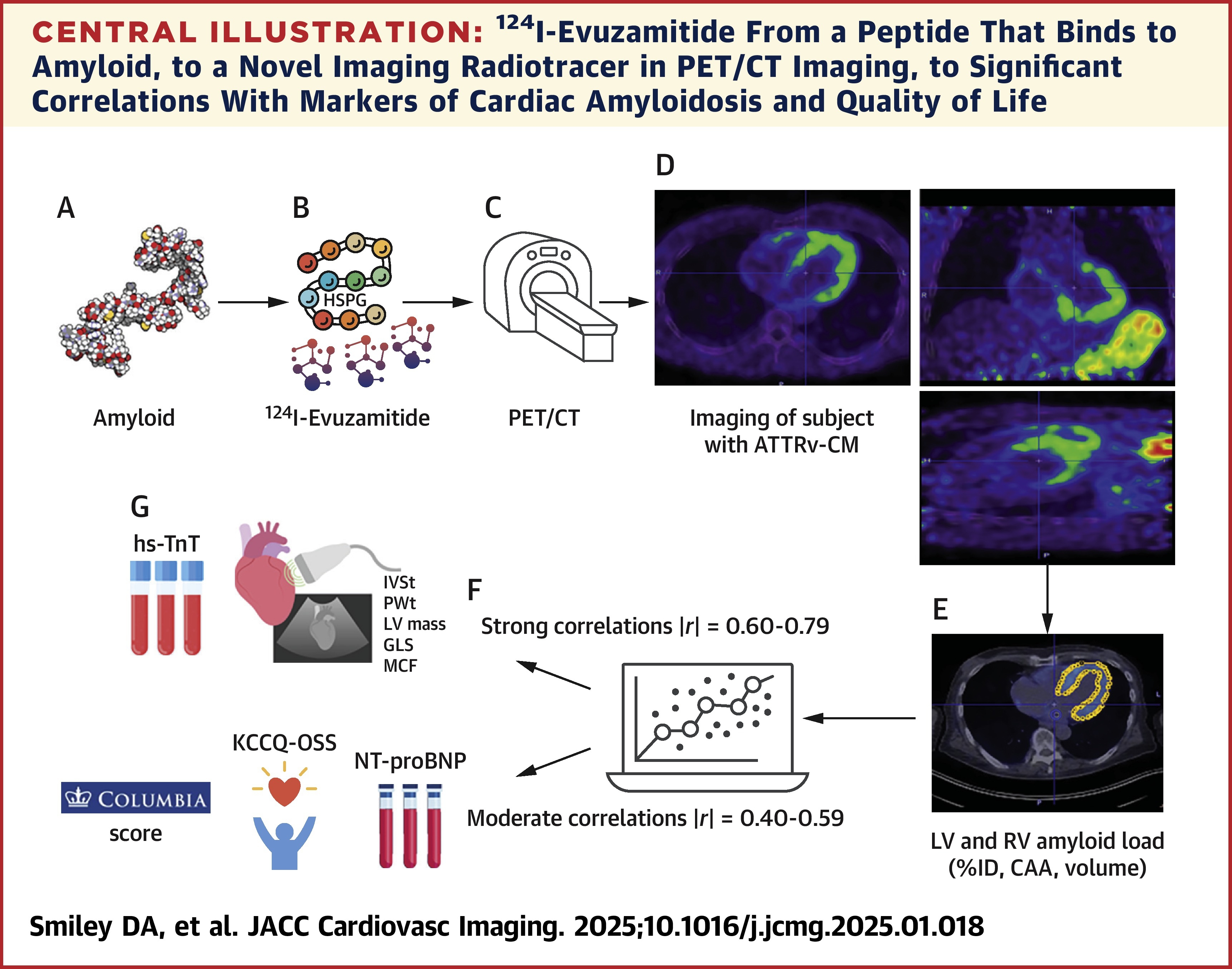
"Whether more sensitive detection of TTR amyloid in the myocardium on 124I-evuzamitide PET/CT imaging will be associated with better outcomes will require additional investigation," write the authors.
In addition, a State-of-the-Art Review also published May 28 in JACC: Cardiovascular Imaging outlines the ways current and emerging fluorine-18 (18F)–labeled PET radiotracers are revolutionizing the field of cardiac imaging.
René R. Sevag Packard, MD, PhD, FACC, et al., highlight the availability and resolution of 18F as key advantages of its use in cardiac PET/CT imaging.
Over the last decade, several novel 18F-labeled probes have expanded the field, introducing new evaluation methods for cardiac disease pathways like coronary artery disease and cardiac amyloidosis. While some of these tracers are now used in clinical practices, others require further clinical validation and standardization, particularly those used for the evaluation of cardiac sarcoidosis, myocardial innervation and fibrosis.
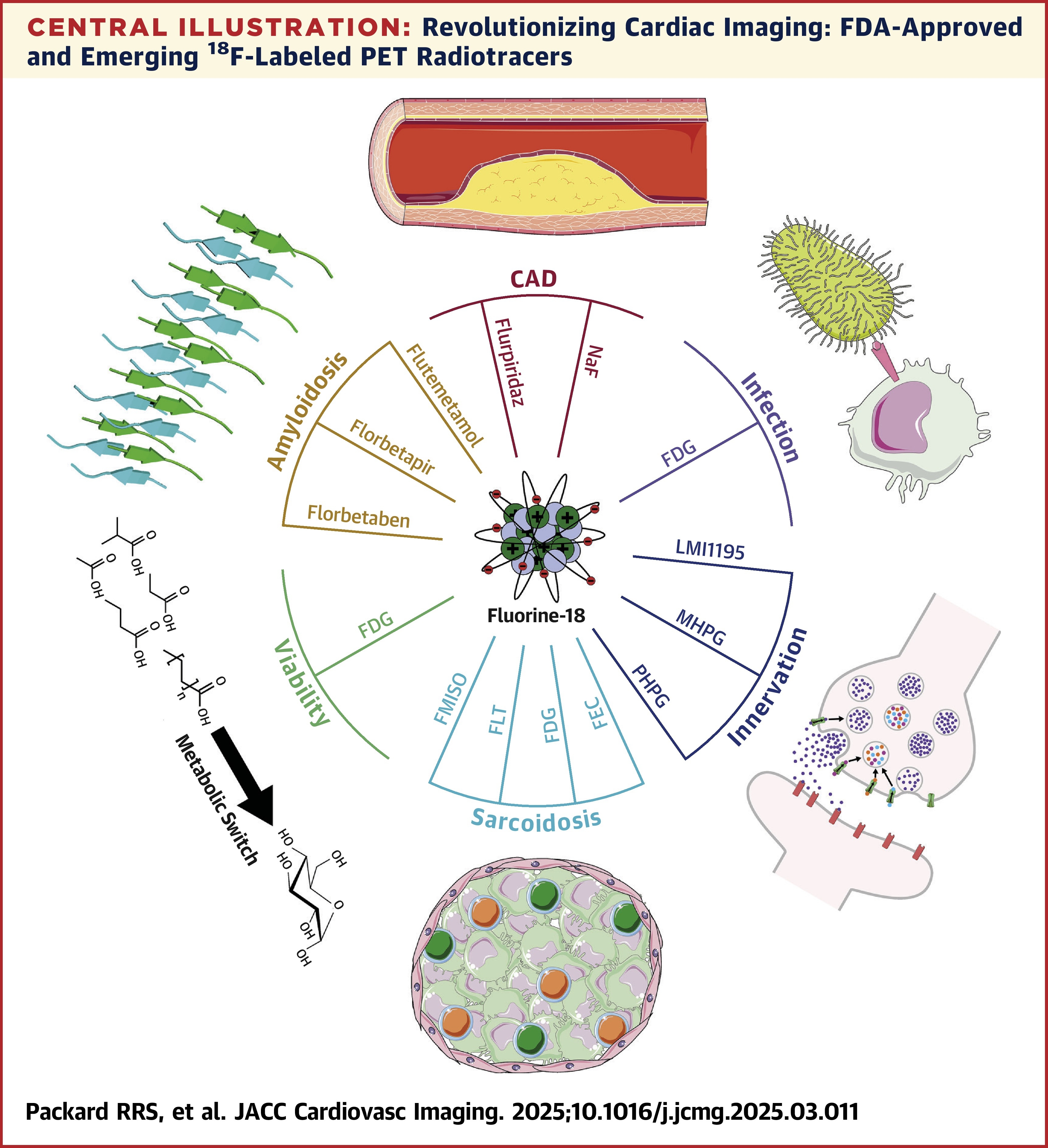
"In parallel to the growing appreciation of the diagnostic value of PET/CT imaging, new 18F-labeled radiopharmaceuticals that are widely accessible bear great promise in improving the management of patients across the spectrum of cardiovascular diseases," note the authors.
Citations:
- Smiley DA, Einstein AJ, O'Gorman KJ, et al. Early detection of transthyretin cardiac amyloidosis using 124I-evuzamitide positron emission tomography/computed tomography. JACC Cardiovasc Imaging. Published online on May 28, 2025. doi:10.1016/j.jcmg.2025.01.018
- Packard RRS, Pelletier-Galarneau M, Malhotra S, et al. Established and emerging Fluorine-18–labeled cardiac PET radiotracers. JACC Cardiovasc Imaging. Published online on May 28, 2025. doi:10.1016/j.jcmg.2025.03.011
Clinical Topics: Heart Failure and Cardiomyopathies, Invasive Cardiovascular Angiography and Intervention, Noninvasive Imaging, Interventions and Imaging, Computed Tomography, Nuclear Imaging
Keywords: Technetium Tc 99m Pyrophosphate, Fluorine Radioisotopes, Fluorine, Positron Emission Tomography Computed Tomography, Radiopharmaceuticals, Amyloidosis, Familial, Iodine Radioisotopes
< Back to Listings


