ACC Issues Guidance For Managing CV Risks Associated With Cancer Treatments
With modern cancer therapeutics changing the landscape of cancer treatment, the need to address cardiovascular treatment-related complications is increasingly important. A new ACC Concise Clinical Guidance report on the Diagnosis and Management of Cardiovascular Adverse Effects of Targeted Oncology Therapies addresses this need by focusing on three classes of anticancer therapies: Bruton's tyrosine kinase (BTK) inhibitors, immune checkpoint inhibitors (ICIs), and vascular endothelial growth factor (VEGF) inhibitors.
Published in JACC, the report is intended to provide clinicians with "succinct and point-of-care guidance" to help with diagnosing and managing cardiovascular toxicities that are typically associated with the three commonly used agents. It offers a detailed look at the scope, clinical presentation, diagnostic evaluation and management strategies across BTK inhibitors, ICIs and VEGF inhibitors, while also including examples of permissive cardiotoxicity, defined as prioritizing continuation of cancer therapy while optimizing cardiovascular outcomes, and related therapeutic adjustments.
A series of three clinical case scenarios is also included in the report. The first focuses on ibrutinib use and cardiovascular complications, while the second and third address ICIs and myocarditis, and VEGF inhibitor–induced cardiovascular toxicity, respectively. According to the Writing Committee, led by Chair Sarju Ganatra, MD, FACC, and Vice Chair Ana Barac, MD, PhD, FACC, these "pragmatic, real-world scenarios [depict] cardiovascular toxicity associated with each of these agents, their [U.S. Food and Drug Administration]-approved indications, epidemiology, predisposing risk factors for toxicity, baseline risk assessment and proposed approaches to diagnosing and managing cardiovascular toxicity in these individuals."
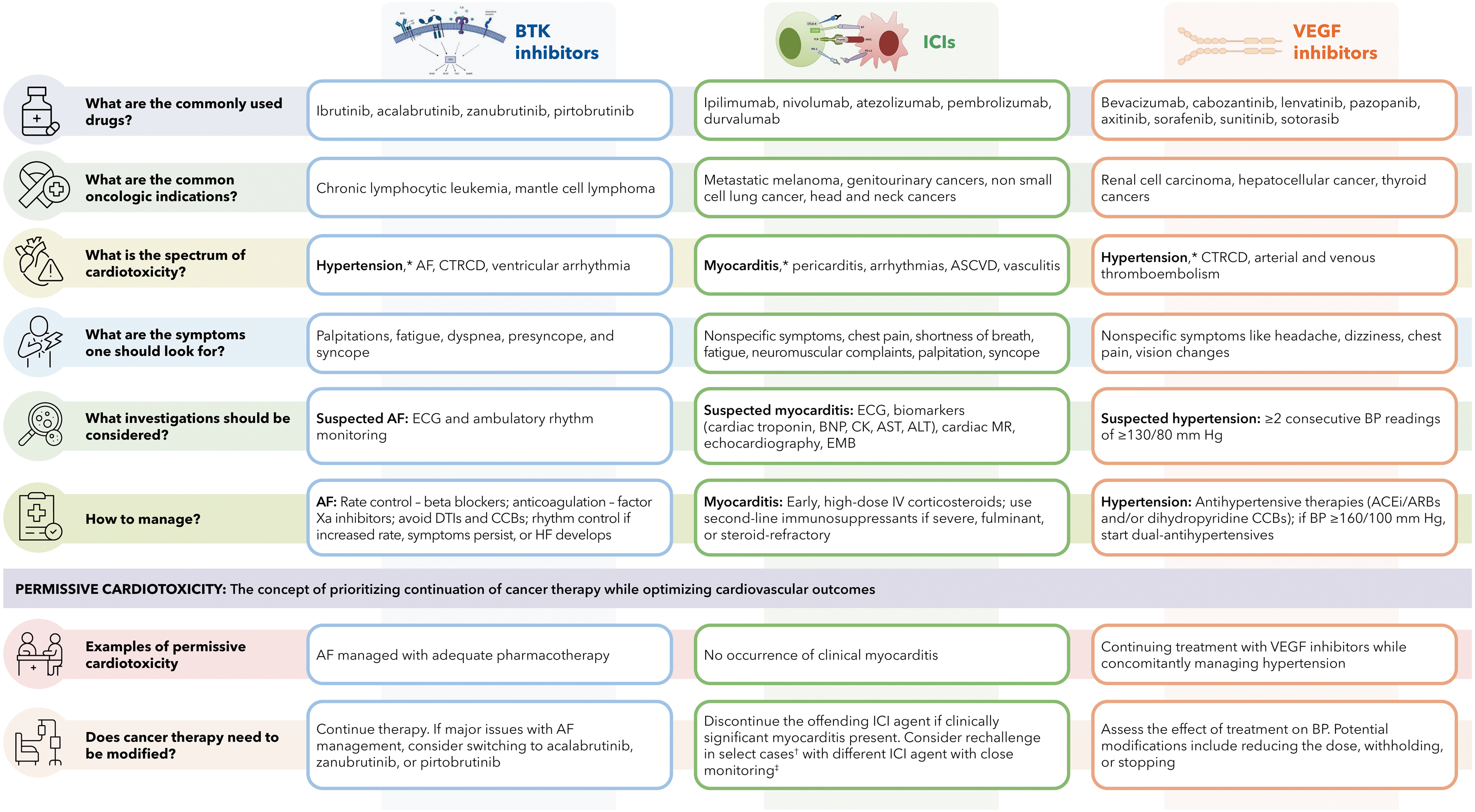
Future directions emphasize prioritizing "developing and rigorously evaluating novel primary prevention strategies to mitigate cardiovascular toxicities associated with targeted cancer therapies." The authors also call for exploring artificial intelligence for early risk prediction, dynamic monitoring, and personalized care. Additional emerging areas, including gut microbiota, environmental health impacts and precision prevention, along with the urgent need for randomized controlled trials assessing both cardiovascular and oncologic outcomes are highlighted.
Clinical Topics: Cardio-Oncology, Heart Failure and Cardiomyopathies
Keywords: Myocarditis, Vascular Endothelial Growth Factor A, Cardiotoxicity, Immune Checkpoint Inhibitors, Protein-Tyrosine Kinases
< Back to Listings


