New-Onset RBBB Post TAVR Associated With High Risk of PPI
Patients developing right bundle branch block (RBBB) following TAVR is rare; however, patients that experience the complication may have a high risk of worsening electrical conduction requiring permanent pacemaker implantation (PPI) within the first week post procedure, according to a study published Aug. 7 in JACC: Clinical Electrophysiology.
Including 7,782 consecutive TAVR patients from seven Israeli centers, Yoav Michowitz, MD, et al., retrospectively evaluated the incidence of new-onset RBBB following TAVR and identified risk factors predicting absolute pacing indication (API), defined as the occurrence of high-grade atrioventricular block (AVB) or alternating bundle branch block (BBB).
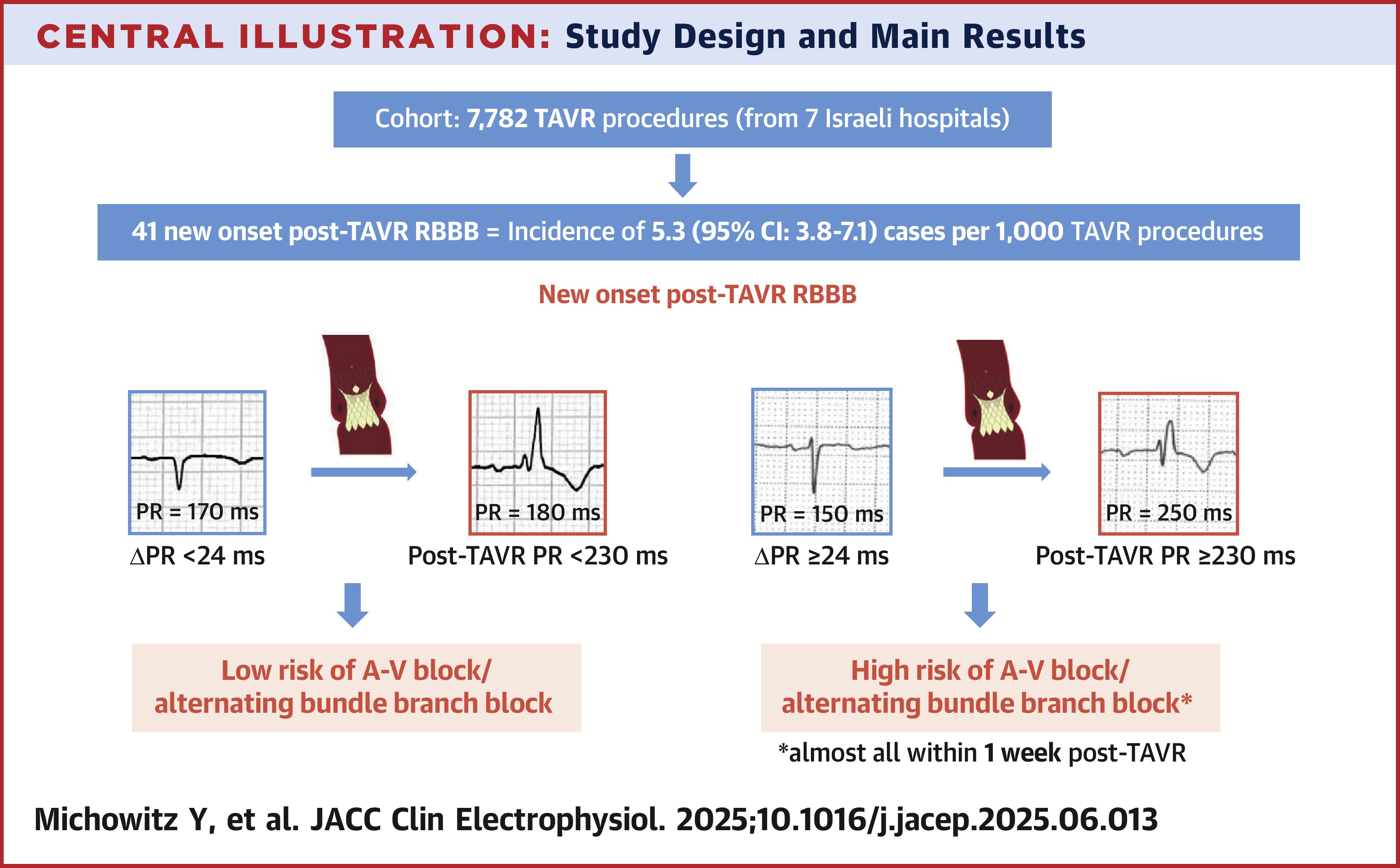
They found that 41 patients developed RBBB, translating to an incidence of 5.3 (95% CI: 3.8-7.1) cases out of 1,000 TAVR procedures. Of these patients, 19 (46%) underwent PPI, 15 (37%) of whom had API, within one year post TAVR. Apart from one case of late AVB, all instances of API occurred prior to discharge from the index TAVR procedure.
In predicting the need for PPI among patients with RBBB, having a PR interval ≥230 ms post TAVR had a 95% specificity and 50% sensitivity, while having a Δ PR ≥24 ms resulted in 80% specificity and 83% sensitivity.
"As almost all episodes of AVB/alternating BBB occurred within one week, it may be advisable to continue in-hospital [electrocardiogram] monitoring surveillance for one week post-TAVR before discharge, especially critical in patients with PR interval ≥230 ms," write the authors.
Clinical Topics: Arrhythmias and Clinical EP, Cardiac Surgery, Invasive Cardiovascular Angiography and Intervention, Implantable Devices, EP Basic Science, SCD/Ventricular Arrhythmias, Atrial Fibrillation/Supraventricular Arrhythmias, Cardiac Surgery and Arrhythmias
Keywords: Pacemaker, Artificial, Bundle-Branch Block, Electrophysiology, Transcatheter Aortic Valve Replacement
< Back to Listings


