ACC CardioSurve: FIT and EC Perspectives on Academic Cardiology Careers Reveal Gender and Career Stage Barriers
The perspectives of Fellows in Training (FITs) and Early Career (EC) cardiologists regarding academic cardiology careers reveal unique gender and career stage barriers, which emphasize the need to support FIT and EC cardiologists during this transition period, according to results of an ACC survey published Oct. 17 in JACC: Advances.
Developed in collaboration with ACC's Women in Cardiology (WIC) Leadership Council, the survey was sent to FITs and ECs in the U.S. and Canada from August 2023 to September 2023 to assess barriers to academic cardiology careers. Responses to the cross-sectional study were evaluated by self-reported gender. Survey questions focused on participant demographics, clinical practice settings, academic achievements, grant application behavior, perceptions of academic medicine, family atmosphere and caregiver responsibilities.
Results showed that of the 608 respondents (16% response rate, 23% women) the reasons for being interested in academia were similar among EC women and men. Of note, women reported more competing clinical responsibilities and discrimination as barriers compared to men (61% vs. 42% and 26% vs. 11%, respectively, p<0.001 for both), and men cited lack of job openings compared to women (35% vs. 22%, respectively; p=0.020).
Among FITs, there was no difference work satisfaction between women and men, but women were less likely to report strong work satisfaction at the EC stage compared to men (62% vs. 77%, respectively; p=0.035). Additionally, both men and women ranked new methods to measure and reward academic pursuits as the most desired intervention to promote academic success, with more EC women valuing mentorship (83% vs. 63%; p=0.016).
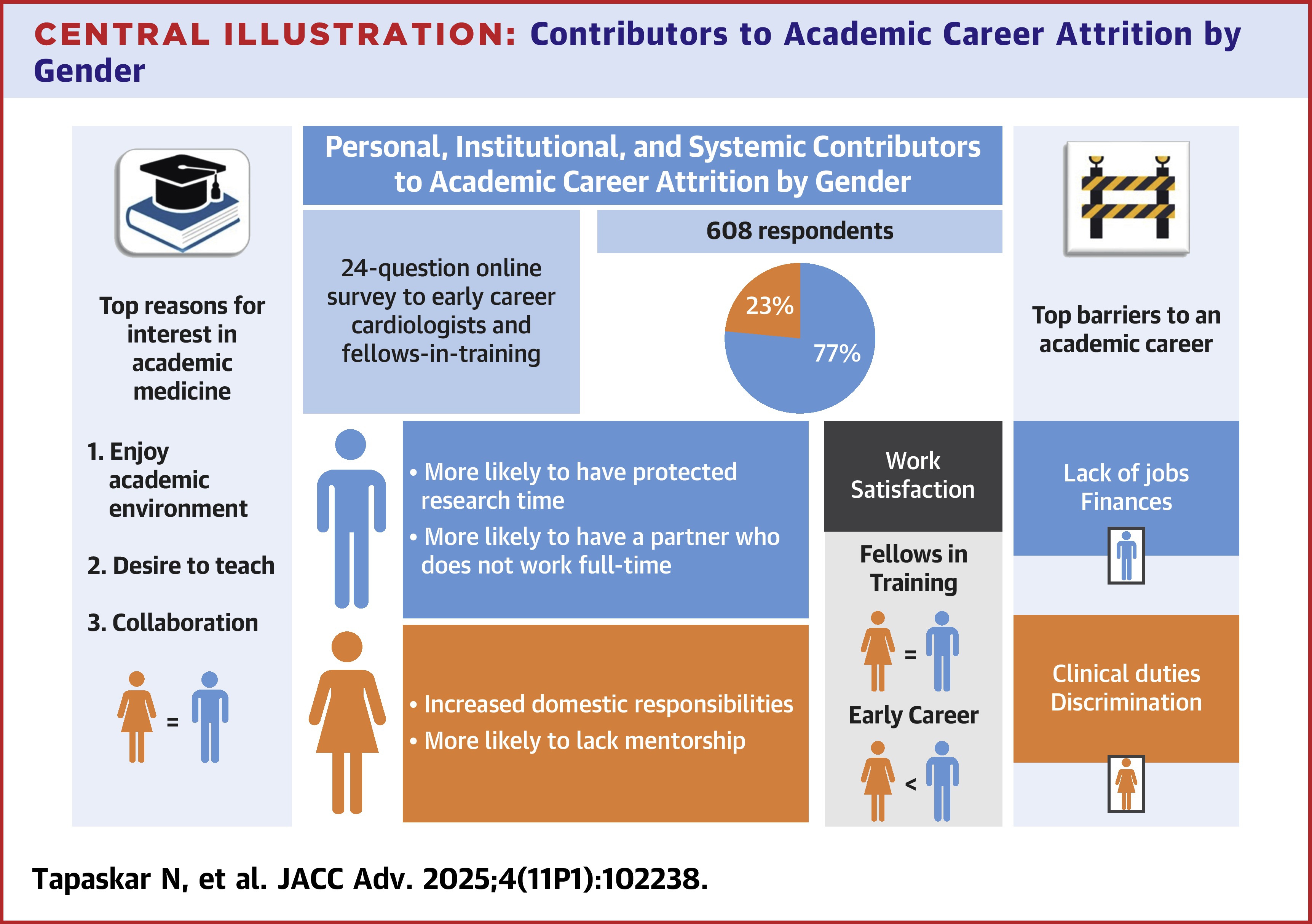
In what Natalie Tapaskar, MD, et al., believe is the first study to examine gender differences in barriers to academic cardiology career stages in North America, the authors highlight key next steps for an equitable environment within academic cardiology focusing on the period of transition from FITs to ECs, including academic promotion that rewards meaningful academic pursuits; transparency around clinical work distribution and compensation; changing the culture of mentorship and networking; structural changes to scheduling; and developing alternative shorter career tracks.
"Our study demonstrates that the barriers to a career in academic medicine differ in important ways by gender, but that respondents of both genders shared common beliefs for how to address them," write Tapaskar, et al. "The proposed solutions will make a positive impact for all EC cardiologists who hope to progress in an academic career – both men and women alike."
Learn more about ACC's Women in Cardiology Member Section here.
Keywords: Surveys and Questionnaires, Cross-Sectional Studies, Academic Success, North America, Job Satisfaction, Sex Factors, Self Report
< Back to Listings


