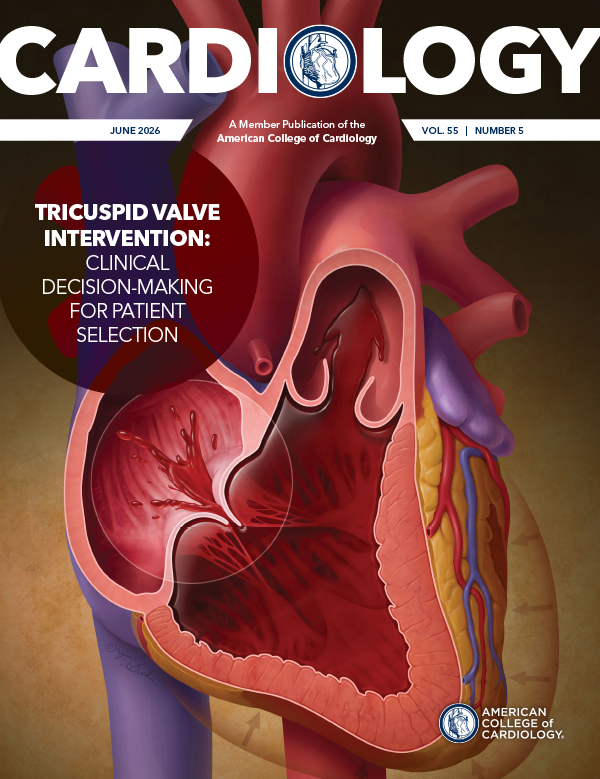
The Pulse of ACC | Remembering Eugene Braunwald; We Want Your Feedback; More
In Memoriam: Eugene Braunwald, MD, MACC
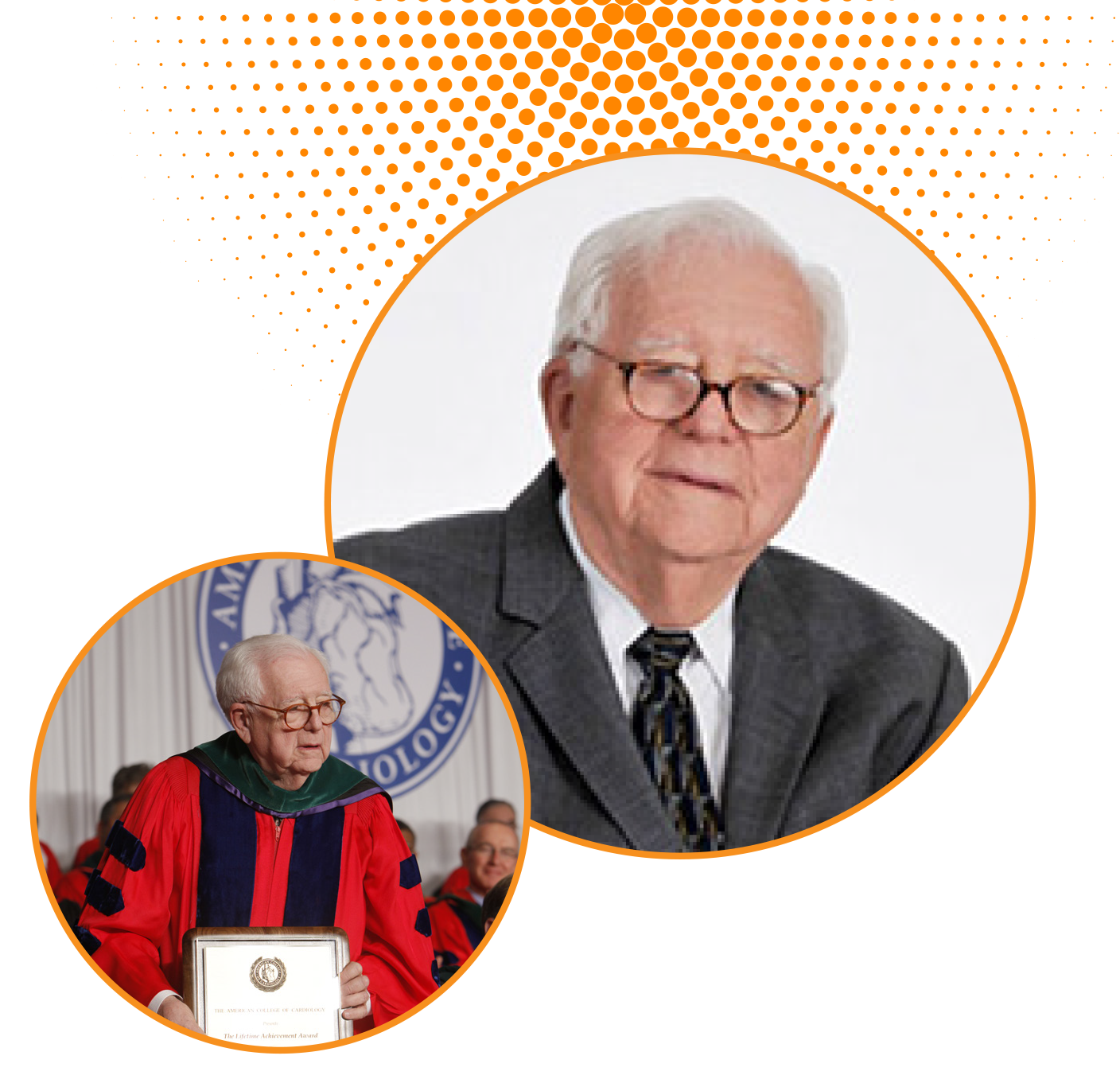
Eugene Braunwald, MD, MACC, often referred to as the father of modern cardiology for his groundbreaking work in hypertrophic cardiomyopathy (HCM) and other specialties, passed away April 22 at the age of 96.
Braunwald was born in Vienna, Austria, in 1929. He left Austria as a child during the Nazi occupation and emigrated to the U.S. as a refugee, an experience he later described as formative in shaping his outlook and work ethic.
He received his undergraduate and medical degree from New York University and completed his internal medicine residency at Johns Hopkins Hospital. Braunwald went on to serve as Chief of Cardiology and Clinical Director of the National Heart, Lung, and Blood Institute, and served as founding Chair of Medicine at the University of California, San Diego; Chair of the Department of Medicine at Brigham and Women's Hospital in Boston, MA; and Distinguished Hersey Professor of Medicine at Harvard Medical School.
"He was a legend of all legends: the 'father of modern cardiology,'" says ACC President Roxana Mehran, MD, FACC. "His contributions span decades and his legacy will live on with all of the many lives he touched through his work as a clinician, researcher, mentor and teacher."
It was Braunwald's, along with his longtime collaborator Andrew Morrow, MD's, 1964 Circulation monograph that first described HCM as a unique clinical entity. In a 2021 Cardiology magazine article, Martin S. Maron, MD, described the two men as "like Lewis and Clark – they had no idea what was around the next corner, without any cardiovascular imaging to guide them, and they were able to put all the pieces together about this complex disease in a way that still stands true today."
Reflecting on Braunwald's legacy, Former JACC Editor-in-Chief Valentin Fuster, MD, PhD, MACC, says: "Eugene was my very good friend for many decades and was one of the most talented people that I have ever met. He was pragmatic and an observer of everything evolving in medicine. He could predict the future and was right in most situations."

Braunwald went on to found the Thrombolysis in MI (TIMI) Study group in 1984, revolutionizing large-scale cardiovascular clinical trials. He was the founding editor of Braunwald's Heart Disease and long-time editor of Harrison's Principles of Internal Medicine, shaping medical education worldwide. He also authored more than 1,000 peer-reviewed publications, becoming one of the most highly cited cardiologists in history.
"Dr. Braunwald's vision to create the TIMI Study Group profoundly shaped the practice of cardiovascular medicine across the world," says Marc Steven Sabatine, MD, MPH, FACC, chair of the TIMI Study Group. "While he touched many lives, we at TIMI were truly blessed to directly work with and learn from him over decades. We will deeply miss him but gain some comfort in knowing that we will carry forward his legacy and continue his lifelong mission to advance cardiovascular care."
Among his other many accolades, Braunwald was recognized as a Master of the ACC, and received ACC's Distinguished Scientist Award in 1986, as well as the Lifetime Achievement Award in 2010. In addition, the Eugene Braunwald Keynote is a cornerstone of ACC's Annual Scientific Session, providing a platform for leading cardiovascular experts to explore emerging challenges and opportunities in the field – honoring Braunwald's enduring legacy and his commitment to advancing the field.
"You always wanted to hear what he had to say," says Harlan M. Krumholz, MD, SM, MACC, Editor-in-Chief of JACC. "I remember a recent lecture of his on the future of cardiology, still looking ahead, still steering the field. He did what he loved, and he did it his entire life, and we are all the better for it. He will be missed dearly."

We Want Your Feedback
Help us build an ACC that delivers even greater value to you and your patients. ACC President Roxana Mehran, MD, FACC, is inviting members to share insights on where they find value in the College and how the ACC can provide the support you need to transform the future of care. Take a brief survey and help shape what's next for ACC.
Hypertension Research: What Comes Next?
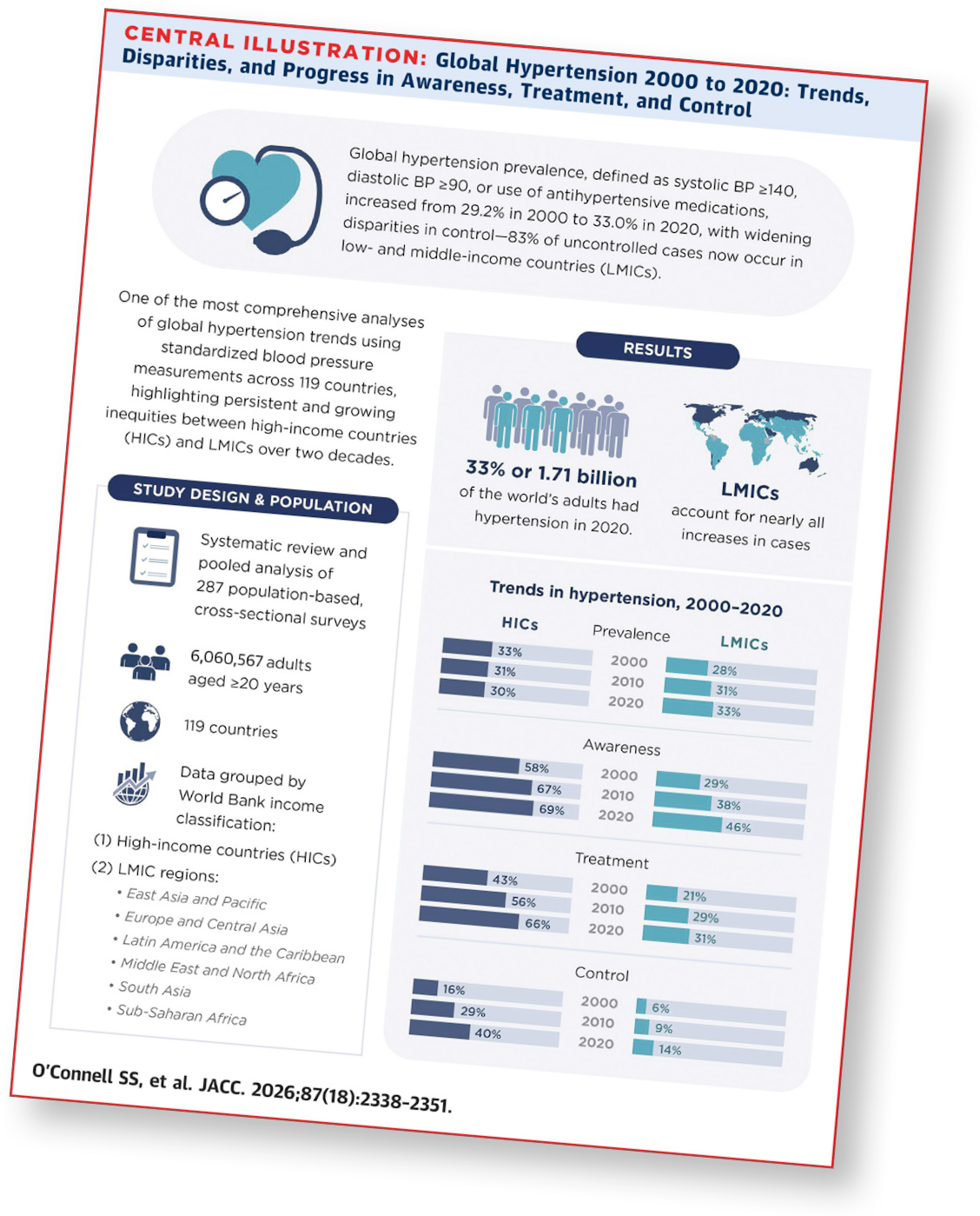
Key advances in hypertension science are the focus of a special focus issue of JACC. Original research and commentaries provide insights into global population trends, breaking clinical trials and real-world implementation. Among the topics: links between blood pressure and critical outcomes; evaluation of pharmacologic and lifestyle treatments; environmental and genetic drivers of hypertension; and emerging approaches to blood pressure measurement and management across the lifespan.
"Lowering blood pressure is one of the most powerful ways clinicians can protect the lives patients hope to continue living," says JACC Editor-in-Chief Harlan M. Krumholz, MD, SM, MACC, in an editorial kicking off the issue. He stresses that "the next frontier will be building systems, potentially aided by artificial intelligence, that help patients more reliably reach and sustain target blood pressure levels."
- Explore the full issue.
- Listen to Krumholz and first author Samantha S. O'Connell, MS, MD, discuss a comprehensive global analysis of hypertension trends from 2000 to 2020, drawing on data from nearly 300 population-based studies across 119 countries.
Clinical Topics: Prevention, Hypertension
Keywords: Cardiology Magazine, ACC Publications, CM-Jun-2026, In Memoriam, Health Surveys, Hypertension, Blood Pressure
